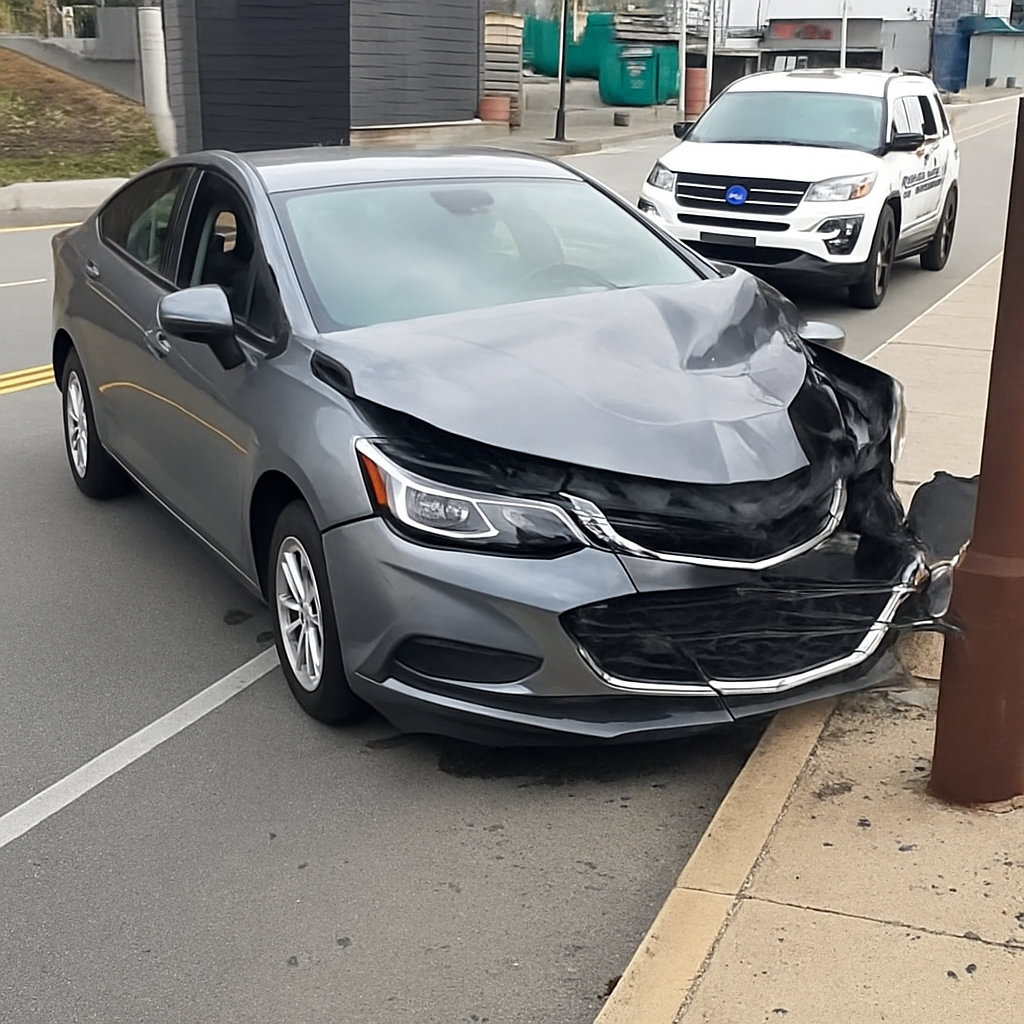
You got a ticket or had an accident in Huntsville, and now your insurance premium is higher. Here's the realistic timeline for rate recovery in Alabama, which carriers still write drivers with points, and what actions accelerate the drop.
Alabama's Two-Year Point Removal Window and What It Means for Your Premium
Alabama removes points from your driving record two years from the conviction date, not the date you received the ticket. If you fought your speeding ticket in Huntsville Municipal Court or Madison County District Court and the conviction came six months after the citation, your two-year clock started six months later than you think. This timing matters because most carriers re-evaluate your risk profile at renewal, and a clean point record triggers immediate rate relief — but only if the points are actually gone.
Most violations in Alabama carry 2 points: speeding 1-25 mph over, improper lane change, following too closely, running a red light. Reckless driving carries 6 points. An at-fault accident with injuries or significant property damage adds 3 points. Alabama's threshold for license suspension is 12-14 points within two years, depending on whether you're a first-time or repeat offender. The Madison County traffic court processes roughly 18,000 citations annually, and speeding violations constitute the majority.
Your insurance premium responds to the violation itself, not just the points. A single speeding ticket in Huntsville typically raises your rate 15-30% at renewal. A second ticket within three years pushes that to 40-60%. An at-fault accident with a claim filed can increase premiums 30-50% for the first incident, and 70-90% if you have a prior violation already on record. These increases persist until the violation ages off your insurance record, which in Alabama is typically three to five years depending on the carrier — longer than the two-year point removal period. Alabama's SR-22 requirements and filing process liability insurance
Rate Recovery Timeline After a Violation in Huntsville
The premium increase you see after a ticket or accident doesn't disappear the moment Alabama removes the points. Your insurance record and your driving record are separate systems. Alabama's Department of Public Safety tracks points for licensing purposes, but carriers track violations for underwriting purposes on a longer timeline. Most insurers in Alabama apply violation surcharges for three to five years from the conviction date, regardless of when points fall off.
Here's the realistic recovery timeline for a single speeding ticket in Huntsville with no prior record. At renewal immediately following conviction: expect a 15-30% increase. Year two: the increase remains, but you may qualify for a good driver discount again if no new violations occur. Year three: many carriers begin reducing the surcharge, dropping your rate 10-20% from the peak. Years four and five: the violation continues to age, and most standard carriers stop applying it as a rating factor entirely by the fifth anniversary.
For at-fault accidents with claims filed, the timeline stretches longer. Comprehensive claims — like hitting a deer on Highway 72 — typically don't affect your rate. Collision and liability claims do. A single at-fault accident with a $5,000+ claim can keep you in a higher rate tier for five full years with most carriers. A second at-fault accident during that window often moves you into non-standard insurance territory, where premiums can double or triple compared to your pre-violation baseline.
Which Carriers Write Drivers with Points in Huntsville
Not all carriers treat violations the same way, and this is where shopping becomes the single highest-leverage action you can take. Some carriers assign flat surcharges per violation; others use tiered underwriting that bumps you into a higher risk class. The difference in premium between a carrier that views you as moderately higher risk and one that views you as high risk can be $80-150/month for the same coverage.
In the Huntsville market, State Farm, GEICO, and Progressive typically remain available to drivers with 1-2 violations and no SR-22 requirement, though you'll see rate increases. USAA (for eligible military families) often applies smaller surcharges for single violations than competitors. If you have multiple violations within three years or a combination of tickets and an at-fault accident, you'll likely need to quote with non-standard carriers like The General, Dairyland, or National General, which specialize in higher-risk profiles.
Alabama does not require SR-22 for standard point violations like speeding tickets, following too closely, or most at-fault accidents. SR-22 is triggered by DUI convictions, driving without insurance, accumulating excessive points leading to suspension, or court-ordered filing after certain serious violations. If you don't have an SR-22 requirement, you're shopping in the standard and preferred non-standard market — not the high-risk SR-22 market. That distinction keeps more carriers available to you and premiums lower than drivers who need SR-22 filings. non-standard auto insurance
Defensive Driving Course: Alabama's Point Reduction Tool
Alabama allows drivers to remove points by completing a state-approved defensive driving course, but the rules are stricter than in many states. You can complete the course once every year to remove up to two points from your record. The course does not erase the violation itself — it only reduces the point total, which matters if you're approaching the 12-14 point suspension threshold.
The point reduction does not automatically lower your insurance premium. Your carrier sees the violation conviction on your record regardless of whether you completed the course. However, some insurers in Alabama offer a defensive driving discount — typically 5-10% — for completing an approved course, separate from the point reduction benefit. You'll need to ask your carrier directly whether they offer this discount and whether it applies to drivers who already have violations on record.
The course must be approved by the Alabama Department of Public Safety. Online and in-person options are available, and the cost typically ranges $25-75. You must complete the course before your court date if you're using it to avoid points for a pending citation, or within the calendar year if you're using it to remove existing points. The reduction applies immediately upon course completion and submission of the certificate to the Alabama Law Enforcement Agency (ALEA).
What You Can Do Right Now to Lower Your Premium
Shop your policy with at least three carriers immediately. Rate tolerance for violations varies widely, and the carrier that gave you the best rate with a clean record may not be the most competitive now. Many Huntsville drivers stay with their current insurer out of inertia and overpay by $600-1,200 annually compared to what's available in the non-standard market.
Increase your deductible if you can afford the out-of-pocket risk. Moving from a $500 to a $1,000 collision deductible typically saves 10-15% on your premium. If you're driving an older vehicle worth less than $3,000-4,000, consider dropping collision and comprehensive coverage entirely and carrying liability-only. Alabama's minimum liability limits are 25/50/25 ($25,000 bodily injury per person, $50,000 per accident, $25,000 property damage), but carrying higher limits — like 100/300/100 — often costs only $15-30/month more and protects you in the event of a serious at-fault accident.
Ask every carrier you quote about bundling discounts, continuous coverage discounts, and defensive driving discounts. Even with violations on your record, you may qualify for 10-25% in stacked discounts depending on your profile. Pay your premium in full if possible rather than monthly installments — most carriers charge 5-10% more annually for monthly billing.
Finally, set a calendar reminder for your two-year conviction anniversary and your three-year conviction anniversary. At two years, your points disappear in Alabama's system. At three years, many carriers begin reducing violation surcharges. Both are natural shopping triggers where you're likely to find significantly lower rates than you're paying now.