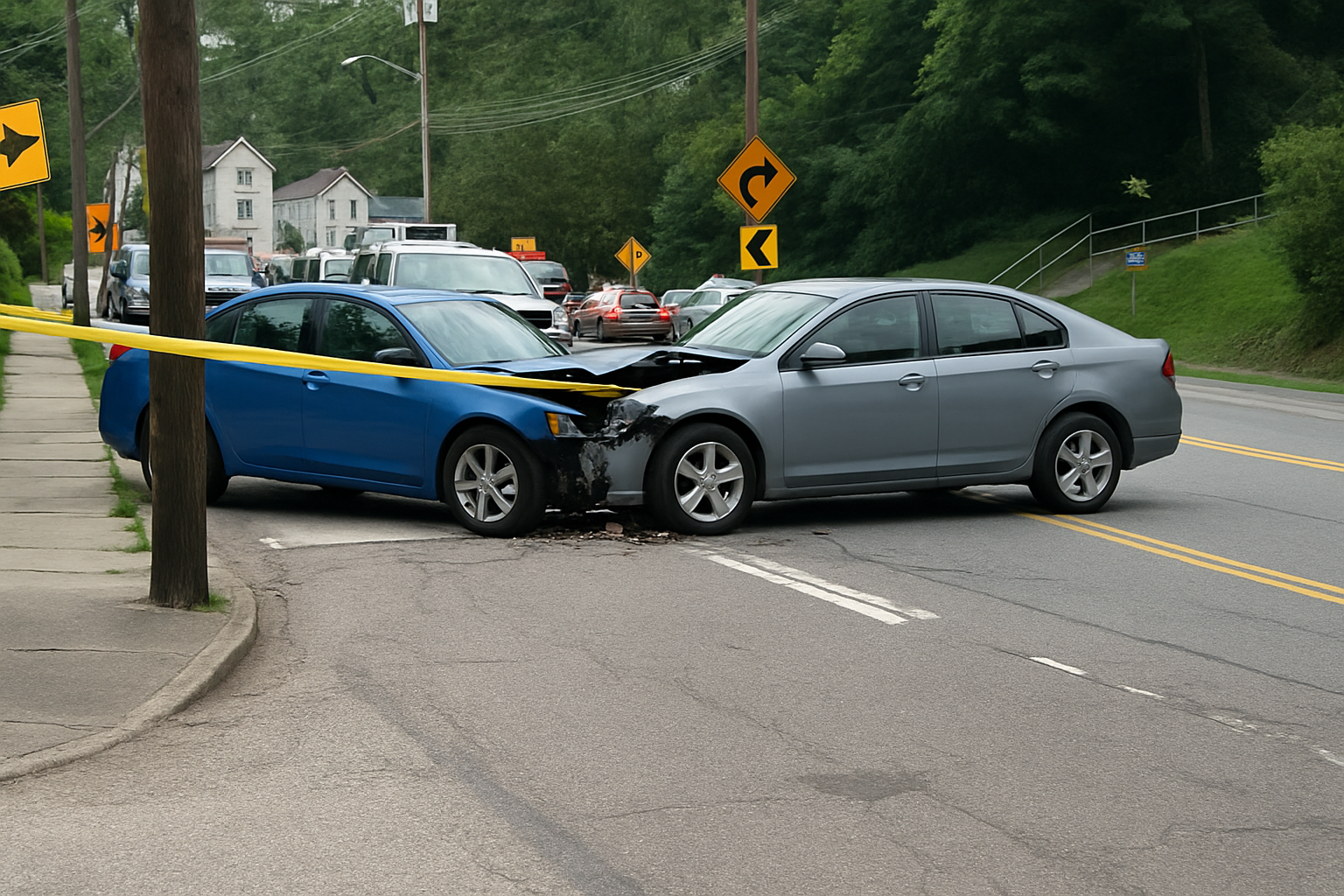
If your car insurance went up after a speeding ticket, at-fault accident, or moving violation in Indianapolis, you're facing a 20–40% rate increase that typically lasts three years. Here's the fastest path to lowering your premium and how long full rate recovery actually takes.
What a Violation Actually Costs You in Indianapolis
A single speeding ticket (15+ mph over) in Indianapolis triggers a 20–35% rate increase on average, adding $400–$900 annually to your premium depending on your carrier and coverage level. An at-fault accident with property damage typically raises rates 30–50%, costing you $600–$1,400 per year. These increases apply at your next renewal and remain on your insurance record for three years from the violation date, not from the date you pay the ticket or settle the claim.
Indiana assigns 2–8 points per violation through the Bureau of Motor Vehicles, with most speeding tickets carrying 2–4 points and reckless driving earning 6 points. But your insurance company uses its own internal scoring system — they care about the violation type and date, not your BMV point total. Your carrier will surcharge your policy even if you take a defensive driving course that removes points from your BMV record, because insurers view the underlying violation as predictive of future claims regardless of point removal.
The financial impact is front-loaded: you pay the highest premium immediately after the violation appears on your record at renewal. Many Indianapolis drivers assume their rate will climb gradually over three years, but the opposite is true — you're already paying the peak surcharge, and the path from here is recovery, not escalation. liability-only coverage
Indiana's Two-Year Point Cycle vs. Your Three-Year Rate Penalty
Indiana's BMV removes points from your driving record two years from the violation date, meaning a speeding ticket issued in March 2023 drops off your state record in March 2025. But your insurance company maintains that violation in its underwriting file for three years from the violation date — March 2026 in this example. This creates a 12-month gap where your BMV record is clean but your insurance rate is still elevated.
Most Indianapolis drivers don't realize they can shop for new coverage during this gap period and often qualify for standard-market rates from carriers who pull a fresh BMV report and see zero active points. Your current carrier will continue surcharging you through the full three-year window because they maintain their own violation history, but a competing carrier performing a new underwriting review may classify you as a standard risk if your BMV record is clear.
This timing mismatch is why month 25 after your violation is the single best time to request quotes from at least three carriers. You're still being surcharged by your current insurer, but new carriers see a clean state record and may offer you pre-violation pricing immediately — cutting 12 months off your rate recovery timeline. Indiana's SR-22 requirements
Carrier Shopping: The Only Action That Cuts Costs Immediately
Rate increases after violations vary wildly by carrier, with some Indianapolis insurers applying flat 25% surcharges for any moving violation while others use tiered pricing based on violation severity and driver history. A speeding ticket might cost you $600/year extra with Progressive but $350/year with Auto-Owners — not because one is objectively cheaper, but because each carrier weighs violations differently in their risk models.
Non-standard carriers like Dairyland, The General, and National General often price violations more competitively than standard-market carriers because their entire book of business is drivers with points. If you had one or two violations and no SR-22 requirement, you're a lower-risk profile within the non-standard market, which can translate to rates 15–30% below what a standard carrier charges after applying their violation surcharge.
Request quotes within 30 days of your renewal notice. Rates are locked for your policy term, so shopping mid-term rarely helps unless you're willing to pay a cancellation fee. Focus on liability-only or state minimum coverage if you're financing recovery — comprehensive and collision premiums also increase after violations, but dropping them temporarily (if your lender allows) can reduce your monthly cost by 40–60% while you rebuild your record. non-standard auto insurance
Defensive Driving Courses: BMV Points vs. Insurance Discounts
Indiana allows drivers to remove up to 4 points from their BMV record by completing a state-approved defensive driving course, but this does not automatically reduce your insurance premium. The course removes points from your state file, which helps you avoid license suspension if you're near the 18-point threshold within 24 months, but your insurer still sees the original violation in its underwriting system.
Some carriers — including State Farm, Nationwide, and Erie — offer a 5–10% policy discount for completing a defensive driving course, applied separately from the violation surcharge. This means you're still paying the 20–35% increase from the ticket, but the course discount offsets a small portion. Always confirm with your carrier before enrolling: not all insurers recognize Indiana's BMV-approved courses for discount purposes, and some require the course to be completed before any violations appear on your record.
The BMV point removal is still worth pursuing if you have multiple violations and are at risk of suspension, but don't expect it to lower your premium in the short term. The real insurance benefit comes 24–36 months later when you're shopping for new coverage and carriers see fewer active violations on your BMV report.
Timeline to Full Rate Recovery in Indianapolis
Your insurance rate begins recovering at the three-year mark from each violation date, assuming no new tickets or claims. If you received a speeding ticket in June 2023, your rate surcharge ends in June 2026. Add a second violation in December 2023, and you'll carry some level of surcharge until December 2026 — the clock resets with each new event.
Most Indianapolis drivers see a two-stage recovery: a partial rate drop at the two-year mark when they switch carriers and new underwriters see a clean BMV record, then a final drop at three years when the violation fully ages out of insurance databases. A driver paying $1,800/year post-violation might drop to $1,400/year by switching carriers in month 25, then return to their original $1,200/year baseline at month 37 when the violation is no longer ratable.
SR-22 violations — DUI, reckless driving with injury, driving while suspended — follow a different timeline. Indiana requires SR-22 filing for three years minimum, and those violations typically carry 50–130% rate increases that last the full three years with no early relief. If your violation did not trigger an SR-22 requirement, you're in the faster recovery track described above.
What to Do Right Now Based on When Your Violation Occurred
If your violation happened less than 12 months ago, focus on shopping your current renewal with at least three carriers and consider raising your deductible or dropping optional coverage to lower your monthly cost. You're in the peak surcharge period, and no insurer will ignore the recent violation — but pricing variation between carriers is often 20–40%, making comparison shopping the only move that yields immediate savings.
If your violation occurred 12–24 months ago, confirm your BMV point status and start pre-shopping for your next renewal. Many carriers will re-rate you favorably once you cross the two-year threshold with no new violations, especially if your state record is clean. Request quotes 45 days before renewal to lock in pricing before your current policy auto-renews at the surcharged rate.
If your violation occurred 24+ months ago, request quotes immediately if you haven't already switched carriers. Your BMV record is likely clean, meaning new carriers will underwrite you as a standard risk even though your current insurer is still applying a surcharge. This is the highest-value action available to Indianapolis drivers in the final year of their rate recovery — you can reclaim 50–75% of your violation surcharge simply by moving to a carrier that's pulling a fresh state report.