If you've picked up points from speeding tickets or moving violations in Irving, your rates have likely spiked. Most drivers don't realize that Texas insurers weigh violations differently — and shopping carriers is more effective than waiting for points to fall off.
Why Your Rates Jumped and When They'll Drop
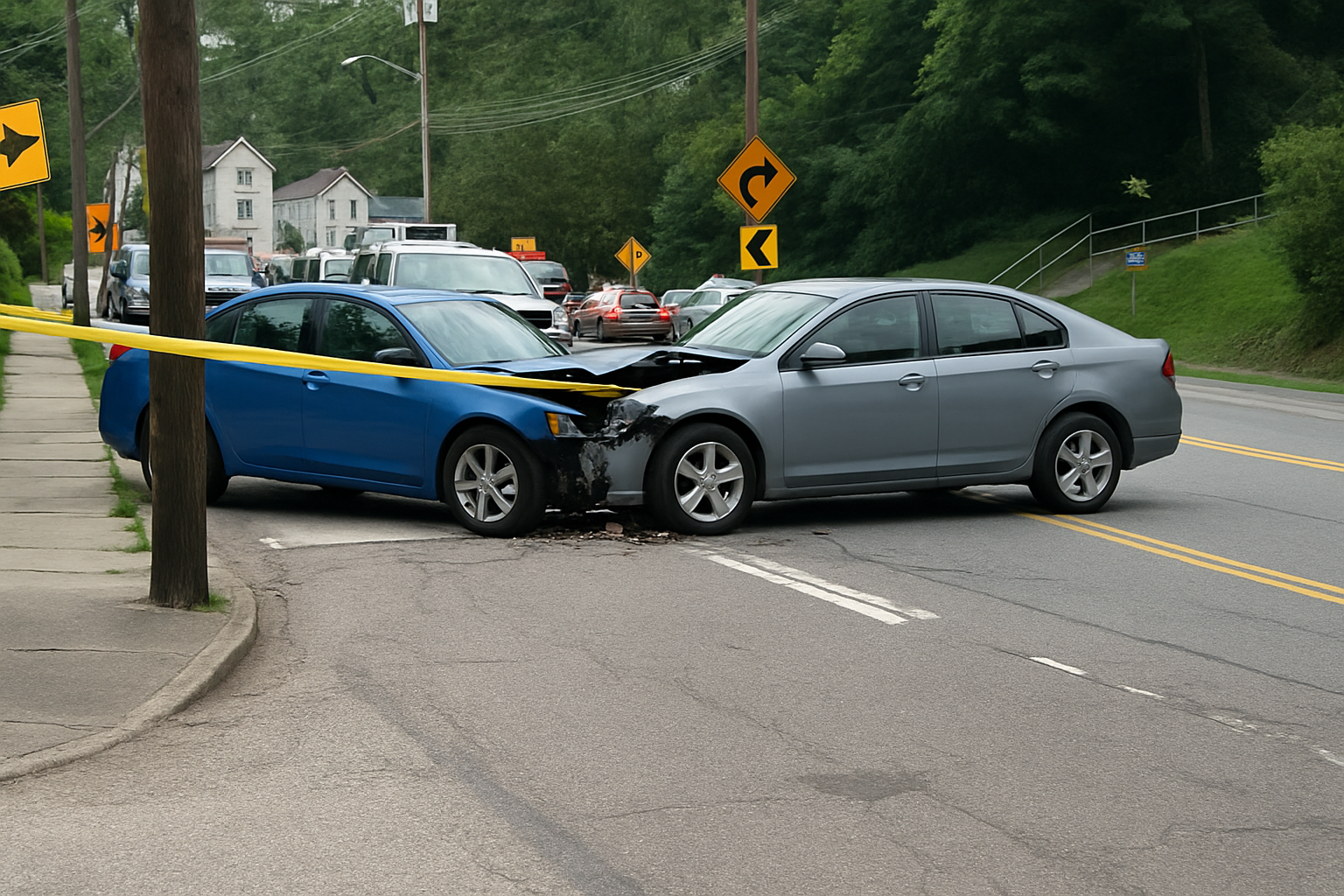
Texas does not assign driver license points the way many other states do — the DPS uses a surcharge program for certain violations, but your insurance premium is based on your full driving record as pulled directly by the insurer. A single speeding ticket in Irving typically raises rates 15–30% on average, depending on how far over the limit you were cited. An at-fault accident can trigger a 30–50% increase, and reckless driving citations often double premiums outright.
Most Texas insurers surcharge violations for 3 years from the conviction date, not the citation date. That means your rate won't normalize until 36 months after you paid the ticket or were convicted in court. A few carriers extend that window to 5 years for major violations like reckless driving or hit-and-run. This timeline is set by the carrier, not the state — there is no statutory lookback period in Texas insurance law.
The surcharge drops off automatically once the violation ages past the carrier's lookback window. You don't need to request removal or file anything with the state. However, waiting 3 years is not your only option — shopping carriers now and taking a defensive driving course can both accelerate rate recovery significantly, often cutting your premium by 20–40% within weeks.
How Texas Insurers Actually Rate Violations
Unlike states with transparent point-to-premium tables, Texas allows each insurer to apply its own underwriting rules to your driving record. One carrier may treat a 15-over speeding ticket as a minor infraction with a 10% surcharge, while another classifies the same ticket as a major violation and raises your rate 35%. This variance is why identical driving records in Irving can produce quotes ranging from $140/month to over $300/month.
Carriers also differ in how they stack multiple violations. Some apply a flat surcharge per incident — two tickets means two surcharges. Others use tiered multipliers where a second violation within 3 years triggers a disproportionately higher increase. If you have two moving violations within 12 months, expect total premium increases of 40–70% with most standard carriers, and potentially higher if one violation involved speed 20+ mph over the limit.
A handful of non-standard carriers in Texas — including Acceptance Insurance, Freeway Insurance, and Gainsco — specialize in drivers with recent violations and typically offer lower rates than standard carriers for the same record. These companies build their underwriting models around imperfect records, meaning they don't penalize violations as harshly. If your current carrier raised your rate after a ticket, you are almost certainly overpaying compared to what a non-standard carrier would quote you today. Texas SR-22 insurance requirements non-standard auto insurance SR-22 insurance
Actions That Lower Your Premium Immediately
The fastest way to reduce your premium after a violation in Irving is to shop at least 5–7 carriers, including both standard and non-standard insurers. Texas is a competitive insurance market with over 200 active auto carriers, and rate variance for drivers with violations is extreme. Pulling quotes from State Farm, Geico, Progressive, Acceptance, Gainsco, Kemper, and Direct Auto gives you a realistic range — and the spread between highest and lowest quote typically exceeds $1,200/year for a driver with one at-fault accident.
Completing a Texas-approved defensive driving course can reduce your premium by 10% for 3 years, and in some cases can prevent a ticket from appearing on your insurance record entirely if you use it for ticket dismissal. You're eligible for ticket dismissal once every 12 months in Texas if you complete the course within 90 days of your citation and the offense qualifies. If you've already been convicted or you're using the course purely for the insurance discount, the 10% reduction applies automatically — just submit your certificate to your insurer.
Increasing your deductible from $500 to $1,000 typically cuts your premium by 8–15%, which can partially offset a violation surcharge. Dropping collision or comprehensive coverage on older vehicles (worth under $3,000) eliminates those premiums entirely and may make sense if your rate spiked to the point where annual premiums approach the vehicle's value. Review your current coverage limits — if you're carrying $100,000/$300,000 liability and your rate jumped significantly, stepping down to Texas minimums ($30,000/$60,000) will lower your premium, though it also increases your financial exposure in a future accident.
Do You Need SR-22 Filing in Texas?
Most traffic violations and at-fault accidents in Irving do not require SR-22 filing. SR-22 is a certificate your insurer files with the Texas DPS to prove you carry continuous liability coverage, and it's only mandated in specific situations: license suspension or revocation, DUI or DWI conviction, driving without insurance citation, repeat violations within a short period, or court order following a serious accident.
If you received a standard speeding ticket, ran a red light, or were cited for an at-fault accident but were insured at the time, you do not need SR-22. Your rate will increase due to the violation itself, but you are not required to file proof of insurance with the state. SR-22 filing adds $15–25/year to your premium in Texas and must remain active for a minimum of 2 years in most cases, though some suspensions require 3 years of continuous filing.
If you're unsure whether SR-22 applies to you, check any correspondence from the Texas DPS or the court that handled your case. If SR-22 was required, the notice will explicitly state it and include a deadline for filing. If you were not notified of an SR-22 requirement, you do not need it — and paying for SR-22 filing when it's not required does not lower your premium or help you recover from a violation faster.
Timeline for Rate Recovery in Irving
Your premium will remain elevated for 3 years from the conviction date with most carriers, after which the violation surcharge drops off automatically. If you take no action and stay with your current insurer, expect your rate to return to pre-violation levels at the 36-month mark, assuming no additional tickets or accidents occur during that window.
If you switch carriers within the first year after a violation, you can often cut your premium by 20–40% immediately, which compresses the financial impact significantly. A driver paying $220/month after a speeding ticket who switches to a non-standard carrier quoting $150/month saves $2,520 over the 3-year surcharge period — far more than they would save by waiting for the violation to age off naturally.
Completing a defensive driving course stacks with carrier shopping. If you switch carriers and take the course within 90 days of your violation, you can reduce your premium by 30–50% compared to staying with your original insurer and taking no action. This is the fastest realistic path to rate recovery available in Texas, and it works regardless of whether your violation was a speeding ticket, failure to yield, or at-fault accident.
Which Carriers Write Drivers with Violations in Irving
Standard carriers like State Farm, Geico, Allstate, and USAA will continue to insure you after a single violation, but they typically apply the highest surcharges. These companies build their rate models around clean-record drivers, so violations trigger steep percentage increases even when the underlying risk is moderate.
Non-standard carriers — including Acceptance Insurance, Gainsco, Freeway Insurance, Direct Auto, Kemper, and Dairyland — specialize in drivers with recent violations and typically offer lower premiums than standard carriers for the same record. Acceptance and Gainsco both operate extensively in the Dallas-Fort Worth area and quote drivers with multiple tickets or at-fault accidents. Progressive and The General also write non-standard policies and may offer competitive rates depending on your specific violation profile.
If you have two or more violations within 3 years, or one major violation like reckless driving, standard carriers may non-renew your policy at the end of your term or decline to quote you entirely. In that scenario, non-standard carriers become your primary market. Shopping 5–7 carriers is essential — rate variance for drivers with multiple violations often exceeds $200/month between the highest and lowest quotes.