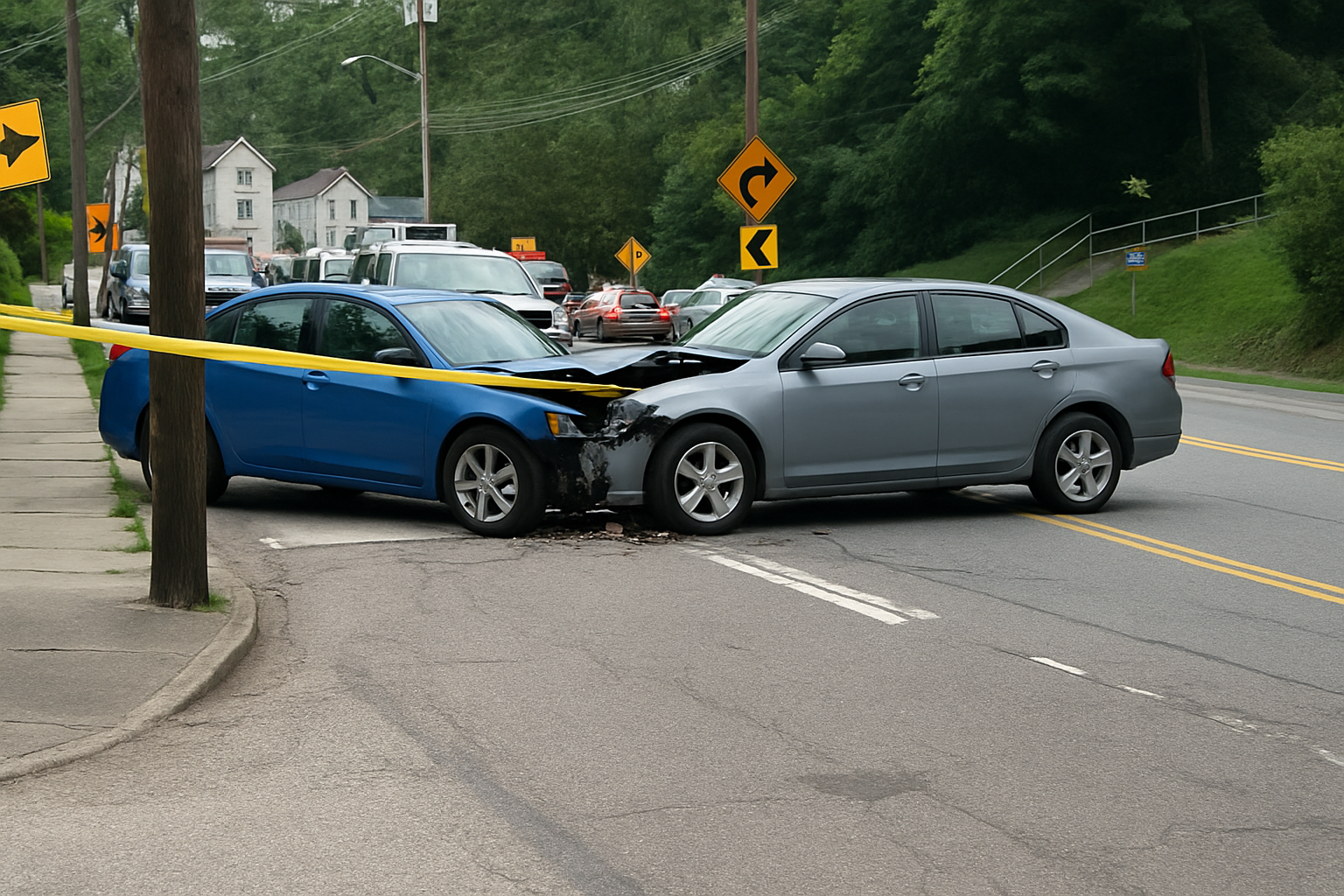
You got a ticket or had an accident in Las Vegas and your rates went up. Here's the realistic timeline for rate recovery, which carriers still write drivers with points, and what you can do now to lower your premium before those points fall off.
Nevada's Point System and How It Affects Your Las Vegas Rates
Nevada assigns 1 to 8 demerit points per violation, with most moving violations landing between 1 and 4 points. Speeding 1–10 mph over carries 1 point, speeding 11–20 mph over carries 2 points, and reckless driving carries 8 points. If you accumulate 12 or more points in 12 months, the Nevada DMV suspends your license. Most Las Vegas drivers with one or two violations are nowhere near that threshold.
Your insurance company sees the same violations but responds with rate increases that vary widely by carrier. A single speeding ticket typically raises your premium 20–30%, while an at-fault accident can push rates up 40–60%. A reckless driving citation often doubles your premium. These increases apply for three to five years in most cases, even though Nevada points fall off after just 12 months.
This creates a critical window: once your points drop off your Nevada DMV record, you can shop for carriers who pull driving records directly from the state and may offer you a clean-record rate. But if your insurer uses a longer lookback period tied to your claims history or conviction record, you may still see elevated rates until the violation ages past the three-year mark. Understanding which timeline applies to your specific situation determines when shopping will actually lower your cost. Nevada's SR-22 requirements liability insurance
When Nevada Points Fall Off Your Record — And When Your Rates Actually Drop
Nevada points expire 12 months from the violation date, not the conviction date or the date you paid your ticket. If you were cited on March 15, 2024, those points fall off March 15, 2025, even if your court date was in May or you didn't pay the fine until June. Most drivers track the wrong date and wait months longer than necessary to request a clean driving record from the Nevada DMV.
Your insurance rate, however, operates on a separate timeline. Most carriers in Nevada apply surcharges for moving violations for three years from the conviction date. That means even after your DMV points disappear, your current insurer may continue charging the higher rate for another two years. This is why shopping for new coverage immediately after your points drop is the single highest-leverage action you can take.
Some non-standard carriers in Las Vegas pull only your current DMV point total and ignore older violations that no longer carry points. Others use third-party data services that track violations for up to five years regardless of DMV status. When you request quotes, ask explicitly whether the carrier uses Nevada DMV records or a claims database — it changes which companies will offer you the best rate and when. non-standard auto insurance
Which Las Vegas Carriers Write Drivers With Points — And What They Charge
Standard carriers like Geico, Progressive, and State Farm will still write policies for drivers with one or two violations, but their rate increases for points are often steeper than non-standard carriers who specialize in imperfect records. A Las Vegas driver with a single 3-point speeding ticket might pay $180–$240/month with a standard carrier versus $150–$190/month with a non-standard carrier that prices points violations more competitively.
Non-standard carriers like Bristol West, Infinity, and Alliance United operate in Nevada and actively compete for drivers with points. These companies assume higher risk as part of their business model and price violations into their base rates rather than applying steep surcharges. If you have two or more violations or an at-fault accident on your record, you'll almost always find better pricing outside the standard market.
The gap narrows as violations age. Once you're 18–24 months past your last citation, standard carriers become competitive again, especially if you've completed a defensive driving course or maintained continuous coverage. At that point, shopping both markets simultaneously gives you the widest rate spread and the best chance of cutting your premium by 20–40% without waiting for the full three-year lookback to expire.
Defensive Driving Courses and Point Masking in Nevada
Nevada allows drivers to attend a DMV-approved traffic safety course once every 12 months to mask up to 3 demerit points from their driving record. The course does not erase the violation or remove it from your record — it prevents those specific points from counting toward the 12-point suspension threshold. Most courses cost $50–$80 and can be completed online in 4–8 hours.
Point masking does not automatically lower your insurance rate. Your insurer still sees the underlying violation and applies its surcharge based on the conviction, not the DMV point total. However, some carriers offer a separate good driver discount that requires zero points on your Nevada DMV record — in those cases, completing the course to mask points can restore eligibility for that discount, which typically saves 10–15% on your premium.
If you're within 3 points of the 12-point suspension threshold, taking the course immediately protects your license. If you're far from suspension but trying to lower your rates, your money is better spent shopping for a new carrier rather than paying for a course that won't directly reduce your premium. The exception: if your current insurer explicitly ties a discount to your DMV point total, confirm in writing that completing the course will restore that discount before you enroll.
Rate Recovery Timeline: What to Expect After Your Last Violation
Most Las Vegas drivers see rates begin to normalize 18–24 months after their last violation, even though the full surcharge period lasts three years. Carriers recalculate risk continuously, and your rate at renewal reflects both the age of your violation and your behavior since. If you've driven clean for 18 months, you're statistically less likely to file another claim, and some insurers adjust pricing accordingly before the three-year mark.
At the 12-month mark, your Nevada points drop off and you become eligible for carriers who rely exclusively on DMV records. This is when you should request quotes from at least three non-standard carriers and compare them against your current rate. Even if you stay with your existing insurer, having a competing offer gives you leverage to negotiate a lower premium at renewal.
At the 36-month mark, most standard carriers drop the violation surcharge entirely and you can shop the full market again. Drivers who stayed with the same insurer for the full three years often see their rate drop 30–50% by switching at this point. The key is calendaring both the 12-month and 36-month anniversaries and treating them as mandatory shopping windows, not optional check-ins.
SR-22 Requirements After Violations in Nevada — When They Apply
Most point violations in Nevada do not trigger an SR-22 requirement. Speeding tickets, failure to yield, following too closely, and even most at-fault accidents do not require SR-22 filing unless your license was suspended as a result. SR-22 is typically required only for DUI convictions, driving without insurance, excessive points leading to suspension, or reinstatement after a suspension for any reason.
If your violation did result in a suspension and you're required to file SR-22, you'll need to maintain that filing for three years in Nevada with no lapses in coverage. The SR-22 itself costs $15–$25 to file, but the real cost comes from the higher premiums charged by carriers willing to write SR-22 policies. Expect to pay 20–80% more than a standard high-risk policy without SR-22, depending on the violation that triggered the requirement.
If you received a ticket but your license was not suspended and you were not explicitly ordered by the court or DMV to file SR-22, you do not need it. Confusion on this point costs drivers thousands of dollars in unnecessary SR-22 premiums. If you're unsure whether your specific violation requires SR-22, check your DMV suspension notice or court order — it will state the SR-22 requirement explicitly if it applies.
What to Do Now If You Have Points on Your Record in Las Vegas
Request a copy of your Nevada driving record from the DMV to confirm exactly how many points you have and when each violation occurred. Use the violation date, not the conviction date, to calculate when your points expire. This costs $7 online through the Nevada DMV website and gives you the same record insurers see when they run your driving history.
Once you know your point total and expiration dates, request quotes from at least three carriers — one standard, two non-standard — and disclose your violations upfront. Waiting until after you buy a policy to reveal a ticket allows the insurer to rescind coverage or reprice your policy retroactively. Honest disclosure at the quote stage gets you accurate pricing and avoids cancellations.
If you're close to the 12-month mark when your points drop, wait until after that date to shop. The rate difference between 11 months and 13 months post-violation can be 20–30%, especially with carriers who pull live DMV data. If you're still in the first six months after a violation, focus on maintaining continuous coverage and avoiding any additional citations — your next ticket will reset the clock and compound your rate increase for another three years.