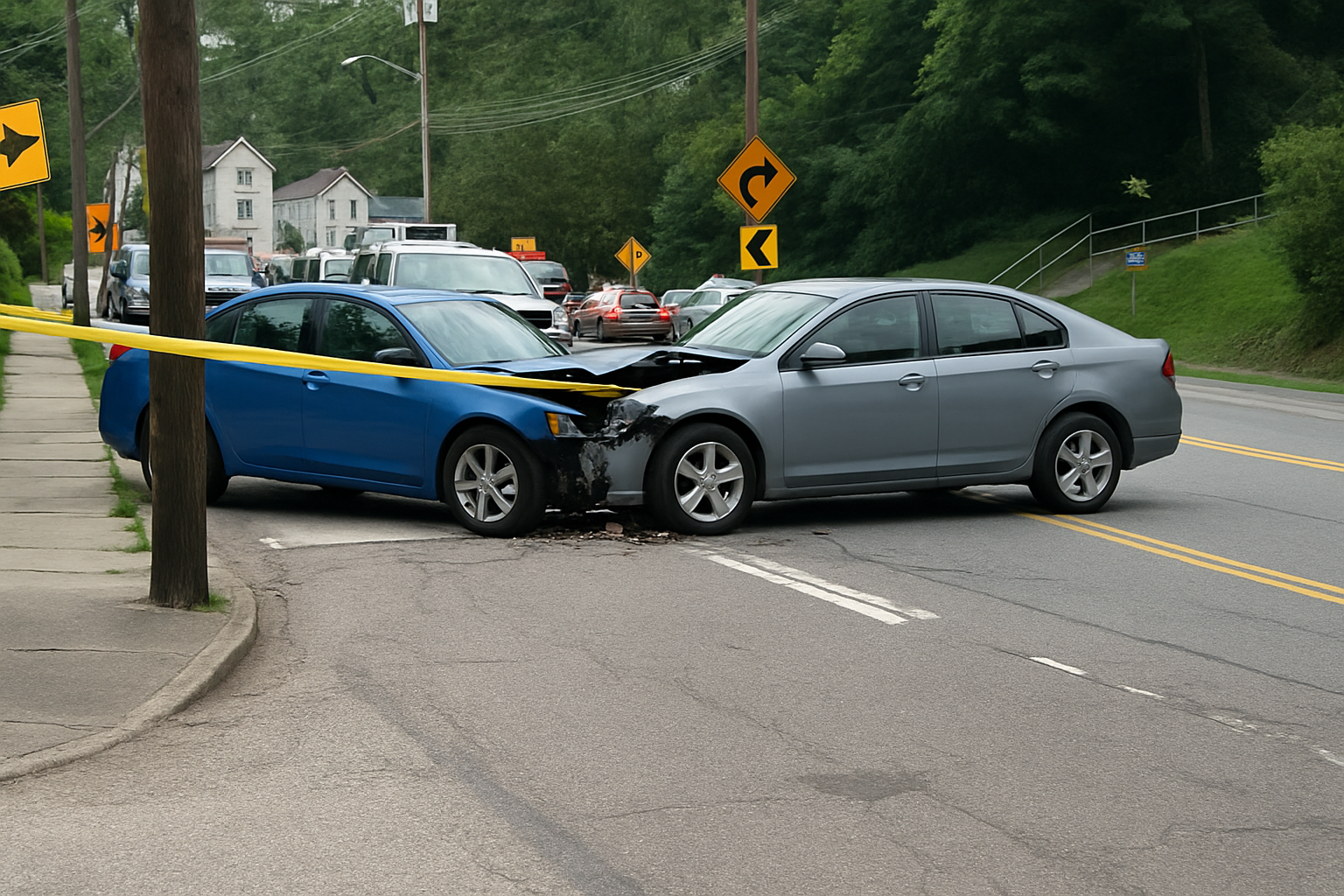
A single violation in Long Beach can raise your insurance premium 20–40%, but California's 3-year lookback period and Long Beach's competitive carrier market mean rates start dropping before your record clears — if you know when to shop.
How Long Violations Affect Your Insurance in Long Beach
California maintains a 3-year lookback period for moving violations, meaning your speeding ticket, at-fault accident, or reckless driving citation will appear on your motor vehicle record (MVR) and influence your insurance rates for 36 months from the conviction date. Long Beach drivers should understand this timeline applies statewide — your violation follows you whether you stay in Long Beach or move to San Diego or Sacramento. The DMV assigns points at conviction, not citation, so the clock starts when you pay the fine or complete traffic school, not when the officer pulled you over.
Your insurance carrier will typically discover the violation at your next policy renewal, which means the rate increase often hits 6–12 months after the actual incident. A single speeding ticket (1 point in California) raises premiums an average of 20–30% statewide, while an at-fault accident (1 point) triggers a 30–40% increase, and reckless driving (2 points) can double your rate. These are not permanent penalties — carriers begin reducing the surcharge as the violation ages, with most offering measurable rate relief after 18–24 months even though the violation remains visible for the full 36 months.
Long Beach's insurance market differs from rural California in one critical way: carrier density. The city hosts regional non-standard carriers like Gainsco, Kemper, and Bristol West alongside national brands, and these regional players often price moderately-pointed drivers (1-2 points) more competitively than Geico or State Farm. This means Long Beach drivers can recover rates by switching carriers at the 12- or 18-month mark, well before the violation falls off their record. Most drivers wait until the 3-year mark to shop, leaving 18–24 months of savings on the table. California's SR-22 requirements non-standard auto insurance
California Point System and Long Beach Enforcement Patterns
California operates a negligent operator point system: 4 points in 12 months, 6 points in 24 months, or 8 points in 36 months triggers a license suspension. Most moving violations — speeding, running a red light, unsafe lane change — carry 1 point. At-fault accidents assign 1 point. Reckless driving, DUI, and hit-and-run violations carry 2 points. Long Beach drivers do not accumulate points faster than drivers in other cities, but Long Beach Police Department and CHP enforcement on the 405, 710, and Pacific Coast Highway means ticket volume is higher than in suburban areas.
Points fall off your DMV record 36 months from the violation date, but insurance surcharges begin declining before that. Most carriers apply a full surcharge for the first 12 months, reduce it by 25–50% between months 13–24, and reduce it further or eliminate it entirely after 24 months. This is not a DMV rule — it is a carrier underwriting practice, and it varies significantly by insurer. Long Beach drivers with 1–2 points should not wait for their record to clear before shopping; the competitive non-standard market means you can often find a carrier willing to offer a lower rate once the violation is 18 months old.
California allows traffic school once every 18 months to mask a 1-point violation from your insurance record, though the point still appears on your DMV record for negligent operator tracking. If you completed traffic school for your ticket, your insurer should not surcharge you — but you must confirm the violation shows as confidential on your MVR. Long Beach drivers who skipped traffic school or received a second ticket within 18 months do not have this option and must ride out the full surcharge period.
Rate Recovery Timeline by Violation Type in Long Beach
A 1-point speeding ticket in Long Beach typically raises your premium 20–30% at the first renewal after discovery. If your rate was $180/month before the ticket, expect $216–234/month for the first 12 months. At 12 months post-violation, your rate may drop 10–15% with your current carrier at renewal, or you can shop and find a non-standard carrier offering rates closer to your pre-violation baseline — often $190–210/month. By 24 months, most carriers reduce the surcharge to 5–10%, and by 30–36 months, the violation has minimal or no impact.
An at-fault accident (1 point) triggers a 30–40% increase, meaning that same $180/month policy jumps to $234–252/month. Long Beach drivers with an at-fault accident should expect to stay in this rate band for 18–24 months before seeing meaningful relief. Shopping at the 18-month mark is critical — regional carriers like Bristol West and Acceptance often price at-fault accidents less aggressively than State Farm or Allstate, and you may recover $30–50/month by switching even though the accident remains on your record.
Reckless driving (2 points) or multiple violations compound differently. Two 1-point violations within 12 months can double your rate or trigger a non-renewal from standard carriers. Long Beach drivers in this category often move into assigned risk (California Automobile Assigned Risk Plan, or CAARP) or non-standard markets immediately. Expect to pay $300–450/month for minimum liability coverage for 18–24 months, with gradual rate relief available after 24 months if no new violations occur. The 36-month lookback still applies, but the practical rate recovery window is 24–30 months if you shop aggressively.
Which Carriers Write Long Beach Drivers With Points
Standard carriers like Geico, State Farm, and Progressive will insure Long Beach drivers with a single 1-point violation, but they surcharge heavily and rarely offer competitive rates until the violation is 24+ months old. Long Beach drivers with 1–2 points recover rates faster by shopping non-standard carriers immediately after the first renewal increase. Kemper, Bristol West, Acceptance, Gainsco, and Infinity specialize in moderately-impaired records and often quote 15–25% below standard carriers for the same coverage once the violation is 12–18 months old.
Long Beach's proximity to Los Angeles and Orange County means you have access to regional non-standard carriers that do not operate statewide. This is a material advantage — drivers in Fresno or Redding face fewer options and higher non-standard rates. If your current carrier non-renewed you or raised your rate above $250/month for minimum liability, you should compare at least three non-standard carriers at every renewal. Rate variance in the non-standard market is extreme: the same driver with the same violation can receive quotes ranging from $210/month to $380/month depending on carrier appetite and underwriting model.
Long Beach drivers with 3+ points or multiple at-fault accidents will likely need to enter CAARP, California's assigned risk pool. CAARP assigns you to a carrier and sets rates based on a state formula; you cannot shop for a better rate within CAARP. Expect to stay in CAARP for 12–24 months, then reenter the voluntary market once your oldest violation passes the 24-month mark. This is not permanent — CAARP is a bridge, not a destination. liability insurance
Actions That Accelerate Rate Recovery in California
California allows you to attend traffic school once every 18 months to keep a 1-point violation confidential from insurers. If you have not yet used this option and received a ticket within the last 18 months, completing traffic school prevents the rate increase entirely. You must request traffic school from the court before your deadline (usually within 90 days of the citation), pay the fine and traffic school fee, and complete an approved course. Once the court marks the violation confidential, it will not appear on your insurance MVR. This is the single highest-leverage action available to California drivers with a recent ticket.
If you already used traffic school or the violation is on your record, shopping carriers at 12-month intervals is your primary rate recovery tool. Long Beach's non-standard carrier density means you can realistically find a 10–20% rate reduction every 12 months as your violation ages, even though it remains on your record for 36 months. Set a calendar reminder for 11 months after each policy start date and run quotes with at least three non-standard carriers. Rate compression in Long Beach begins at 12–18 months, not 36 months, but only if you actively shop.
Maintaining continuous coverage is non-negotiable. A lapse in coverage — even for 24 hours — will raise your rate more than the underlying violation. California carriers surcharge lapses for 36 months, and a lapse combined with a violation can push you into CAARP or make you uninsurable in the voluntary market. If cost is an issue, drop collision and comprehensive before you drop liability. Long Beach drivers must carry California's minimum liability limits (15/30/5), and driving uninsured after a violation exposes you to license suspension and SR-22 requirements if caught. SR-22 is not required for standard point violations in California — speeding tickets and at-fault accidents do not trigger SR-22 unless they result in a suspension, DUI, or court order.
When to Expect Your Rate to Normalize After a Violation
Long Beach drivers with a single 1-point violation should expect rates to normalize within 24–30 months if they shop carriers at 12 and 18 months. Your rate will not return to your pre-violation baseline immediately when the violation falls off at 36 months — most of the rate recovery happens between months 12 and 30 as carriers reduce surcharges and you switch to more competitive underwriters. If you stay with the same carrier for the full 36 months, you will overpay by an average of $600–900 compared to a driver who shops annually.
Drivers with 2 points or an at-fault accident should expect a 30–36 month recovery timeline, with meaningful rate relief starting at 24 months. If you accumulated 3+ points or multiple violations, expect to remain in non-standard or assigned risk markets for 36–48 months. The oldest violation falls off at 36 months, but carriers will still see the second violation until it also reaches 36 months from its conviction date. This is why spacing violations matters — two tickets 18 months apart means your rate stays elevated for 54 months total, not 36.
California's 3-year lookback is not negotiable, but your insurance rate trajectory is entirely within your control. Long Beach drivers who treat their violation as a permanent record wait too long to shop and pay thousands more than necessary. Violations are temporary. Rates recover. The timeline depends on how aggressively you shop and how well you understand the non-standard carrier market in your city.