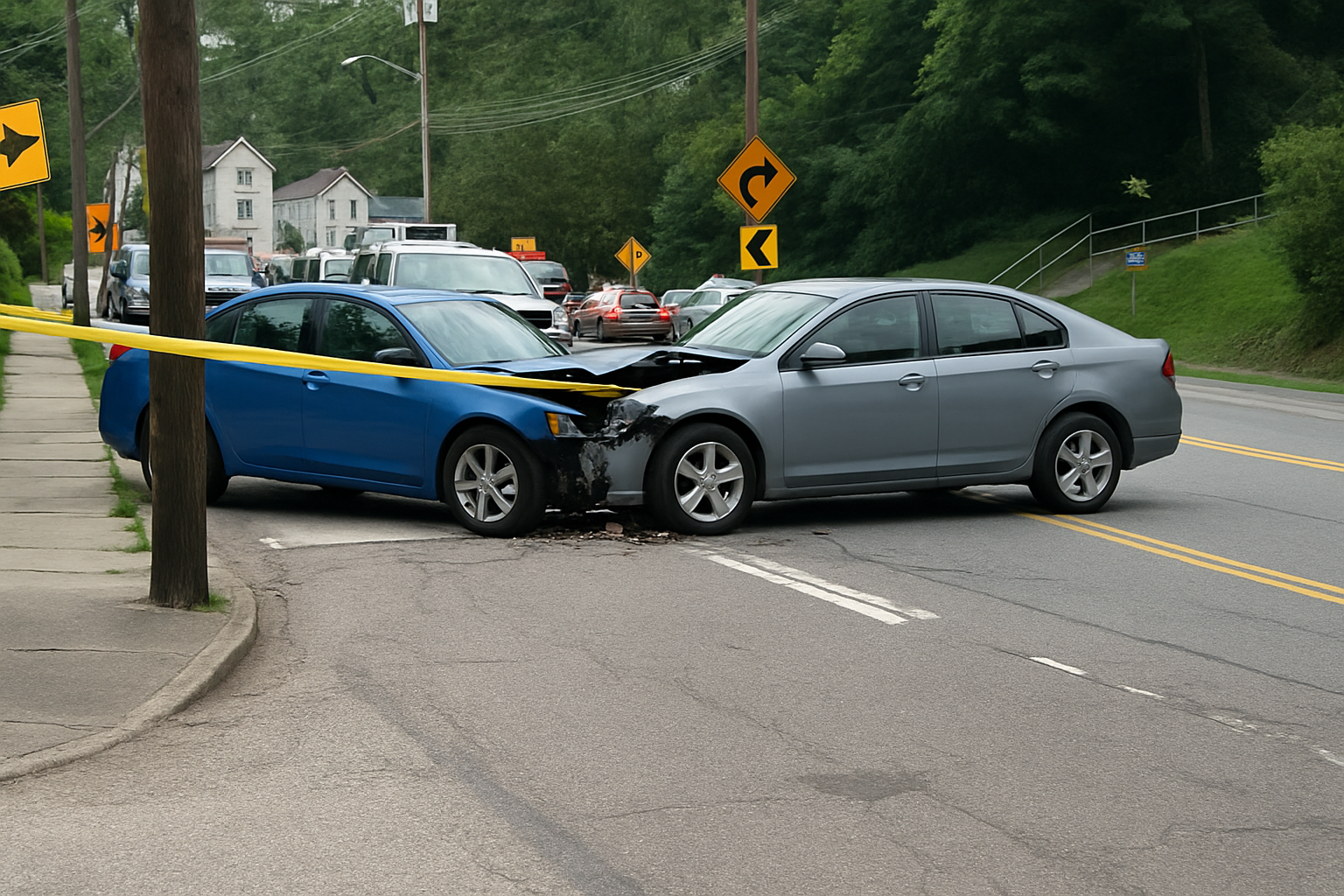
You got a ticket or had an accident in Madison and your rates spiked. Here's the timeline for rate recovery, when points fall off your Wisconsin record, and which carriers actually write drivers with violations at competitive premiums.
When Points Fall Off Your Wisconsin Record vs. When Your Rates Drop
Wisconsin operates on a 12-month point system for most violations. A speeding ticket 10–19 mph over the limit adds 3 points that fall off your record after 12 months from the conviction date. More serious violations like reckless driving (6 points) clear after 24 months. But here's the disconnect: while your DMV record clears, insurance surcharges typically last 3 years for minor violations and up to 5 years for major incidents like at-fault accidents or DUIs.
This creates a recovery gap. Your Wisconsin driving record may show zero points after a year, but your insurer is still rating you on a 3-year loss history. Madison drivers often assume their rates will drop automatically once points disappear — they don't. Carriers price based on their own lookback period, not the DMV point expiration. You need to actively shop carriers once violations age past the 3-year mark, because your current insurer has no incentive to lower your premium until renewal competition forces it.
The suspension threshold in Wisconsin is 12 points in 12 months. Most single violations won't trigger suspension, but stacking tickets — two speeding citations plus a following-too-closely charge in the same year — can put you at risk. If you hit 12 points, you face a 2-month suspension. If you accumulate points again after reinstatement and reach 12 points within 12 months of the first suspension, the second suspension jumps to 4 months. This escalation is why spacing out violations matters if you're already carrying points. Wisconsin SR-22 requirements non-standard auto insurance liability insurance minimums
How Much Rates Increase After Common Violations in Madison
A single speeding ticket in Wisconsin typically increases premiums by 20–30% at your next renewal. For a Madison driver paying $1,400/year for full coverage, that's an additional $280–$420 annually. An at-fault accident with a property damage claim raises rates by 40–60%, adding $560–$840 to the same base premium. A reckless driving conviction can spike rates 70–90%, and a DUI triggers increases of 80–140% with most standard carriers — if they renew you at all.
These percentages vary by carrier. Some insurers penalize speeding tickets heavily but treat minor at-fault accidents more leniently. Others do the opposite. This is why shopping after a violation is critical: your current carrier's surcharge schedule may be punitive compared to a competitor's. Madison drivers with one speeding ticket should expect quotes from at least three carriers, because the spread between the highest and lowest quote can exceed $600/year for identical coverage.
Wisconsin does not require SR-22 for standard point violations like speeding or following too closely. SR-22 is only mandated after specific incidents: DUI/OWI conviction, driving without insurance, accumulating enough points to trigger suspension, or certain license reinstatements after revocation. If you received a ticket but were not ordered by a court or the Wisconsin DMV to file SR-22, you do not need it. Confusion on this point leads some drivers to overpay for SR-22 policies they don't legally require.
The 3-Year Rate Recovery Timeline for Madison Drivers
Most carriers in Wisconsin use a 3-year rating window for violations. That means a speeding ticket from April 2022 will stop affecting your premium at your first renewal after April 2025. The surcharge doesn't taper — it applies in full for three years, then drops off entirely. Some carriers extend this to 5 years for major violations like DUI or reckless driving, and at-fault accidents with bodily injury claims often carry 5-year surcharges as well.
You can accelerate perceived recovery by shopping aggressively at the 3-year mark. Your current insurer may keep you in a non-standard or assigned risk tier even after the violation ages out, because their internal underwriting model still flags you as elevated risk. A competitor viewing your record fresh may slot you into a standard tier immediately. Madison drivers should mark their calendar for 36 months post-conviction and request quotes from at least five carriers that month. The rate drop from switching can be 30–50% compared to staying with your current insurer.
Wisconsin allows insurance companies to non-renew policies for any reason with 60 days' notice, except during the first 60 days of a new policy. If your insurer decides you're too high-risk after a violation, they'll wait until renewal to drop you. This is why maintaining continuous coverage is critical — a lapse after a violation will compound your risk profile and push you into the non-standard market with rates 50–100% higher than standard.
Which Carriers Write Drivers With Points in Madison
Not all carriers treat violations the same way. GEICO and Progressive are the most accessible for drivers with one or two speeding tickets, often offering rates only 15–25% above standard. State Farm and American Family tend to be more restrictive, surcharging heavily or non-renewing after multiple violations. Dairyland and The General specialize in non-standard risk and will write policies for drivers with multiple violations or recent at-fault accidents, but expect premiums 40–80% higher than standard market rates.
Madison drivers with 3–6 points should focus on Progressive, GEICO, and National General first. If those decline or quote above $2,500/year for minimum liability, move to Dairyland or Bristol West. If you're carrying 7+ points or have a recent DUI, you'll likely need an SR-22 specialist like The General, Acceptance, or a broker who can access non-standard carriers like Gainsco or Freeway.
Local independent agents in Madison often have access to regional carriers like Integrity, Foremost, or Auto-Owners that don't advertise nationally but write non-standard risk at competitive rates. These carriers won't appear in online comparison tools. If you've been quoted $3,000+/year by a direct writer, call an independent agent who specializes in high-risk or non-standard auto — they may find you coverage $500–$1,000/year cheaper through a carrier you've never heard of.
Steps to Lower Your Premium While Violations Are Still on Your Record
Wisconsin offers a traffic safety course option that can prevent points from appearing on your record if you complete it before your court date and the judge approves the deferral. This is not automatic — you must request it, and it's typically only available once every three years for minor violations. If granted, the ticket still counts as a conviction on your criminal record, but zero points are assessed, which means many insurers won't surcharge you. Check with the Dane County court clerk before paying the fine to see if you're eligible.
If points are already on your record, the highest-leverage move is raising your deductible. Increasing your collision and comprehensive deductibles from $500 to $1,000 can reduce your premium by 10–15%, offsetting part of the violation surcharge. Dropping collision and comprehensive entirely — if your car is worth under $5,000 and paid off — can cut your premium in half, though you'll have no coverage for damage to your own vehicle.
Review your coverage limits and drop anything optional you don't legally need. Wisconsin requires only $50,000 bodily injury per accident and $10,000 property damage — bare minimum liability. If you're carrying $100,000/$300,000 limits to satisfy a lender or personal preference, dropping to state minimums can save $300–$600/year. This increases your financial exposure in a serious accident, but for drivers prioritizing affordability after a violation, it's a common short-term strategy until rates recover.
Finally, bundle your auto policy with renters or homeowners insurance if you don't already. Most carriers offer a 10–20% discount for multi-policy customers, and this discount applies even to surcharged policies. Madison renters can often get a $15–$20/month renters policy and save $40–$60/month on auto through bundling — a net savings of $25–$45/month.
What Happens If You Accumulate More Points Before Recovery
If you receive a second violation while still carrying points from the first, your situation escalates quickly. Wisconsin's 12-point suspension threshold applies to a rolling 12-month window. Two speeding tickets (3 points each) plus a failure to yield (4 points) within 12 months puts you at 10 points — two points away from suspension. Add one more minor violation and your license is suspended for 2 months, during which you cannot legally drive and your insurance will either cancel or skyrocket.
After a suspension, you'll need to pay a $60 reinstatement fee to the Wisconsin DMV and prove financial responsibility, which often requires SR-22 filing for 3 years. SR-22 itself costs $15–$50 to file, but the real cost is the policy underneath it — non-standard carriers writing SR-22 policies in Wisconsin charge $1,800–$3,500/year for minimum liability, compared to $600–$1,200 for a clean-record driver.
If you're approaching the 12-point threshold, consider hiring a traffic attorney to contest your next ticket or negotiate a non-point plea. Attorney fees in Madison for traffic cases run $300–$800, but avoiding 3–6 points can prevent suspension and keep you in the standard insurance market, saving thousands over three years. The math heavily favors paying the attorney for drivers already carrying 6+ points.