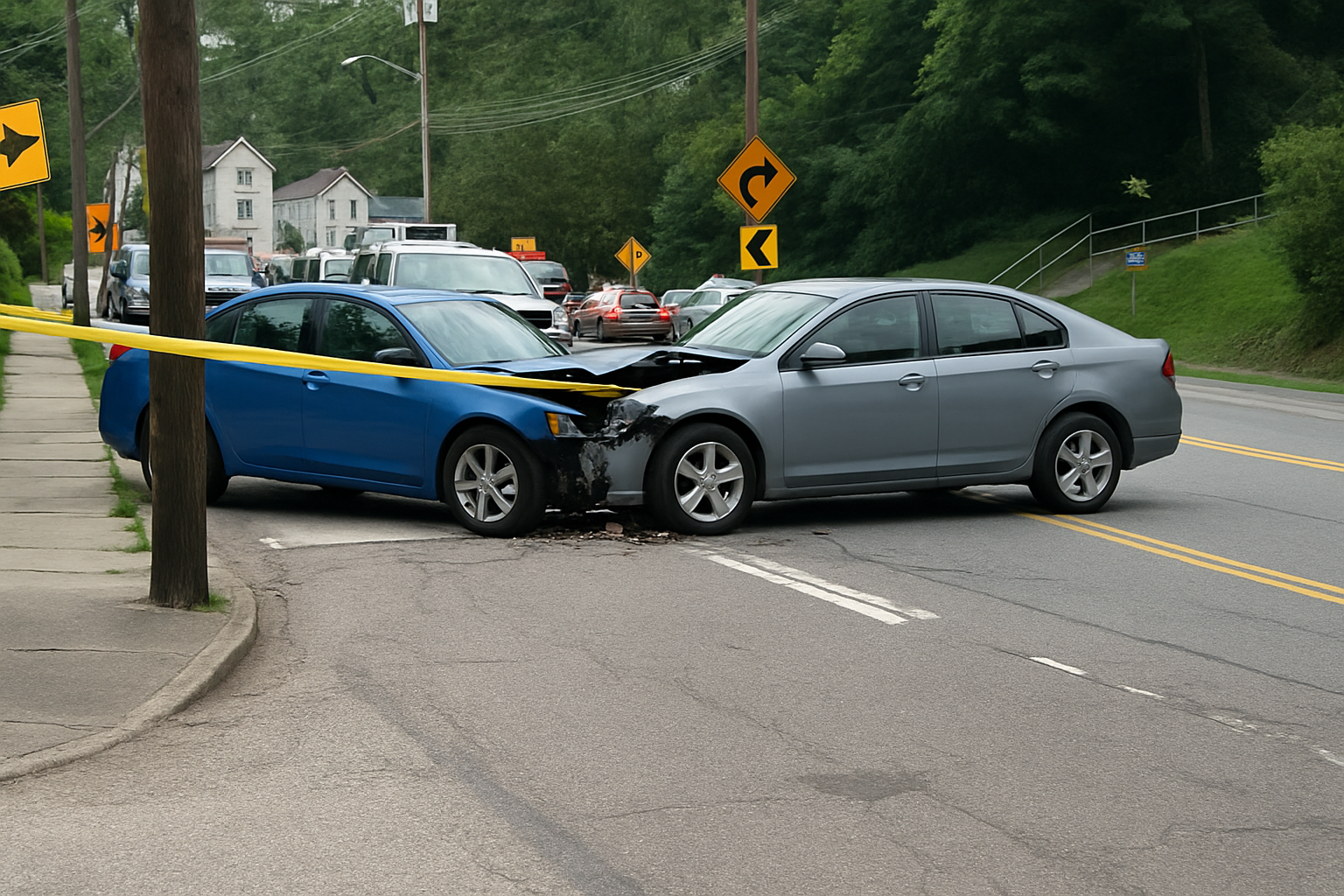
Memphis drivers with points from violations face 25–75% rate increases that persist for 3–5 years. The recovery timeline depends on violation severity, carrier response, and whether you proactively shop or wait for your current insurer to forgive points.
How Violations Affect Memphis Driver Insurance Rates
A single speeding ticket in Memphis typically raises your premium 15–25% at renewal, while a reckless driving citation or at-fault accident can trigger increases of 40–75%. Tennessee assigns points to most moving violations — 1 to 8 points depending on severity — but insurers set rates based on their own risk models, not the state point total. This means two Memphis drivers with identical 3-point speeding tickets can see wildly different premium increases depending on their carrier's underwriting rules and claims history.
Most major carriers increase rates immediately at the next policy renewal after a violation appears on your Tennessee driving record, which happens within 30–60 days of your ticket or court disposition. The rate increase stays in effect for 3–5 years depending on the violation type and the carrier's lookback period. Tennessee removes points from your DMV record faster than insurers remove the violation from your rate calculation: a speeding ticket drops off the state point system after 1 year, but insurers typically surcharge for it for 3 years.
Memphis drivers often assume their rates will automatically drop once points fall off the Tennessee DMV record, but insurers use the violation date, not the point total, to determine surcharges. Your carrier does not check your point balance — they pull your full driving history at renewal and apply surcharges based on violations that occurred within their lookback window. This disconnect is why proactive carrier shopping matters more than waiting for your record to clean itself. Tennessee SR-22 requirements non-standard auto insurance liability insurance
Tennessee Point System and Insurance Lookback Periods
Tennessee assigns points for most moving violations: 1 point for minor infractions like improper lane change, 3 points for speeding 6–15 mph over the limit, 4 points for speeding 16–25 mph over, 6 points for speeding 26+ mph over, and 8 points for reckless driving. If you accumulate 12 points within 12 months, the state suspends your license. Points remain on your Tennessee driving record for 1 year from the violation date, but the underlying conviction stays visible to insurers for 3–7 years depending on severity.
Insurers in Tennessee do not use the state point system to set rates — they apply their own surcharge schedules based on the violation type and how long ago it occurred. Most carriers in Memphis use a 3-year lookback for standard moving violations, a 5-year lookback for major violations like reckless driving or DUI, and a 3-year lookback for at-fault accidents. This means your speeding ticket will affect your rate for roughly 36 months even though Tennessee removes the points after 12 months.
The practical result for Memphis drivers: your state driving record and your insurance risk profile operate on different timelines. You can have zero points on your Tennessee DMV record but still carry a surcharge on your premium because the violation date falls within your carrier's lookback window. This is why requesting a copy of your driving record from the Tennessee Department of Safety does not tell you when your rates will drop — only your carrier's underwriting guidelines determine that.
Rate Recovery Timeline by Violation Type
A standard speeding ticket (1–4 points) typically triggers a 15–25% rate increase that persists for 36 months from the violation date. Memphis drivers can expect their premium to return to baseline at the 3-year mark if no additional violations occur during that period. Some carriers reduce the surcharge incrementally — applying a 25% increase in year one, 15% in year two, and 10% in year three — but most hold the full surcharge until the violation ages out of the lookback window.
Reckless driving, hit-and-run, or driving on a suspended license produce 40–75% rate increases that last 5 years with most carriers. These violations move many Memphis drivers into the non-standard insurance market, where premiums run 50–150% higher than standard rates. Drivers in this category should expect limited carrier availability and elevated premiums for the full 5-year period, with meaningful rate relief only appearing after the 60-month mark.
At-fault accidents with a claim payout follow a similar 3-year surcharge timeline, with increases ranging from 20–50% depending on claim severity and your prior history. Memphis drivers with a single at-fault accident and no prior violations typically stay in the standard market but face higher premiums until the accident drops off the 3-year lookback. A second at-fault accident within 3 years often triggers non-standard placement and compounds the rate increase, sometimes doubling your baseline premium.
No major carrier in Tennessee offers accelerated forgiveness programs that shorten the surcharge period if you remain violation-free. Your violation affects your rate for the full lookback period regardless of your driving behavior after the ticket. The only exception: some carriers offer accident forgiveness as an optional endorsement, which waives the surcharge for your first at-fault accident if you purchased the coverage before the loss occurred.
How to Lower Rates Faster in Memphis
The highest-leverage action Memphis drivers can take is shopping carriers at the 12-month and 36-month marks after a violation. Different insurers weight violations differently in their underwriting models: one carrier may apply a 30% surcharge for a speeding ticket while another applies 15% for the same violation. Shopping at 12 months captures carriers who offer competitive rates to drivers with a single recent violation, and shopping again at 36 months captures standard-market carriers who will write you once the violation ages out of their lookback.
Tennessee allows drivers to complete a state-approved defensive driving course to remove up to 2 points from their DMV record, but this does not reduce your insurance surcharge. The violation conviction remains visible to insurers even if the points are reduced, and most carriers base their surcharge on the conviction, not the point total. Some insurers offer a 5–10% discount for completing a defensive driving course, but this discount applies separately from the violation surcharge and does not offset the rate increase in most cases.
Memphis drivers should avoid allowing coverage to lapse while rates are elevated. A lapse in coverage adds a separate surcharge of 20–50% and dramatically reduces carrier availability, compounding the cost impact of the underlying violation. If your current premium is unaffordable, switching to state minimum liability limits or raising your deductible keeps you continuously insured at a lower monthly cost while you wait for the violation to age out.
Raising your deductible from $500 to $1,000 typically reduces your collision and comprehensive premium by 10–15%, which partially offsets a violation surcharge. Dropping optional coverages like rental reimbursement or roadside assistance saves an additional $50–150 annually. These adjustments do not remove the surcharge, but they lower your total premium while the violation remains on your record.
Memphis Carrier Availability and Non-Standard Market
Memphis drivers with a single standard violation — one speeding ticket or one at-fault accident — typically remain eligible for coverage with major carriers like State Farm, GEICO, Progressive, and Allstate, though premiums increase at renewal. Drivers with multiple violations within 3 years, a reckless driving charge, or a combination of violations and at-fault accidents often lose access to standard-market carriers and must seek coverage from non-standard insurers.
Non-standard carriers operating in Memphis include The General, Direct Auto, Bristol West, Acceptance, and National General. These insurers specialize in higher-risk profiles and accept drivers that standard carriers decline, but premiums run 50–150% higher than standard-market rates for comparable coverage. Non-standard policies often require higher down payments and impose stricter cancellation rules, including immediate policy termination for late payment.
Shopping multiple non-standard carriers is critical for Memphis drivers in this market because rate variation is extreme. One non-standard insurer may quote $250/month for minimum liability while another quotes $180/month for the same driver and coverage. Non-standard carriers use proprietary risk models that weight violations differently, and there is no industrywide standard for how much a specific violation should increase your premium.
Memphis drivers should re-shop the standard market every 12 months even if currently placed with a non-standard carrier. As violations age and fall outside the 36-month lookback window, standard carriers become accessible again, and premiums drop significantly. Most drivers who enter the non-standard market after a violation can return to the standard market within 3 years if they avoid additional violations during that period.
When SR-22 Is Required in Tennessee and What It Costs
Tennessee does not require SR-22 for standard point violations like speeding tickets or at-fault accidents. SR-22 is required only for specific legal offenses: DUI, reckless driving with injury, driving without insurance, driving on a suspended or revoked license, or accumulating 12 points in 12 months leading to a suspension. If your violation does not fall into one of these categories, you do not need SR-22 and should not be quoted SR-22 rates.
If you do need SR-22 in Memphis, your insurer files the certificate electronically with the Tennessee Department of Safety. The SR-22 filing fee is typically $15–50 depending on the carrier, and Tennessee requires you to maintain continuous SR-22 coverage for 3 years from the date the requirement is imposed. Any lapse in coverage during the 3-year period resets the clock, and the state suspends your license until you refile.
SR-22 itself does not increase your insurance premium — the underlying violation that triggered the SR-22 requirement is what raises your rate. However, the fact that you need SR-22 limits your carrier options, as not all insurers offer SR-22 filings in Tennessee. Carriers that commonly write SR-22 policies in Memphis include Progressive, The General, Bristol West, and National General.
Memphis drivers who need SR-22 should clarify the filing period with the Tennessee Department of Safety or their attorney, as the 3-year requirement begins from the date the state imposes the requirement, not the date of the violation. Filing SR-22 longer than legally required costs you nothing extra but keeps you in a higher-risk insurance pool unnecessarily, so confirming your removal date matters.