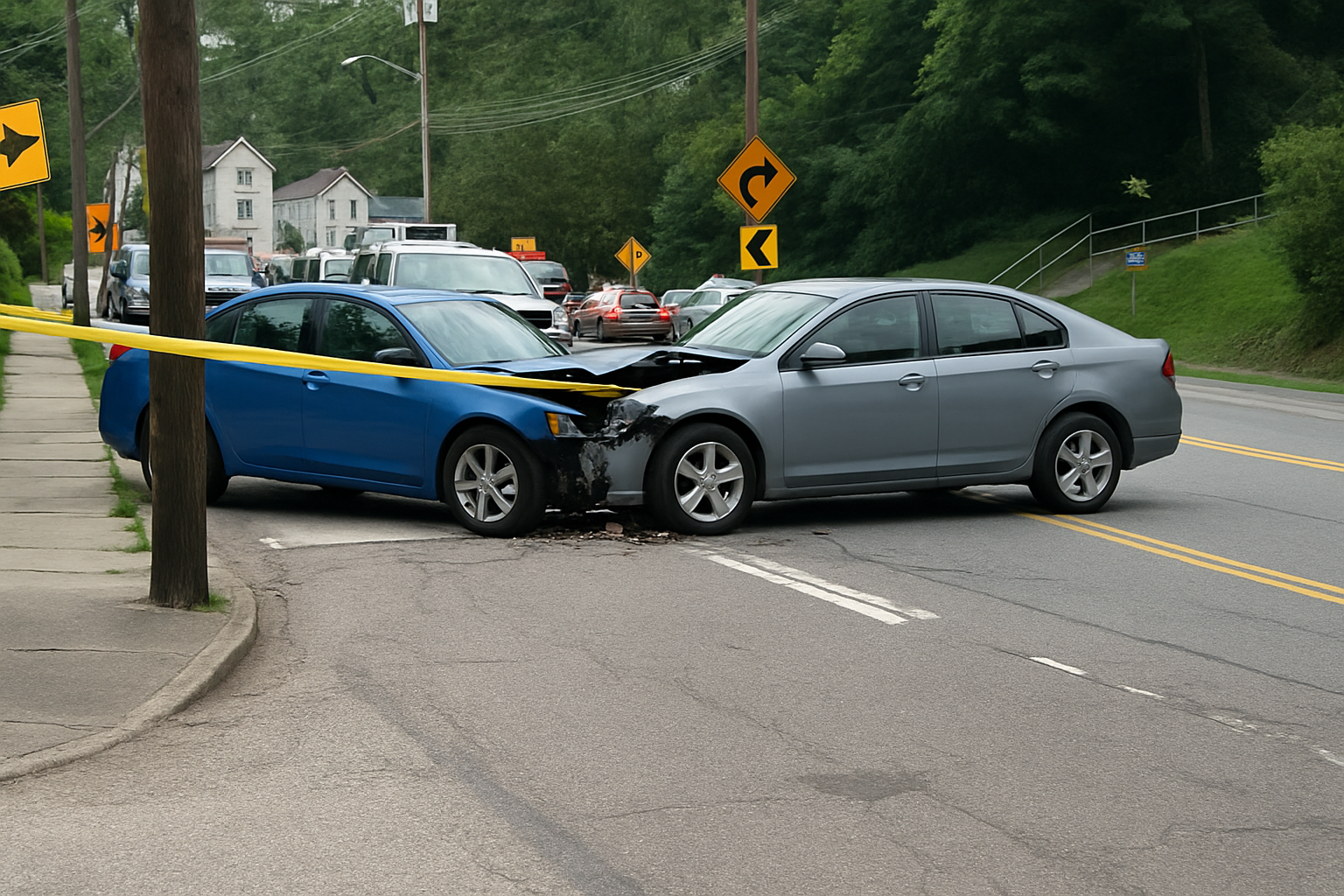
Minneapolis drivers with points face 20–60% rate increases, but most see premiums normalize within 3 years. Here's the timeline for recovery and which carriers write discounted policies after violations.
How Points and Violations Affect Rates in Minneapolis
Minnesota operates a point system where violations add points to your driving record, but insurance companies set rates based on the violation itself, not the point total. A speeding ticket 10–14 mph over the limit typically raises premiums 15–25%, while an at-fault accident can trigger a 30–60% increase. These percentages vary by carrier and your location within the metro — drivers in downtown Minneapolis and inner suburbs often see smaller increases than those in exurban areas, because carriers price based on claim density and loss history in your ZIP code.
The Minnesota Department of Public Safety assigns points that stay on your driving record for five years, but most insurers only surcharge violations for three years. This creates a gap: your record still shows the points, but the rate penalty typically drops off earlier. A single speeding ticket adds four points; an at-fault accident adds six. If you accumulate 12 or more points within 12 months, the state suspends your license — but most drivers with one or two violations stay well below this threshold.
SR-22 insurance is not required for standard point violations like speeding tickets or minor at-fault accidents in Minnesota. You only need SR-22 if you're convicted of DUI, driving without insurance, repeat violations within a short window, or if the court or DMV specifically orders it. Most Minneapolis drivers with points do not need SR-22 — they just need a carrier willing to write them at a competitive rate. Minnesota SR-22 requirements non-standard auto insurance
Rate Recovery Timeline: What to Expect Year by Year
The first year after a violation is the most expensive. Expect your premium to jump immediately at renewal — most carriers apply the surcharge within 30–60 days of the violation appearing on your record. If you're paying $150/month before the ticket, a 20% increase puts you at $180/month, or an extra $360 per year. That surcharge stays in place for the full rating period, which is why shopping for a new carrier immediately after a violation often saves more than waiting for your current insurer to "forgive" it.
By year two, some carriers begin to reduce the surcharge if you've had no additional violations. The original 20% penalty might drop to 10–15%, depending on the insurer's rating structure. This is when comparison shopping delivers the best results — carriers that specialize in non-standard risk often offer better rates in the second and third year than standard carriers who maintain full surcharges for the entire three-year window.
Most violations stop affecting your rate entirely after three years, even though they remain on your Minnesota driving record for five. After 36 months with no new incidents, you're typically eligible for standard rates again. Carriers verify this through your Motor Vehicle Report (MVR), which they pull at each renewal. If you've completed a defensive driving course or maintained continuous coverage, some insurers offer additional discounts that accelerate the recovery timeline.
Which Minneapolis Carriers Write Discounted Policies After Violations
Not all carriers price violations the same way. Standard insurers like State Farm and Allstate maintain surcharges for the full three-year period and rarely negotiate. Non-standard and regional carriers — including Progressive, The General, and Dairyland — often offer lower rates for drivers with points because they specialize in this market segment. These carriers price violations less aggressively in the first 12–24 months, which is when the rate gap is widest.
Progressive uses a tiered system that treats first-time violations more leniently than repeat offenses, and they price metro ZIP codes separately from Greater Minnesota. If you have a single speeding ticket and no other violations, Progressive often delivers quotes 15–25% lower than captive carriers in the first year post-violation. Dairyland writes policies for drivers with multiple violations and at-fault accidents, though their rates are typically higher than Progressive — they're a fallback option if standard carriers decline coverage entirely.
Local independent agents in Minneapolis have access to surplus lines carriers that don't advertise directly to consumers. These include Bristol West, Kemper, and National General. Surplus lines policies cost more upfront but provide coverage when standard markets won't write you. If you've been non-renewed or declined, an independent agent can place you with a surplus carrier immediately, then move you to a standard market once your violation ages past the two-year mark.
Defensive Driving Courses and Point Reduction in Minnesota
Minnesota does not allow drivers to remove points from their record by completing a defensive driving course — points stay for the full five-year period regardless of any coursework. However, many insurers offer a 5–10% premium discount if you complete an approved course, even if the points remain. This discount applies for three years in most cases, which can offset a portion of the violation surcharge.
The Minnesota Department of Public Safety maintains a list of approved defensive driving courses, including online options that take 4–6 hours to complete. Courses cost $25–$60, and you must submit the completion certificate to your insurer to activate the discount. Not all carriers honor this discount — check with your current insurer before enrolling. If they don't offer it, that's another reason to shop for a carrier that does.
Some insurers also offer accident forgiveness programs, which waive the surcharge for your first at-fault accident if you've been with the carrier for a minimum period (usually 3–5 years) and have no prior violations. This doesn't remove points from your record, but it prevents the rate increase. Accident forgiveness is rarely available to new customers — you need to establish the relationship before the violation occurs. If you're already with a carrier that offers it and you haven't used it yet, confirm your eligibility before your next renewal. liability insurance minimums
When to Shop and How to Compare Carriers
Shop for a new policy immediately after a violation appears on your record — don't wait for renewal. Carriers price violations differently, and the insurer charging you the least before the ticket is rarely the cheapest after. Run quotes with at least three carriers: one standard market (Progressive, GEICO), one non-standard specialist (The General, Dairyland), and one independent agent who can check surplus lines. Request quotes for identical coverage limits so you're comparing accurately.
Minnesota requires minimum liability limits of 30/60/10 ($30,000 per person, $60,000 per accident for bodily injury, $10,000 for property damage). If you're financing a vehicle, your lender requires comprehensive and collision. Don't drop coverage types to lower your premium — if you cause another accident without adequate liability, you'll face out-of-pocket costs that exceed any savings. Instead, raise your deductible from $500 to $1,000 if you have the cash reserves to cover it. This typically reduces premiums by 10–15%.
Shop again every 12 months, even if your rate doesn't change. Carrier appetite for non-standard risk shifts constantly, and an insurer that quoted high in year one may offer the best rate in year two. Set a calendar reminder for 30 days before each renewal and run new quotes. Most drivers with violations find that switching carriers at least once during the three-year surcharge window saves $400–$800 total.
What Happens If You Get Another Violation During Recovery
A second violation during the three-year recovery window resets the surcharge clock and compounds the rate increase. If your first ticket triggered a 20% increase and you get another before the surcharge expires, expect the combined penalty to reach 40–60%. Some carriers non-renew policies after a second violation — they'll allow you to finish your current term, but they won't offer renewal. This forces you into the non-standard market, where premiums are 50–100% higher than standard rates.
If you accumulate 12 or more points within 12 months, Minnesota suspends your license for 30 days. After the suspension, you'll need to file proof of insurance (Form SR-22) for three years to reinstate. SR-22 filing adds $20–$50 per year to your premium, and the underlying violation surcharges remain in place. Avoid this by staying below the point threshold — one major violation or three minor ones within a year puts you at risk.
The best recovery strategy is straightforward: no new violations for 36 months, shop carriers annually, and maintain continuous coverage. Gaps in coverage trigger separate surcharges and disqualify you from good driver discounts. If your carrier non-renews you, place coverage with a non-standard insurer immediately — don't let the policy lapse. A lapse is worse than a violation when it comes to finding affordable coverage later.