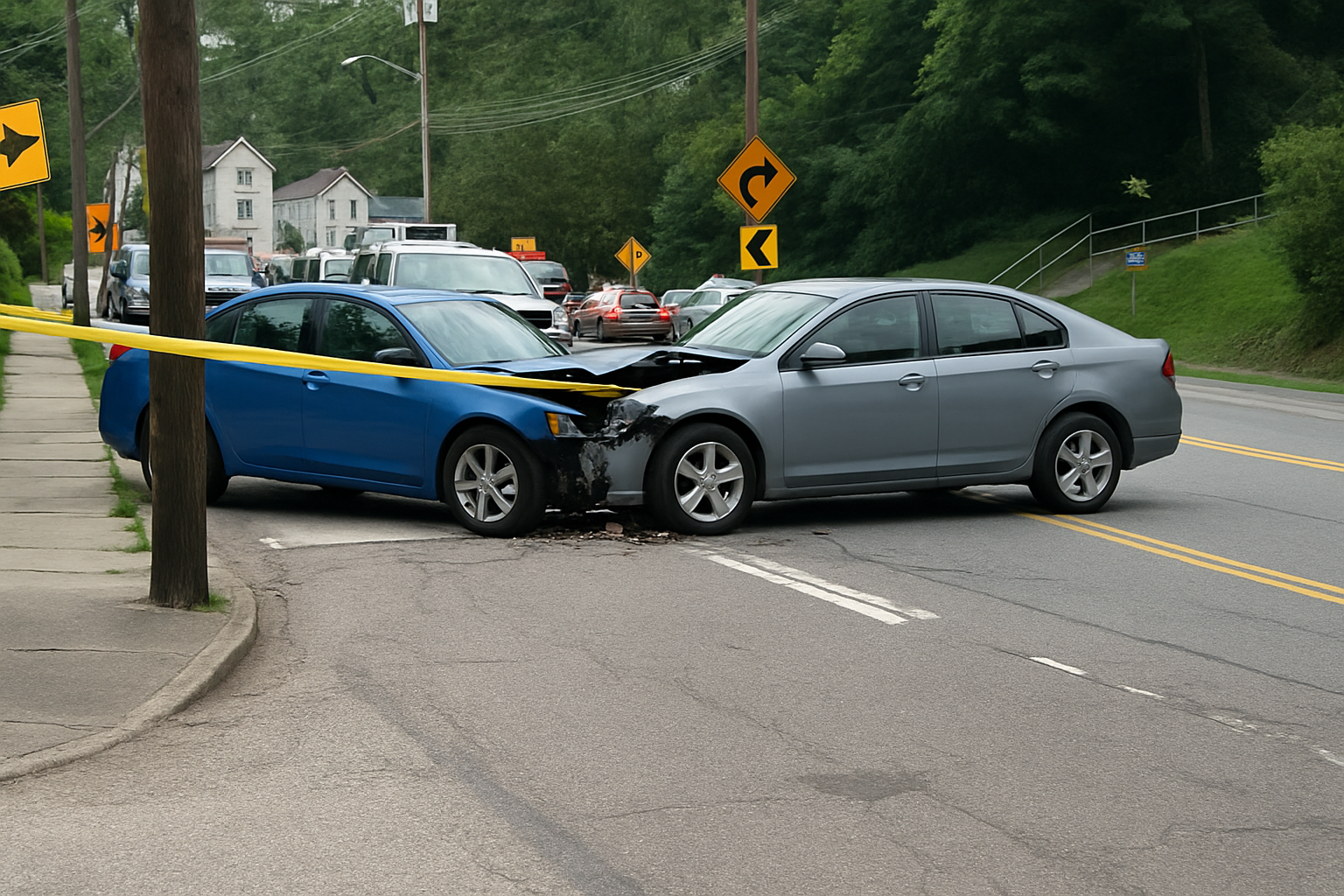
If you've picked up speeding tickets, at-fault accidents, or moving violations in Norfolk, your insurance rate jumped — but it won't stay high forever. Virginia's point system, paired with carrier shopping and proactive steps, determines how quickly your premium normalizes.
How Virginia's Point System Affects Your Norfolk Insurance Rate
Virginia assigns demerit points for moving violations and at-fault accidents, and those points directly influence your insurance premium. A single speeding ticket 10–19 mph over the limit adds 4 demerit points and typically triggers a 25–40% rate increase at your next renewal. Two tickets in a 12-month period can push that increase to 60–90%, and carriers may move you from preferred to non-standard underwriting tiers.
Virginia DMV maintains points on your driving record for two years from the conviction date, not the violation date. If you receive 12 or more points in 12 months — or 18 points in 24 months — you face a license suspension. Most Norfolk drivers with 1–2 violations stay well below the suspension threshold, but insurance carriers often react to the first ticket, not the point total. That means your rate increases before you're anywhere near losing your license.
Virginia is one of the few states offering a Safe Driver Point system that allows you to earn positive points. Completing a state-approved defensive driving course awards you 5 safe driver points, which offset negative demerit points on your DMV record. While this doesn't erase the violation from your insurance record, it demonstrates proactive risk reduction and some carriers — particularly non-standard specialists like The General, National General, and Dairyland — factor defensive driving completion into underwriting decisions. The course can be repeated once every 24 months. Virginia's SR-22 requirements
Rate Recovery Timeline for Norfolk Drivers With Points
Your insurance rate peaks immediately after a violation appears on your record, typically at your first renewal following the conviction. That initial increase holds for 12–18 months, then begins declining if you accumulate no additional violations. The rate recovery timeline depends on violation severity and your carrier's lookback period.
For a single speeding ticket or minor moving violation, expect the rate impact to diminish after 18 months and normalize fully by the 36-month mark. Most standard carriers review the most recent 36 months of driving history, so a violation older than three years has minimal to no effect on your premium. At-fault accidents follow a similar trajectory but may carry slightly longer surcharge periods — 3–5 years depending on the carrier and accident severity.
Virginia does not require SR-22 filings for standard point violations like speeding tickets, reckless driving under 20 mph over, or single at-fault accidents. SR-22 is reserved for DUI convictions, driving on a suspended license, and repeat major offenses. If you have violations but no SR-22 requirement, your recovery timeline is significantly shorter and your carrier options are far broader than drivers in the SR-22 market. state minimum liability coverage
Which Norfolk Carriers Write Policies for Drivers With Points
Standard carriers — State Farm, GEICO, Allstate — often raise rates sharply after violations and some non-renew policies after multiple tickets or accidents. Non-standard carriers specialize in exactly this profile and frequently offer lower premiums than what standard carriers charge after surcharges. In Norfolk, non-standard options include The General, Acceptance Insurance, National General, Dairyland, and Bristol West.
The General and Acceptance Insurance consistently quote competitive rates for drivers with 1–3 violations in Norfolk. Both use tiered underwriting that distinguishes between speeding tickets and more serious offenses like reckless driving or hit-and-run. National General and Dairyland excel with drivers who have violations paired with coverage lapses, a common combination that triggers non-renewal with standard carriers. Bristol West often appears as the lowest quote for drivers with exactly two at-fault accidents in a three-year period.
Carrier availability shifts as your record cleans up. At 18 months post-violation with no new tickets, you become eligible for standard carrier consideration again — but those carriers rarely reach out proactively. Shopping at the 18-month mark is critical because non-standard carriers don't automatically lower your rate as your violation ages. You have to re-shop to capture the rate drop your improved record now qualifies you for. non-standard auto insurance
Defensive Driving and Other Rate Reduction Actions in Virginia
Completing a state-approved Virginia defensive driving course adds 5 safe driver points to your DMV record and qualifies you for an insurance discount with most carriers. The course costs $25–60 online and takes 6–8 hours to complete. The safe driver points offset demerit points, which can prevent a suspension if you're approaching the 12-point threshold, and the insurance discount typically ranges from 5–10% for three years.
Virginia DMV accepts online defensive driving courses from approved providers including DriversEd.com, Driving-Tests.org, and I Drive Safely. The course completion certificate must be submitted to DMV within 60 days, and you should notify your insurance carrier immediately after DMV processes the certificate. Some carriers apply the discount automatically once DMV updates your record, but others require you to request it explicitly.
Beyond defensive driving, raising your deductible from $500 to $1,000 typically reduces your premium by 10–15%, and dropping collision or comprehensive coverage on older vehicles eliminates those premium components entirely. For Norfolk drivers with violations, bundling home and auto insurance often unlocks multiline discounts that offset part of the violation surcharge. Progressive, Nationwide, and National General offer aggressive bundling discounts for non-standard auto policies paired with renters or homeowners coverage.
When to Shop and What to Expect in Norfolk
Shop immediately after a violation if your current carrier non-renews your policy or doubles your premium. Shop again at the 18-month post-violation mark even if your rate hasn't changed, because that's when standard carriers begin reconsidering your application and non-standard carriers adjust their risk tier. Shop a third time at the 36-month mark when the violation falls off most carriers' underwriting lookback periods entirely.
Norfolk drivers with 1–2 violations should expect quotes from 3–5 carriers to vary by 40–70%. A speeding ticket that triggers a $400/year surcharge with State Farm might add only $200/year with The General or National General. The variation comes from how each carrier weights specific violation types, your age, your vehicle, and how long you've held continuous coverage. Carriers penalize coverage lapses more heavily than violations, so maintaining continuous coverage — even if it's state minimum liability — is the single most important action you can take to preserve your insurability.
At the 18-month mark, expect your best quote to drop by 15–25% compared to your initial post-violation rate, assuming no new violations. At 36 months, your rate should return to near your pre-violation baseline if you've maintained a clean record. If your rate hasn't dropped by month 18, you're with the wrong carrier and leaving money on the table every renewal cycle.
SR-22 vs. Standard Violations: What Norfolk Drivers Need to Know
Most Norfolk drivers with points do not need SR-22 filings. SR-22 is a certificate of financial responsibility required by Virginia DMV for DUI convictions, driving on a suspended license, accumulating excessive points leading to suspension, and failing to pay a court-ordered judgment. A speeding ticket, even 20 mph over, does not trigger SR-22 unless it results in a suspended license.
If you do need SR-22, the filing itself costs $15–25 with most carriers and must remain active for three years in Virginia. The real cost comes from the SR-22 insurance premium, which runs 50–150% higher than standard coverage depending on the underlying violation. Not all carriers file SR-22 in Virginia — State Farm and USAA typically non-renew SR-22 customers — so you'll work with non-standard carriers like The General, Acceptance, or Progressive.
If you have violations but no SR-22 requirement, you avoid the SR-22 filing fee, the restricted carrier pool, and the extended 3-year compliance period. Your rate recovery timeline is shorter, your carrier options are broader, and your path back to standard insurance is faster. The distinction matters because many high-risk insurance articles conflate the two, creating unnecessary alarm for drivers who have tickets but no SR-22 filing obligation.