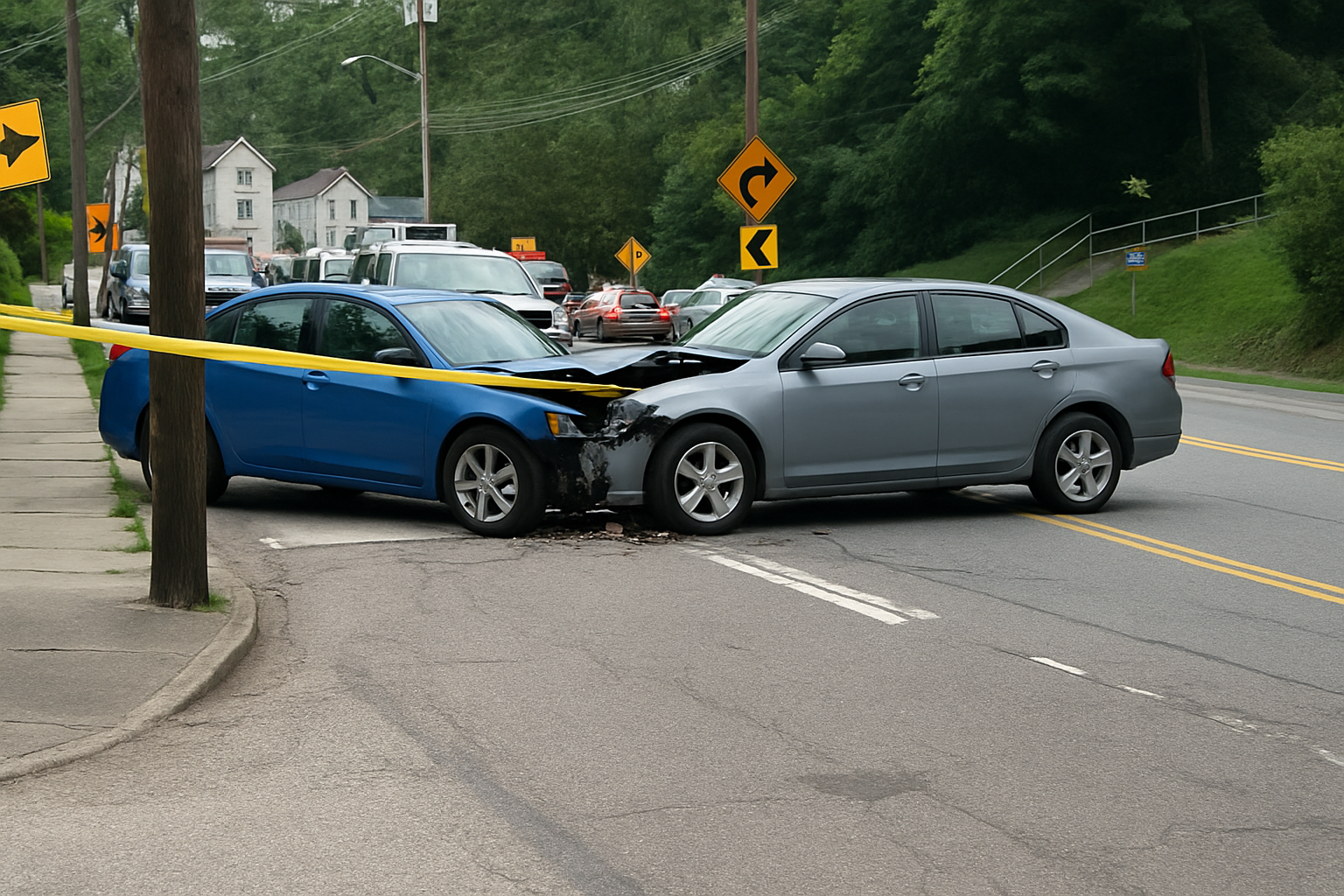
Points from speeding tickets, at-fault accidents, or moving violations push Orlando drivers into non-standard markets where premiums can double overnight. Here's the timeline for rate recovery and what you can do to accelerate it.
What Points Violations Actually Cost in Orlando
A single speeding ticket in Orlando (15 mph over) adds 3 points to your Florida license and typically raises your premium by 20–40% depending on your carrier and prior record. An at-fault accident with property damage adds 3 points and triggers a 30–60% increase. Reckless driving — 4 points — can push your premium up 60–90% or get you non-renewed entirely by standard carriers like Progressive or State Farm.
Orange County drivers pay an average of $2,100/year for full coverage with a clean record, according to 2024 Florida Office of Insurance Regulation filings. After a single violation, that same driver typically pays $2,500–2,900/year. After two violations within 12 months, you're looking at $3,200–4,000/year, and many standard carriers will not renew your policy at all.
Florida does not require SR-22 for standard point violations like speeding or at-fault accidents. SR-22 is triggered by license suspension, DUI, driving without insurance, or court order. If you have points but no suspension or DUI, you are in the non-standard market — not the SR-22 market. That distinction matters because non-standard premiums are high but not as high as SR-22 premiums, and more carriers are willing to write you. Florida SR-22 requirements non-standard auto insurance SR-22 insurance
How Florida's Point System Works and When Points Actually Affect Your Rate
Florida assigns points for moving violations, and those points stay on your driving record for 3 to 5 years depending on the violation. Speeding and most moving violations remain for 3 years. DUI-related violations and serious offenses remain for 5 years. If you accumulate 12 points in 12 months, your license is suspended for 30 days. Eighteen points in 18 months triggers a 3-month suspension. Twenty-four points in 36 months means a year-long suspension.
But here's what matters more for your insurance cost: insurers do not base your rate on Florida's point total. They pull your motor vehicle record and apply their own underwriting rules. Most carriers evaluate violations within a 3-year lookback window from the date you apply for coverage. That means a speeding ticket from July 2022 stops affecting your rate in July 2025, even though the points technically remain on your Florida record until the violation's official expiration date.
This creates a recovery window that starts sooner than most drivers expect. You don't need to wait for points to disappear from your license to qualify for better rates — you need to wait for the violation to age out of the carrier's underwriting window.
The Realistic Rate Recovery Timeline for Orlando Drivers with Points
In the first 12 months after a violation, expect no rate relief. You are in the highest-cost tier and most standard carriers will not offer you coverage at all. Non-standard carriers like Acceptance, National General, and Bristol West will write you, but premiums will reflect the fresh violation.
At the 18–24 month mark, some carriers begin reducing surcharges if you've had no additional violations. The initial 30–60% increase may drop to 15–25% above baseline. This is when proactive shopping pays off — a carrier that priced you at $3,400/year immediately after the violation may now offer $2,700/year, while a competitor you didn't quote with 18 months ago may come in at $2,400/year.
At 36 months from the violation date, most carriers stop surcharging entirely and you return to standard-tier pricing. If your driving record is otherwise clean, you can expect quotes within 5–10% of what you would have paid with no violations at all. This is the hard reset point — the violation is still on your Florida record, but it's no longer visible in the 3-year lookback most insurers use.
After 5 years, even serious violations like reckless driving or DUI-related offenses (if you did not face suspension or SR-22 requirements) drop off your Florida record entirely and you are back to clean-record pricing.
What You Can Do Right Now to Lower Your Premium
Shop aggressively, and shop repeatedly. Non-standard carriers price risk very differently. One carrier may quote you $3,200/year immediately after a violation while another quotes $2,400/year for identical coverage. This variance is larger for drivers with points than for clean-record drivers because underwriting models treat violation recency, type, and combinations differently. Get quotes from at least four carriers every six months during your recovery period.
Complete a Florida Basic Driver Improvement course. This is a state-approved defensive driving course that removes up to 18% of your points once every 12 months (with a 5-year lookback). It does not erase the violation from your record, but it can keep you below suspension thresholds and some carriers offer a 5–10% discount for completion. The course costs $25–50 online and takes about 4 hours.
Raise your deductibles and drop coverage you don't need. If you're driving an older vehicle worth under $5,000, dropping collision and comprehensive coverage can cut your premium by 30–40%. Raising your collision deductible from $500 to $1,000 saves another 10–15%. You still need liability coverage — Florida requires $10,000 property damage and $10,000 personal injury protection — but you can control the rest.
Avoid any additional violations during the recovery period. A second ticket or at-fault accident resets your rate timeline entirely. Carriers treat multiple violations within 36 months as pattern behavior, not isolated incidents, and will either non-renew you or price you into the highest-risk tier.
Which Carriers Write Drivers with Points in Orlando
Standard carriers like GEICO, State Farm, and Allstate will write you after a single violation, but expect significant surcharges and limited discounts. After two violations, most will non-renew you at your next policy period. Progressive tends to keep drivers with multiple violations longer than most standard carriers, but premiums reflect that risk retention.
Non-standard carriers specialize in drivers with points and operate throughout Orlando and Orange County. Acceptance Insurance, National General, Bristol West, and Dairyland all write policies for drivers with multiple violations or fresh tickets. Premiums are higher than standard market rates, but these carriers will not non-renew you solely for point accumulation unless you hit suspension thresholds.
Local independent agents in Orlando often have access to regional non-standard carriers that don't advertise directly to consumers. These carriers — like Unite Auto, Ocean Harbor, and Bluefire — price competitively for drivers with 6–11 points who are still below suspension. If you've been quoted $4,000+/year by direct writers, an independent agent may find you coverage in the $2,800–3,200/year range.
What Happens If You Accumulate Enough Points for Suspension
If you hit 12 points in 12 months, the Florida Department of Highway Safety and Motor Vehicles will suspend your license for 30 days. This is an administrative action, not a criminal penalty, but it changes your insurance situation entirely. Once your license is reinstated, Florida requires you to file SR-22 for three years to prove continuous coverage. That filing adds $15–25 to your premium and limits you to carriers who write SR-22 policies.
SR-22 premiums in Orlando start around $150/month for state minimum liability and can exceed $300/month for full coverage, depending on your violation history. The filing requirement stays in place for the full three years even if you maintain a clean record during that period. Any lapse in coverage — even one day — resets the three-year clock.
If you're approaching the 12-point threshold, prioritizing point reduction through the Basic Driver Improvement course or contesting citations in traffic court can keep you out of SR-22 territory. Once you're suspended, the financial and administrative burden increases sharply.