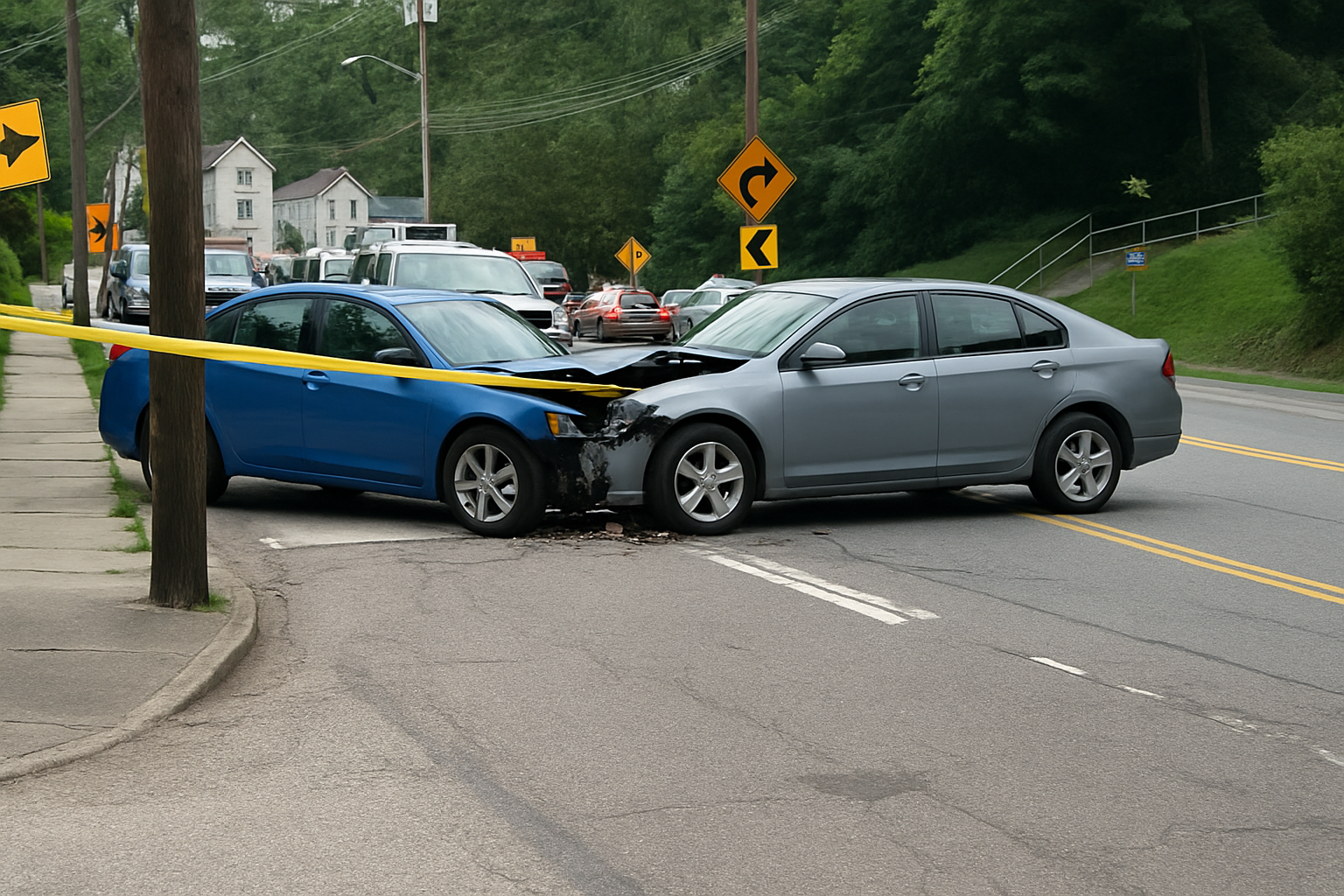
Philadelphia drivers with points face some of the highest urban insurance premiums in Pennsylvania — but most violations don't require SR-22, and rates normalize in 3–5 years if you stay clean and shop aggressively.
What Violations Cost Philadelphia Drivers — Rates and Point Impact
A single speeding ticket (15–25 mph over) adds 3 points to your Pennsylvania driving record and typically increases Philadelphia premiums by 25–40% at renewal. An at-fault accident with injury or property damage over $1,000 adds 3 points and can trigger a 40–70% increase. A reckless driving conviction adds 6 points and often doubles your premium or forces you into the non-standard market entirely.
Philadelphia's base insurance costs are already among the highest in Pennsylvania — average full coverage premiums run $2,100–$2,800 per year for clean-record drivers, compared to $1,400–$1,900 in suburban counties. That urban premium reflects higher theft, vandalism, and accident frequency. When you add violation surcharges on top of that baseline, you're often looking at $3,000–$4,500 annually after a single major ticket or accident.
Pennsylvania uses a point system where accumulating 6 or more points in 2 years triggers a mandatory PennDOT notice and potential remedial actions — 6 points require a written exam, 9 points require a safety hearing, and 11 points within 2 years result in a license suspension. Most standard violations (speeding, failure to yield, running a red light) fall in the 2–3 point range. Points remain on your record for 2 years from the violation date, but insurance surcharges often persist for 3–5 years depending on carrier policy. Pennsylvania SR-22 requirements and filing rules non-standard auto insurance liability insurance
Philadelphia's Non-Standard Carrier Landscape — Why Shopping Matters More Here
Philadelphia has a dense concentration of non-standard and assigned-risk carriers because of the city's high violation and accident volume. National carriers like GEICO, Progressive, and Nationwide all write policies for drivers with points, but they price violations differently — one carrier may add a 30% surcharge for a speeding ticket while another adds 50% for the same offense. Regional carriers like Dairyland, National General, and Bristol West actively compete for point-heavy drivers in Philadelphia and often quote 20–35% lower than the Big Three for the same violation profile.
If you have 3–5 points from multiple tickets or a single at-fault accident, you're still in the standard to preferred-risk market with most carriers — you'll pay more, but you won't be declined. If you have 6+ points, a DUI, or multiple at-fault accidents, you're likely looking at non-standard carriers or Pennsylvania's assigned-risk plan (CAT Fund). The CAT Fund is the insurer of last resort and typically costs 40–60% more than the highest non-standard carrier quote, so exhausting commercial market options first is critical.
Because Philadelphia has more carrier competition than rural Pennsylvania, shopping every 6–12 months after a violation is the single highest-leverage action you can take. Carriers re-tier drivers at different intervals — some will drop your surcharge after 2 years, others hold it for 3–5 years. A carrier that was expensive at your first renewal may be competitive 18 months later as the violation ages.
Rate Recovery Timeline — How Long Violations Affect Philadelphia Premiums
Pennsylvania removes points from your driving record 2 years after the violation date, but insurance surcharges follow a different timeline. Most carriers apply a violation surcharge at your next renewal after the ticket or accident is reported, then phase it out over 3–5 years. A speeding ticket typically stops affecting your rate 3 years from the violation date. An at-fault accident often carries a 5-year surcharge. A reckless driving conviction or major violation can affect your rate for 5+ years.
Your first renewal after a violation will show the steepest increase — expect 25–70% depending on the severity. At your second renewal (12 months later), the surcharge typically holds steady or decreases slightly if you've stayed clean. By your third renewal, if no new violations have occurred, many carriers begin reducing the surcharge incrementally. After 3 years with no new incidents, you should see rates approaching pre-violation levels with most standard carriers.
Philadelphia drivers often see faster recovery if they complete a PennDOT-approved defensive driving course. Pennsylvania allows drivers to reduce their point total by 2 points once every 3 years by completing an approved course, and some carriers (GEICO, State Farm, Progressive) offer an additional 5–10% discount for course completion independent of the point reduction. The course costs $50–$100 and takes 6–8 hours online or in person — it's one of the few proactive steps that affects both your PennDOT record and your insurance premium immediately.
SR-22 in Philadelphia — When Violations Trigger Filing Requirements
Most point violations in Pennsylvania do not require SR-22 filing. Speeding tickets, at-fault accidents, failure to yield, running a red light, and similar moving violations result in points and premium increases, but they do not trigger SR-22. Pennsylvania requires SR-22 (called Form DL-26 in the state) only for specific license-related actions: DUI conviction, driving without insurance, license suspension for habitual offender status, or certain serious violations like vehicular homicide.
If you accumulate 11+ points in 2 years and lose your license, reinstatement does not automatically require SR-22 unless the suspension involved one of the above triggers. The SR-22 filing period in Pennsylvania is typically 3 years from the date of reinstatement, and filing adds $15–$50 to your policy cost (one-time filing fee, not annual). The real cost is the insurance premium itself — SR-22 filers are considered higher risk, and premiums often run 70–130% above standard rates.
If you're a Philadelphia driver with points but no DUI, no license suspension, and no lapsed insurance violations, you do not need SR-22. Your focus should be on managing the point-driven premium increase through carrier shopping, defensive driving, and time. Conflating point violations with SR-22 requirements is a common source of confusion and unnecessary alarm — clarify your specific situation with PennDOT or your insurer before assuming you need SR-22 filing.
Action Steps to Lower Your Premium After a Violation in Philadelphia
Shop at least three carriers immediately after a violation is reported to your insurer. Do not wait until renewal — get quotes now so you know your options before your current carrier applies the surcharge. Focus on non-standard specialists (Dairyland, National General, Bristol West) and direct carriers (GEICO, Progressive) that quote competitively for point-heavy drivers. Independent agents who specialize in high-risk placement can access multiple non-standard carriers in one submission.
Complete a PennDOT-approved defensive driving course within 90 days of the violation if you're within 2 points of a suspension threshold or if your carrier offers a completion discount. The 2-point reduction applies immediately and can prevent you from crossing into mandatory remedial action territory. Verify that your insurer will honor the discount before enrolling — not all carriers offer it, and the reduction is wasted if it doesn't affect your premium.
Increase your deductible from $500 to $1,000 if you can absorb the out-of-pocket risk in an accident. This typically reduces your premium by 10–15%, which partially offsets the violation surcharge. Drop collision and comprehensive coverage on vehicles worth under $3,000 — you're paying for coverage that won't return meaningful value after the deductible. Keep liability limits at or above Pennsylvania's minimum (15/30/5) but consider increasing to 50/100/50 if you have assets to protect — the incremental cost is small and the risk exposure after a violation is real.
Set a calendar reminder to re-shop your insurance every 6 months for the first 2 years after a violation, then annually after that. Carrier pricing for violations changes constantly, and the best quote today may not be the best quote in 6 months. Loyalty costs Philadelphia drivers with points an average of $400–$800 per year compared to aggressive shoppers — there is no reward for staying with a carrier that surcharges you heavily after a violation.