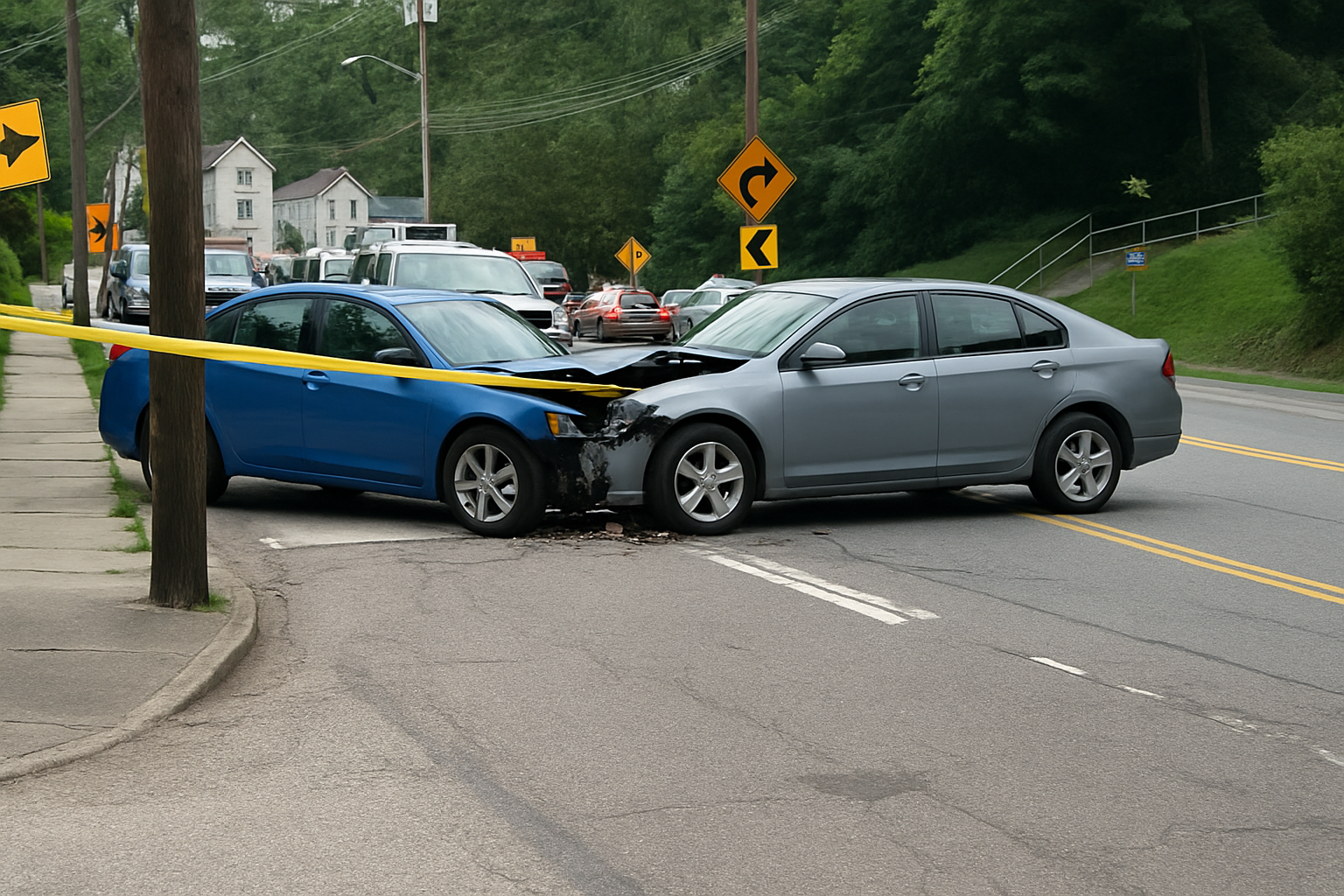
If you've picked up points from tickets or accidents in Plano, your insurance rates have likely spiked. Here's the realistic timeline for rate recovery and the specific actions that bring premiums down faster.
How Texas Violations Affect Insurance Rates in Plano
Texas does not assign points to your license the way most states do. Instead, your insurance rates after a violation depend on convictions for moving violations and at-fault accidents that appear on your driving record. When you receive a speeding ticket, reckless driving citation, or are found at fault in an accident, insurers see that conviction — not a point total — and adjust your premium accordingly.
In Plano and across Texas, a single speeding ticket typically increases your premium by 20–30% on average, while an at-fault accident can raise rates by 30–50%. A more serious conviction like reckless driving or failure to stop and render aid can trigger increases of 50–80% or more. These rate hikes are applied at your next renewal after the violation is reported, which usually happens within 30–90 days of the conviction date.
Unlike point systems in other states, Texas violations do not accumulate toward a suspension threshold based on points. Instead, the Texas Department of Public Safety uses a Driver Responsibility Program surcharge system for specific offenses — though this program was abolished in 2019, meaning drivers convicted after September 1, 2019 no longer face state surcharges. However, insurance surcharges remain in full effect, and those are set by your carrier based on the conviction type and your overall driving history. Texas SR-22 requirements non-standard auto insurance
The Rate Recovery Timeline After a Plano Violation
The standard timeline for rate recovery in Texas is anchored to how long the conviction remains visible on your driving record. Most moving violation convictions stay on your Texas driving record for 3 years from the conviction date, not the date of the ticket. At-fault accidents also remain visible for 3 years. During that entire period, insurers can factor the violation into your premium.
This means if you received a speeding ticket in Plano in March 2023 and were convicted in May 2023, that conviction will be visible to insurers until May 2026. Your rates will remain elevated — though not necessarily at the initial peak — for the full 3-year period. Most carriers apply the steepest surcharge in the first year after the conviction, then reduce it incrementally in years two and three, assuming no new violations occur.
The actual rate decline is not automatic. Some carriers maintain the same elevated rate for the full 3 years, while others offer forgiveness programs that begin reducing the surcharge after 12–24 months of claim-free and violation-free driving. Shopping your policy at the 12-month and 24-month marks is the single highest-leverage action you can take to accelerate rate recovery, because different carriers weigh violations differently and some specialize in insuring drivers with recent convictions.
If you accumulate multiple violations or an at-fault accident during the 3-year lookback period, your rate recovery timeline resets. A second conviction restarts the clock and compounds the surcharge, which is why drivers with two or more recent violations often face premiums 60–100% higher than clean-record drivers in Plano.
Actions That Lower Rates Faster in Plano
The most effective strategy for reducing your premium after a violation in Plano is comparison shopping with non-standard and standard carriers simultaneously. Standard carriers like State Farm, Allstate, and GEICO may keep you insured after a single violation, but they often apply the steepest surcharges. Non-standard carriers — including Acceptance, Dairyland, and Direct Auto — specialize in insuring drivers with recent violations and at-fault accidents, and their base rates for this profile are often 20–40% lower than surcharged standard carrier rates.
Texas allows drivers to take a defensive driving course once every 12 months to dismiss a ticket, but only if you request it before your court date and the violation qualifies under Texas law. If you've already been convicted, the defensive driving dismissal option is no longer available. However, some insurers in Texas offer premium discounts — typically 5–10% — for completing a state-approved defensive driving course even after conviction. Check with your current carrier to confirm eligibility before enrolling.
Increasing your deductible from $500 to $1,000 can reduce your collision and comprehensive premiums by 10–20%, which partially offsets the liability surcharge from your violation. Bundling your auto policy with renters or homeowners insurance can yield an additional 5–15% discount with most carriers. Dropping collision and comprehensive coverage entirely — if your vehicle is older and paid off — eliminates those premiums altogether, though you remain responsible for all damage costs in future accidents.
Maintaining continuous coverage without lapses is critical. A coverage lapse of 30 days or more in Texas triggers an additional surcharge on top of your violation-related increase, and some carriers will non-renew you entirely. If cost is an issue, drop optional coverages before you drop the policy. Liability coverage is mandatory in Texas, and driving without it exposes you to fines, license suspension, and SR-22 filing requirements if you're caught or involved in another accident.
Do You Need SR-22 After a Violation in Plano?
Most drivers with standard moving violations or a single at-fault accident in Plano do not need SR-22 insurance. Texas requires SR-22 filing in specific situations: after a DUI or DWI conviction, after driving without insurance and being involved in an accident, after accumulating multiple violations that result in a license suspension, or after certain serious offenses like vehicular manslaughter or leaving the scene of an accident.
A single speeding ticket, even if it results in a conviction, does not trigger an SR-22 requirement. Similarly, one at-fault accident does not require SR-22 unless you were uninsured at the time. SR-22 is a compliance filing, not a type of insurance — it's a form your insurer submits to the Texas DPS certifying that you carry at least the state minimum liability coverage. If the state has not sent you a notice requiring SR-22, you do not need it.
If you do receive an SR-22 requirement from the Texas DPS, the filing itself costs $15–25 in most cases, but the insurance premium increase is significant. Drivers required to carry SR-22 in Texas typically pay 50–80% more than drivers with similar violations but no SR-22 requirement, because the SR-22 designation signals to insurers that the state has flagged you as high-risk. The SR-22 filing period in Texas is typically 2 years for most offenses, though DUI-related filings may require 3 years depending on the court order.
Which Plano Carriers Insure Drivers With Violations
Not all carriers in Plano accept drivers with recent violations, and those that do price the risk very differently. Standard carriers like USAA, Travelers, and Progressive may retain you after a first violation, but expect a significant surcharge. If you have two or more violations within 3 years, or one major violation like reckless driving, many standard carriers will non-renew your policy at the next renewal.
Non-standard carriers operating in Plano — including Acceptance Insurance, Dairyland, Direct Auto, and Freeway Insurance — actively write policies for drivers with recent violations and at-fault accidents. These carriers often offer lower premiums than surcharged standard carriers for drivers with one or two violations, because their underwriting models are built around non-standard risk. A driver with one speeding ticket in Plano might pay $180/month with a surcharged standard carrier, but $140/month with a non-standard carrier writing the same coverage limits.
Some standard carriers offer accident forgiveness programs that waive the surcharge for your first at-fault accident, but these programs are typically only available to drivers who have been with the carrier for 3–5 years and have no prior violations. If you were not enrolled in accident forgiveness before your violation, you cannot add it retroactively.
The carrier that offers the lowest rate will change over time as your violation ages. A non-standard carrier may be cheapest in year one, while a standard carrier becomes competitive again in year two or three. This is why annual shopping is not optional for drivers with violations — the market for your risk profile shifts constantly, and loyalty to a single carrier costs you money.
What Plano Drivers Should Do Next
If your rates increased after a violation in Plano, your first action should be to request quotes from at least 3–5 carriers, including both standard and non-standard insurers. Use your current policy declarations page to ensure you're comparing identical coverage limits and deductibles. If your current carrier quoted you $220/month after your violation, and a non-standard carrier offers $165/month for the same coverage, switching immediately saves you $660 over the next 12 months.
Confirm the conviction date on your Texas driving record by requesting a copy from the Texas DPS. You can order your driving record online for $20, and it will show the exact date each violation was reported. This date determines when the 3-year lookback period ends, which is critical for timing your rate recovery and knowing when to shop for standard carrier quotes again.
If you're struggling to afford coverage, prioritize maintaining state minimum liability limits — 30/60/25 in Texas — over comprehensive and collision coverage. Dropping optional coverages reduces your premium immediately and keeps you legal. Driving without insurance in Texas after a violation exposes you to license suspension, SR-22 requirements, and significantly higher premiums when you reinstate coverage.
Set a calendar reminder to re-shop your policy 12 months and 24 months after your conviction date. Rate recovery accelerates when you actively compare carriers at each interval, because the marginal value of a clean year increases your appeal to standard carriers while non-standard carriers continue competing for your business.