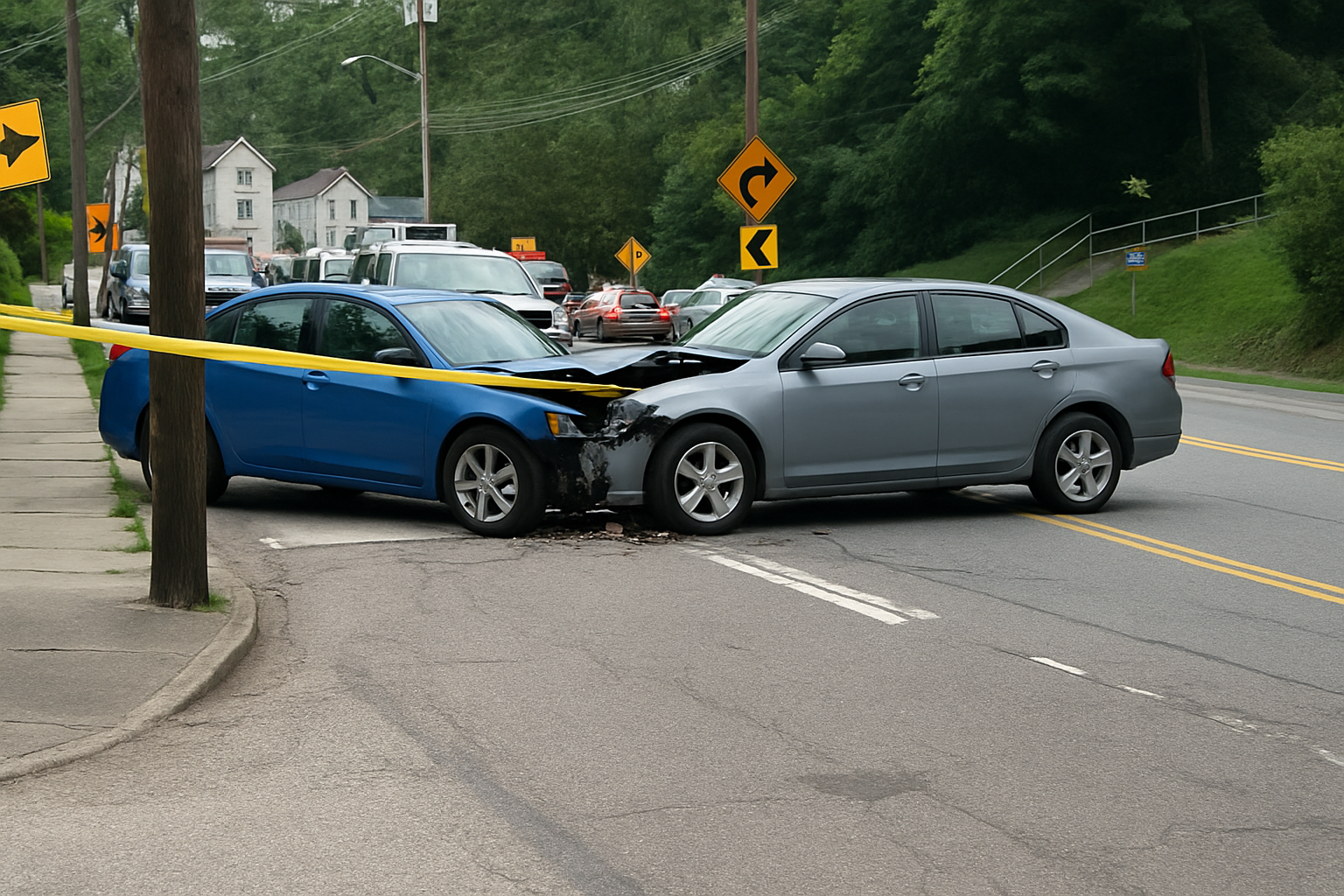
Richmond drivers with points from speeding tickets, at-fault accidents, or moving violations typically see premiums drop 15–25% within 3 years as violations age off — but only if you shop carriers and take active steps to accelerate recovery.
How Virginia's Point System Affects Richmond Drivers
Virginia uses a demerit point system that assigns 3, 4, or 6 points depending on violation severity. A basic speeding ticket (1–9 mph over) adds 3 points, while speeding 20+ mph over or reckless driving adds 6 points. If you accumulate 12 points in 12 months or 18 points in 24 months, the Virginia DMV suspends your license. Most Richmond drivers with a single speeding ticket or at-fault accident are nowhere near suspension — you're facing rate increases, not compliance crises.
Points remain on your Virginia driving record for 2 years from the conviction date, but insurers look at both the points themselves and the underlying violations. A 6-point reckless driving conviction affects rates longer than a 3-point speeding ticket because the violation itself signals higher risk. Most carriers review driving records at renewal — meaning your rate won't drop the day your points expire, but rather at your next renewal cycle after the 2-year mark.
Virginia offers one safe driving point for every 12 months without a violation, up to 5 points total. These credits offset future violations but do not erase existing ones. Completing a Virginia-approved driver improvement clinic removes 5 points once every 24 months, which can prevent suspension if you're near the threshold — but it won't necessarily lower your insurance rates. Carriers care about the violation itself, not just the point balance. Virginia SR-22 requirements non-standard auto insurance how points affect insurance rates
What Richmond Drivers Pay After Violations — Real Rate Increases
A single speeding ticket in Richmond typically increases premiums by 20–30% at renewal, depending on severity and your carrier. A driver paying $140/month before a ticket can expect $170–$185/month after. An at-fault accident raises rates 30–50%, while reckless driving or a DUI can double or triple premiums. These increases apply at your next renewal — not immediately — unless your carrier non-renews you, which forces you into the non-standard market mid-term.
Not all carriers penalize violations equally. State Farm and GEICO tend to increase rates moderately for first-time speeding tickets, while Progressive and Nationwide often apply steeper surcharges but offer forgiveness programs after 3 years. Non-standard carriers like The General, Dairyland, or National General write policies for drivers with multiple violations but charge 40–70% more than standard market rates. The gap between the cheapest and most expensive carrier for the same Richmond driver with one speeding ticket can exceed $800/year.
Richmond-specific factors compound violation surcharges. The city's urban density and higher collision frequency mean base rates are already 10–15% above rural Virginia averages. Adding a violation on top of that urban premium creates a compounding effect — you're paying more for the location and the record simultaneously. This makes carrier shopping even more critical for Richmond drivers than for those in lower-density areas.
The 2-Year Recovery Timeline — When Rates Actually Drop
Most Richmond drivers see their first meaningful rate decrease 24–30 months after a violation, when the conviction ages off their driving record and carriers refresh their risk assessment at renewal. Rates don't drop to pre-violation levels immediately — expect a 15–25% reduction in the first renewal cycle after the 2-year mark, with full recovery taking 3–5 years depending on how many violations you have and whether you incur new ones.
Carriers vary in how frequently they pull updated MVRs (motor vehicle records). Some refresh at every renewal, others only every 2–3 years unless you request a re-rate. This means you could be paying for a violation that's already aged off your record simply because your carrier hasn't pulled a new report. Requesting a re-rate or shopping for new quotes 25–27 months after your conviction ensures you're not overpaying for a clean lookback period.
If you accumulate a second or third violation during the initial 2-year period, the recovery timeline resets. A driver with speeding tickets in Year 1 and Year 2 won't see meaningful rate relief until Year 4 — two years after the most recent violation. This cascading effect makes defensive driving and violation avoidance the single most important financial decision you can make after your first ticket.
Actions That Accelerate Rate Recovery in Richmond
Shopping carriers every 6–12 months after a violation is the highest-leverage action available. Carriers re-underwrite violations differently: one may penalize a speeding ticket for 3 years, another for 5. A Richmond driver who stays with the same carrier after a violation often pays 30–50% more than they would by switching to a competitor with lighter surcharges. This is not disloyalty — it's financial necessity.
Completing a Virginia-approved driver improvement clinic removes 5 points from your record and satisfies DMV requirements if you're near suspension. Some carriers — GEICO, State Farm, and Nationwide — offer premium discounts of 5–10% for completing defensive driving courses even if you're not court-ordered. The course costs $50–$100 and takes 8 hours online or in-person. It won't erase the violation, but it signals proactive risk management to underwriters.
Increasing your deductible from $500 to $1,000 reduces premiums by 10–15% immediately, which partially offsets violation surcharges. Bundling auto and renters or homeowners insurance often unlocks multi-policy discounts of 15–25%, even with violations on your record. Paying premiums in full rather than monthly installments saves $30–$60/year by avoiding installment fees. None of these steps erase the violation, but together they reduce the financial impact while you wait for the 2-year clock to expire.
Which Richmond Carriers Write Drivers With Points
Standard carriers like State Farm, GEICO, and USAA will typically keep you after a single speeding ticket or at-fault accident, though they'll raise your rates. If you have 2+ violations in 3 years or a major violation like reckless driving, expect non-renewal notices from standard carriers at your next renewal cycle. This pushes you into the non-standard market, where carriers like The General, National General, Bristol West, and Dairyland specialize in drivers with points.
Non-standard carriers charge 40–70% more than standard market rates, but they're often the only option if you've been non-renewed. A Richmond driver paying $185/month with GEICO after one ticket might pay $260–$315/month with a non-standard carrier after a second violation. These rates are not permanent — once you maintain a clean record for 12–24 months, you can often move back to the standard market and recapture significant savings.
Progressive and Nationwide operate in both standard and non-standard segments, which makes them useful bridge carriers. They'll write policies for drivers with 2–3 violations at higher rates, then reduce premiums as violations age off without requiring you to switch companies. This continuity can simplify the recovery process, though it's still worth shopping every renewal to ensure you're getting the best available rate for your current record.
When Virginia Requires SR-22 After a Violation — And When It Doesn't
Most speeding tickets and at-fault accidents in Richmond do not trigger SR-22 filing requirements. Virginia mandates SR-22 only for specific scenarios: DUI convictions, reckless driving convictions resulting in license suspension, driving without insurance, accumulating enough points to trigger suspension, or reinstating a suspended license. A single speeding ticket — even a 6-point reckless driving charge — does not require SR-22 unless it results in suspension.
If you do need SR-22, the filing itself costs $15–$25 and must be maintained for 3 years from the date of reinstatement. The real cost is the insurance premium: SR-22 drivers pay 50–100% more than standard rates because the filing signals high-risk status to carriers. Richmond drivers reinstating after a DUI typically pay $200–$350/month for minimum liability coverage with SR-22, compared to $100–$140/month for a clean-record driver.
If your violation did not result in suspension and you were not ordered by the court or DMV to file SR-22, you do not need it. Many Richmond drivers mistakenly believe any reckless driving charge requires SR-22 — it does not, unless the charge led to license suspension or you were specifically ordered to file. Check your DMV notice or court order to confirm your actual requirement.