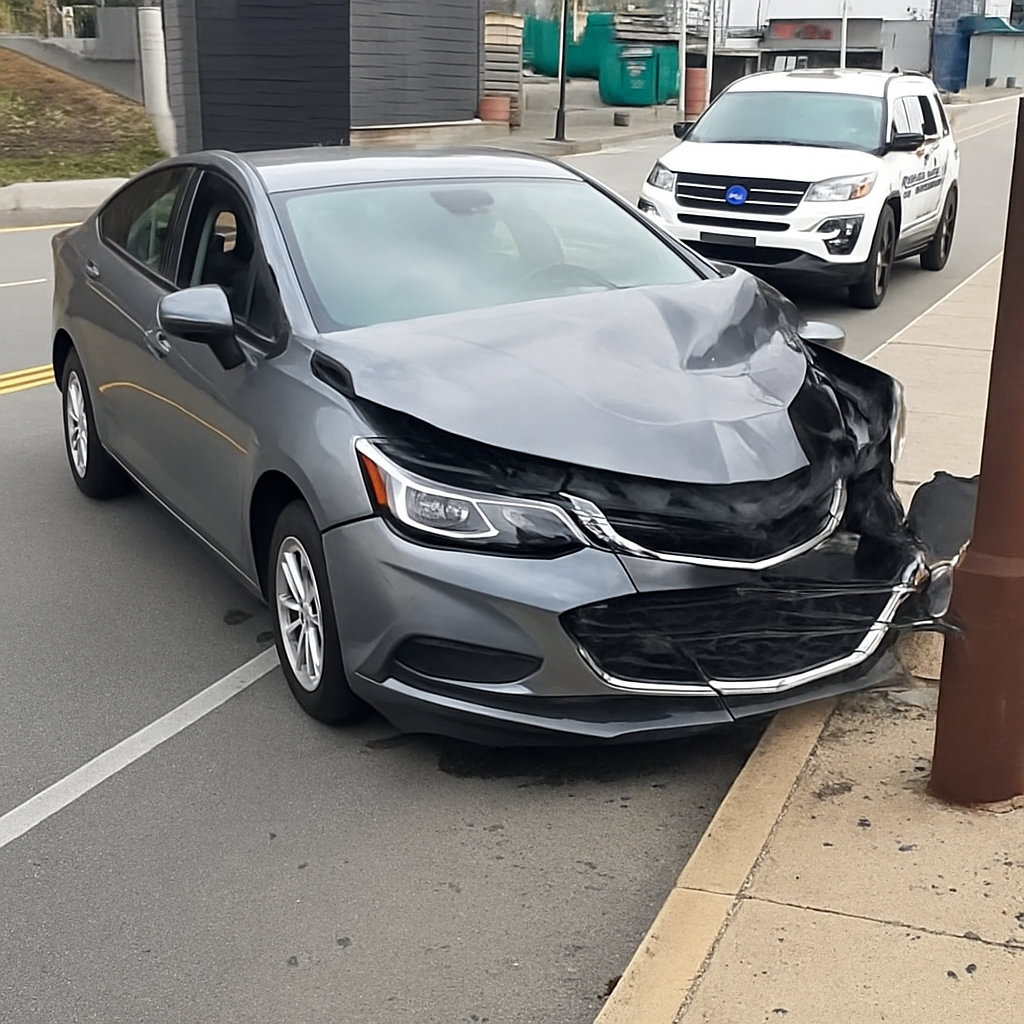
Sacramento drivers with violations see 20–40% rate increases that typically persist for 3–5 years. Most carriers re-rate annually, which means your premium can drop before your violation falls off your record if you shop aggressively and stay violation-free.
How Violations Affect Your Rates in Sacramento — Immediate and Long-Term Impact
A single speeding ticket in Sacramento typically raises your premium 15–25%, while an at-fault accident can trigger a 40–60% increase. California assigns points to most moving violations — 1 point for speeding or running a red light, 2 points for reckless driving or a DUI — and insurance carriers price those points aggressively. Unlike some states, California does not publish a fixed rate schedule for violations, so the actual increase depends entirely on your carrier's proprietary rating algorithm and your baseline risk profile.
Most Sacramento drivers see the rate increase appear at their next policy renewal, which can be anywhere from 1 to 12 months after the violation depending on when it posts to your DMV record. The California DMV updates driving records within 30–60 days of a citation, and carriers pull updated records at renewal. If you're renewing within weeks of a ticket, you may see the increase immediately. If your renewal is months away, you have a brief window to shop before the violation hits your current policy.
Violations stay on your California driving record for 3 years from the violation date, not the conviction date. Points assigned to your license remain for the same period. However, insurance carriers do not always wait the full 3 years to stop surcharging you — many begin reducing the violation surcharge after 12–24 months if you remain violation-free, which is why annual shopping becomes the highest-leverage action available to you during the recovery window. California SR-22 requirements non-standard auto insurance liability insurance
The Sacramento Rate Recovery Timeline — When Premiums Actually Drop
Rate recovery happens in stages, not all at once when your violation expires. Most California carriers re-rate violations annually, meaning they reassess the surcharge every 12 months based on how much time has passed since the violation and whether you've added new incidents. A speeding ticket that triggered a 20% increase in year one may drop to a 10% surcharge in year two with the same carrier, even though the violation is still on your record.
This re-rating behavior varies widely by carrier. State Farm and Farmers historically reduce surcharges incrementally after 12 and 24 months. Progressive and Geico tend to hold the full surcharge for 24–36 months, then drop it sharply. Mercury and CSAA often price violations aggressively upfront but offer steeper discounts for violation-free renewals. The timeline is not standardized, which is why staying with the same carrier after a violation often costs you hundreds of dollars per year compared to shopping.
The fastest rate recovery path in Sacramento is shopping at least two carriers every 12 months after your violation. You are comparing how each carrier prices your violation today, not three years from now. A carrier that surcharged you 40% at month one may offer you a 15% increase at month 13 if you shop them again as a new quote. Another carrier may not surcharge the violation at all if you bundle policies or qualify for a violation forgiveness program. Annual re-shopping during the 3-year violation window consistently delivers larger savings than waiting for the violation to expire.
Which Violations Trigger the Largest Rate Increases in Sacramento
Not all violations are priced equally. In California, DUI convictions generate the steepest increases — typically 70–130% — and also trigger a mandatory SR-22 filing requirement for 3 years. Reckless driving and hit-and-run citations carry 2 points and often result in 50–80% increases. At-fault accidents with injury or significant property damage can raise premiums 40–60%, even without a citation, because carriers price the claim itself.
Speeding violations are tiered by severity. A ticket for 1–15 mph over the limit typically adds 15–20% to your premium. Speeding 16–25 mph over often triggers a 25–35% increase. Excessive speeding citations — 26+ mph over or 100+ mph on any road — are treated as major violations by most carriers and can result in 50%+ surcharges or outright declination. Sacramento drivers cited on I-5, Highway 50, or Business 80 often fall into this category due to higher posted limits and CHP enforcement patterns.
Multiple violations compound exponentially, not linearly. Two speeding tickets within 3 years can double your premium or push you into the non-standard market entirely. Three or more violations in 36 months often result in non-renewal from standard carriers, forcing you into non-standard insurers like Acceptance, Bristol West, or Gainsco, where rates start 50–100% higher than standard market baselines even before violation surcharges.
What You Can Do Right Now to Lower Your Premium in Sacramento
The single highest-impact action is shopping at least three carriers immediately after your violation posts to your record. Do not wait for your current carrier to non-renew you or raise your rate — get quotes before your renewal date. Carriers that specialize in non-standard risk often price violations less aggressively than your current insurer, especially if you've been with a standard carrier like Allstate or Nationwide that has limited appetite for drivers with points.
If your violation qualifies, completing a California DMV-approved traffic school can mask one point violation every 18 months. Traffic school does not remove the citation from your record, but it prevents the point from being assigned, which means some carriers will not surcharge you at all. You must complete traffic school within the court-ordered deadline — typically 90 days from your citation date — and only certain violations are eligible. Speeding tickets, red light violations, and most 1-point infractions qualify. Reckless driving, DUI, and commercial vehicle violations do not.
Raising your deductible from $500 to $1,000 can reduce your collision and comprehensive premiums by 10–15%, which partially offsets the violation surcharge. Dropping collision coverage entirely on vehicles worth under $3,000 can free up $50–$100/month, though this only makes sense if you can afford to replace the vehicle out of pocket. Bundling auto and renters or homeowners insurance often unlocks a 10–25% multi-policy discount, and some carriers apply that discount before calculating the violation surcharge, which amplifies the savings.
Re-shop your policy every 12 months during the 3-year violation window. Rates do not improve automatically — you have to force the comparison. Carriers price the same violation differently at 12 months, 24 months, and 36 months, and the carrier offering the lowest rate today may not be the lowest rate in a year. Set a calendar reminder for 30 days before each renewal and run new quotes with at least three carriers each time.
Sacramento-Specific Carrier Options for Drivers with Violations
Sacramento drivers with violations have access to both standard and non-standard carriers, but availability and pricing vary widely by ZIP code and violation type. CSAA, Mercury, and Wawanesa often remain competitive for drivers with a single speeding ticket or minor at-fault accident. Progressive and Geico typically price violations more aggressively upfront but may offer better rates at the 24-month mark. State Farm and Farmers price violations inconsistently depending on your agent's book of business and your bundling profile.
If standard carriers decline you or quote premiums over $200/month for minimum liability, non-standard carriers become your primary market. Acceptance Insurance, Bristol West, Gainsco, and Freeway Insurance all operate in Sacramento and specialize in drivers with points, lapses, and violations. These carriers typically require higher down payments — 20–30% of the 6-month premium instead of the standard 10–15% — and offer fewer payment plan options, but they will write policies that standard carriers will not touch.
Some Sacramento drivers with violations qualify for usage-based insurance programs like Progressive Snapshot or Allstate Drivewise, which discount your premium based on actual driving behavior rather than violation history. If you drive fewer than 8,000 miles per year, maintain smooth braking patterns, and avoid late-night driving, these programs can reduce your rate by 10–30% even with a violation on your record. The discount is not guaranteed and requires 90–180 days of monitored driving, but it stacks with other discounts and applies at every renewal as long as you maintain safe driving metrics.
How Long Until Your Rate Fully Recovers in California
California violations fall off your driving record 3 years from the violation date, at which point the DMV no longer reports them to insurance carriers. Once the violation is removed, most carriers will re-rate you at your next renewal as though the violation never occurred, assuming you have not added new incidents in the interim. This means a violation that occurred on January 15, 2022 will stop affecting your insurance rates at your first renewal after January 15, 2025.
However, full rate recovery does not always require waiting the full 3 years. Many Sacramento drivers see their premiums return to near-baseline levels within 24–30 months if they remain violation-free and shop carriers annually. Carriers weight recent violations more heavily than older ones, so a violation at 30 months is often priced 50–75% lower than the same violation at 6 months. Shopping at the 24-month mark often reveals significant savings because you are now being quoted as a lower-risk driver even though the violation is still technically on your record.
DUI convictions follow a longer timeline. California requires SR-22 filing for 3 years after a DUI, and most carriers will not offer standard rates until the SR-22 requirement is fully satisfied and the conviction reaches the 5-year mark. DUI surcharges typically persist for 5–7 years with most standard carriers, though some non-standard insurers begin reducing the surcharge after 3 years. If you completed DUI school, maintained continuous coverage, and remained violation-free during the SR-22 period, you can often transition back to standard carriers at the 4–5 year mark with only a modest residual surcharge.