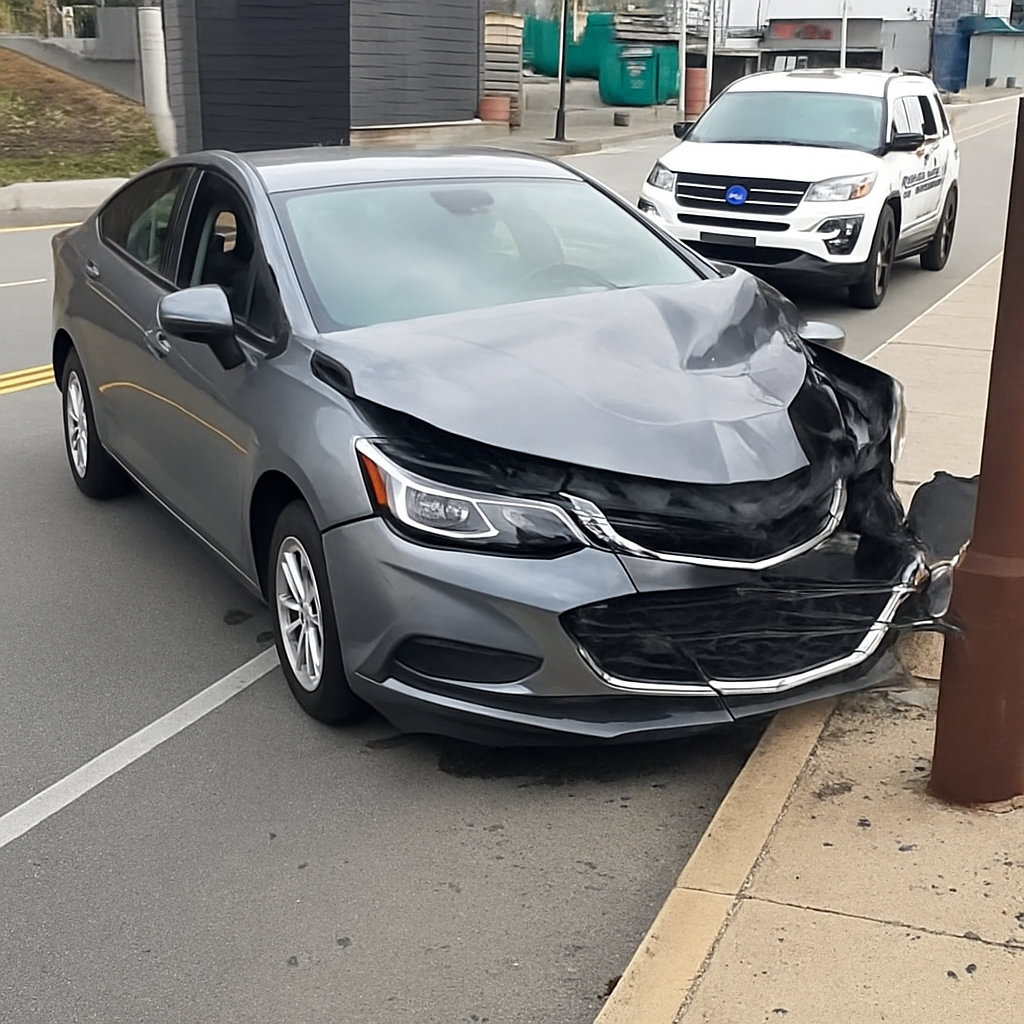
Points from tickets or accidents in San Francisco trigger immediate rate hikes — often 20-50% for a single violation. Here's the timeline for getting your premiums back down and which carriers still compete for your business.
What a Violation Does to Your Rates in San Francisco
A single speeding ticket in San Francisco typically raises your premium by 20-35% immediately, with at-fault accidents triggering 40-50% increases. California operates on a negligent operator point system: 1 point for most moving violations, 2 points for at-fault accidents or reckless driving. You accumulate these points on your DMV record, and insurers pull that record at renewal to adjust your rates.
The California DMV assigns points to your license, but your insurance company decides how those points affect your premium. Most major carriers apply surcharges that last 3-5 years from the violation date — not from when the point falls off your DMV record. A speeding ticket from January 2023 will affect your rates through early 2026 or 2028 depending on the carrier, even though the point drops off your DMV record after 36 months.
San Francisco's dense traffic and high accident frequency mean insurers price violations more aggressively here than in less congested California markets. The same speeding ticket that raises your rate 22% in Fresno may trigger a 32% increase in San Francisco because actuarial data shows repeat violation rates are higher in metro ZIP codes. This also means you have more carrier options willing to compete for non-standard risk — something rural drivers don't have access to. liability insurance
California Point System and What Triggers SR-22
California does not require SR-22 for standard point violations like speeding tickets or at-fault accidents. You only need SR-22 if you're convicted of DUI, reckless driving causing injury, driving without insurance, or accumulate 4+ points in 12 months (which triggers a negligent operator suspension). Most drivers with 1-3 points do not face SR-22 requirements and should not shop SR-22 providers unless explicitly told by the DMV.
Points remain on your California driving record for 36 months from the violation date for most moving violations, and 10 years for DUI or serious offenses. But insurance surcharges outlast the DMV point duration — a ticket from 2022 may still be surcharged in 2027 by some carriers even though it's no longer visible to the DMV. This disconnect is why shopping carriers matters more than waiting for points to fall off.
If you hit 4 points in 12 months, 6 points in 24 months, or 8 points in 36 months, the DMV initiates a negligent operator suspension. That suspension requires SR-22 to reinstate your license, and your rate will triple or quadruple. If you're currently at 2-3 points, your primary goal is to avoid another violation that pushes you into suspension territory. California's SR-22 requirements non-standard auto insurance
The Rate Recovery Timeline After a San Francisco Violation
Your first opportunity to lower your rate happens at your next policy renewal — typically 6 months after your violation if you're on a standard policy term. San Francisco's competitive insurance market means non-standard carriers actively re-rate every renewal period, and many drivers see a 10-15% drop simply by switching to a carrier that views their specific violation type as lower risk.
Year 1 after the violation: expect to pay the full surcharge. Most carriers apply maximum penalty during this period. Year 2: some carriers begin reducing surcharges by 25-40% if you remain claim-free and don't add new violations. Year 3: surcharges drop to 10-20% of the original penalty. Year 4-5: most carriers remove the surcharge entirely, though a few (GEICO, Progressive in some cases) continue applying reduced penalties through year 5.
The fastest path to lower rates is not waiting — it's shopping every 6 months. A driver who stays with the same carrier for 3 years will pay the full surcharge schedule. A driver who quotes with 4-5 non-standard carriers at every renewal will find a 20-30% savings within the first 12 months because different carriers weight violations differently. In San Francisco, Mercury and CSAA often re-rate point violations more favorably than State Farm or Allstate after the first year.
Which Carriers Still Compete for Drivers with Points in San Francisco
Not all carriers treat violations equally. Mercury, CSAA, and Progressive typically offer the most competitive rates for San Francisco drivers with 1-2 points, while Wawanesa and AAA Northern California (CSAA) often beat out majors for drivers with clean records prior to a recent violation. Farmers and Nationwide tend to apply steeper surcharges but may still quote where others decline.
If you have 3+ points or a combination of violations and an at-fault accident, non-standard carriers like Acceptance, Bristol West (a Farmers subsidiary), and Freeway Insurance become your best options. These carriers specialize in point violations and often price 15-25% below what a standard carrier would charge for the same risk profile. They're not budget carriers — they're actuarially designed for non-standard risk.
San Francisco also has access to California-specific carriers like Infinity and Kemper that write high volumes of point-violation policies in metro areas. These carriers rarely advertise but consistently undercut majors for drivers with 2-4 points. The key is quoting all of them — not just the names you recognize — because rate spread for the same driver can exceed $100/month between the highest and lowest quote.
What You Can Do Right Now to Lower Your Rate
Take a California DMV-approved traffic school course if you're eligible. California allows you to mask one point every 18 months by completing traffic school, which prevents the point from appearing to insurers even though it remains on your DMV record for negligent operator tracking. This works for most moving violations but not for at-fault accidents or violations over 25 mph above the limit. If your ticket is eligible, completing traffic school before your next renewal can prevent the surcharge entirely.
Shop at least 4-5 carriers 30-45 days before your current policy renews. Do not wait until the renewal notice arrives — non-standard carriers need 2-3 weeks to underwrite and bind a policy, and if you wait until the last day, you lose negotiating leverage. Request quotes from both standard carriers (Mercury, CSAA, Progressive) and non-standard specialists (Acceptance, Bristol West, Kemper) to capture the full rate range.
Consider raising your collision and comprehensive deductibles to $1,000 or $2,000 if you're currently at $500. This won't reduce your liability surcharge, but it can lower your overall premium by 10-15%, which offsets part of the violation penalty. San Francisco drivers often over-insure older vehicles — if your car is worth under $5,000, dropping collision entirely may make sense and can cut your premium by 20-30%.
When Rates Normalize and What to Expect Long-Term
Most carriers return your rate to pre-violation levels 3-5 years after the violation date, assuming no new incidents. Some carriers (Mercury, CSAA) drop surcharges faster — often by year 3 — while others (GEICO, Progressive) maintain reduced surcharges through year 5. You will not receive a notification when the surcharge drops — it happens automatically at renewal.
If you're currently paying $215/month with a violation, expect to return to approximately $140-$160/month once the surcharge period ends, assuming you had a clean record before the ticket. That's a typical San Francisco rate for minimum liability coverage (15/30/5) for a driver in their 30s with no violations. If you're currently shopping and seeing quotes above $250/month, you're either underinsured or quoting the wrong carriers.
Your violation will remain visible on your CLUE report (Comprehensive Loss Underwriting Exchange) for up to 7 years even after the DMV point falls off and the insurance surcharge ends. This doesn't affect your rate once the surcharge period ends, but it does mean some carriers may still see it during underwriting. The practical impact is minimal — by year 5, no carrier prices it, and by year 7, it's fully invisible.