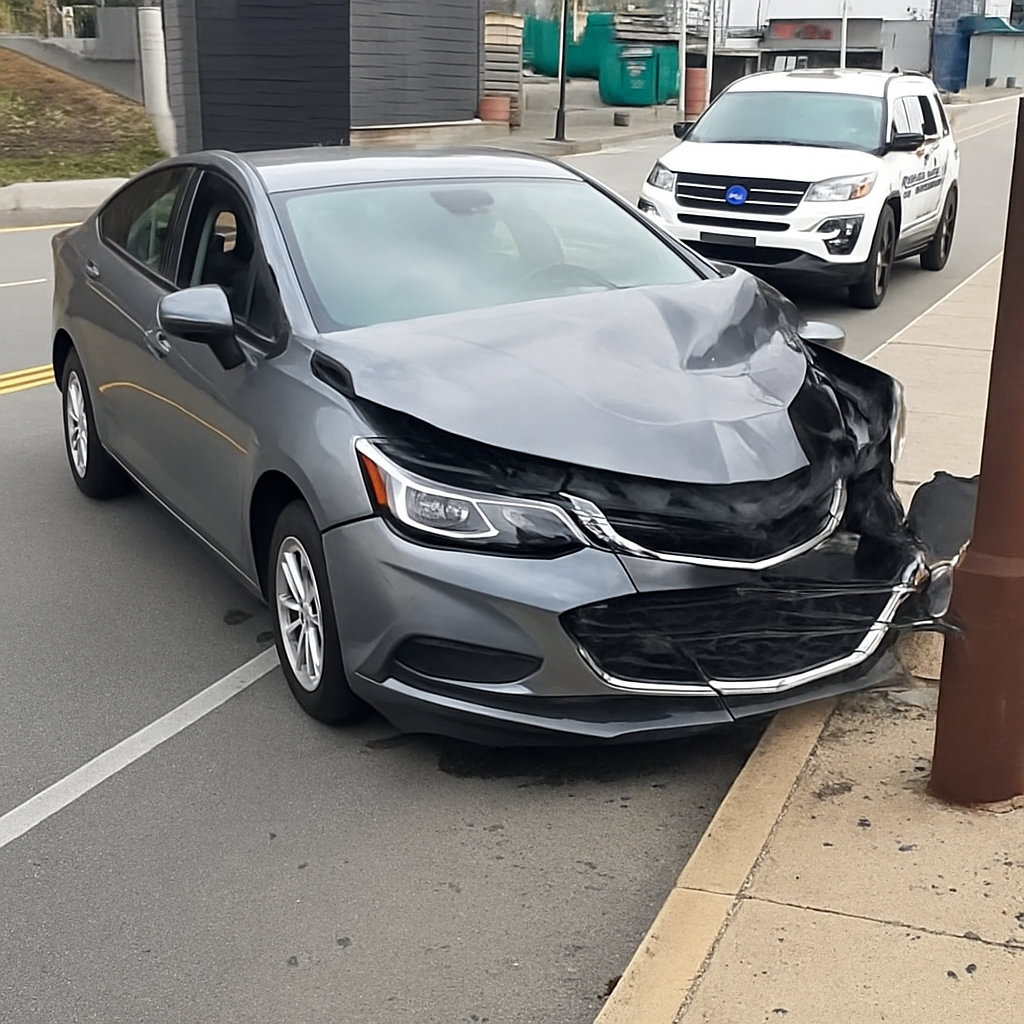
Your rate spiked after a ticket or accident in Spokane, and you're wondering how long it takes to recover. Washington's point system and insurer lookback periods determine your timeline — and what you do in the next 90 days matters most.
Washington's Point System and What It Means for Spokane Drivers
Washington assigns points to moving violations that stay on your driving record with the Department of Licensing for two years from the violation date, not the conviction date. If you accumulate 6 points within 12 months or 7 points within 24 months, the DOL suspends your license for 60 days. A speeding ticket 1–15 mph over the limit is 3 points, 16–25 mph over is 4 points, and reckless driving is 6 points — meaning a single reckless driving citation puts you halfway to suspension.
Insurance companies in Washington do not use the state point system to set your rates. They use their own internal scoring models that typically look back 3 to 5 years depending on the violation type. A minor speeding ticket may only affect your rate for 3 years, while an at-fault accident or reckless driving citation can impact premiums for the full 5 years. This creates two separate timelines: points fall off your DOL record in 2 years, but your insurer may continue charging higher premiums for 3 to 5 years.
Most Spokane drivers with a single speeding ticket or at-fault accident do not need SR-22 filing. Washington requires SR-22 only for specific offenses like DUI, driving without insurance, or license suspension for too many violations — not for standard point violations. If your license was not suspended and you were not ordered by a court or the DOL to file SR-22, you are in the non-standard or assigned-risk category, not the SR-22 category, and that distinction matters when shopping for coverage. Washington's SR-22 requirements non-standard auto insurance how Washington's point system works
Rate Increases After Violations in Spokane: What to Expect
A single speeding ticket in Washington typically increases your premium by 18% to 32% depending on the speed and your carrier. An at-fault accident raises rates by 40% to 60% on average, and a reckless driving citation can spike premiums by 70% to 90%. These are average increases — your actual hike depends on your carrier's underwriting tier, your age, your prior driving history, and how long you've been with the insurer.
Carriers make their keep-or-drop decision within 60 to 90 days of the violation appearing on your record, which is typically 30 to 45 days after the ticket or accident date. If you've been with a carrier for several years with a clean record, they may keep you at a surcharged rate. If you're a newer customer or you already had one prior incident, many standard carriers will non-renew your policy at the end of the term. This 90-day window is when you have the most leverage to shop for a better rate with a different carrier before your current insurer makes that decision for you.
Spokane drivers often see the steepest rate increases from State Farm, Allstate, and Farmers after violations, while carriers like GEICO, Progressive, and The General tend to offer more competitive rates for drivers with one or two tickets. Non-standard carriers like Dairyland, Bristol West, and National General specialize in drivers with points and may quote 20% to 40% lower than standard carriers post-violation. Shopping within that first 90 days gives you the widest range of options before your current carrier takes action.
The Recovery Timeline: When Rates Start to Drop
Your rate begins to normalize 3 years after the violation date for most minor tickets, and 5 years for at-fault accidents or serious moving violations. This is not the same as when points fall off your DOL record — insurance companies keep their own lookback period separate from the state point system. At the 3-year mark, many carriers will reclassify you from high-risk to standard-risk if you've maintained a clean record in the interim, which can drop your premium by 30% to 50% compared to your surcharged rate.
Each year you remain violation-free after the initial incident, your risk score improves incrementally. Some carriers reduce surcharges annually — for example, a 40% increase in year one may drop to 30% in year two, 20% in year three, and disappear entirely by year four. Other carriers hold the full surcharge for the entire lookback period and then drop it all at once. This is why shopping annually is critical: a carrier that penalized you heavily in year one may not be your best option in year two, even if the violation is still on your record.
Spokane drivers can accelerate rate recovery by completing a Washington-approved defensive driving course, which may reduce your premium by 5% to 10% depending on the carrier. The course does not remove points from your DOL record, but it signals to insurers that you are actively managing your risk. Bundling policies, raising deductibles, and maintaining continuous coverage without lapses also contribute to faster rate normalization.
Spokane Carrier Options for Drivers with Points
Standard carriers like State Farm, Allstate, and USAA typically non-renew drivers after a second violation within 3 years, which means if you already had one ticket and you get another, you will likely need to move to a non-standard carrier. Progressive, GEICO, and Nationwide are more flexible and often keep drivers with one or two violations, but at significantly higher rates. If your current carrier non-renews you, you have 30 to 45 days to find replacement coverage before your policy lapses.
Non-standard carriers like Dairyland, Bristol West, National General, and Foremost specialize in drivers with points and write policies in Washington. These carriers often quote 20% to 40% lower than standard carriers for drivers with violations, especially if you have multiple tickets or an at-fault accident. They may require higher down payments and offer fewer coverage options, but they will not non-renew you for a single additional ticket the way a standard carrier might.
Spokane drivers should compare at least three quotes within 90 days of the violation. Rates vary by 40% to 60% between carriers for the same driver with the same violation, which means a $180/month premium with one carrier could be $110/month with another. Non-standard carriers do not always advertise widely, so working with an independent agent or using a multi-carrier comparison tool is the fastest way to surface the lowest available rate for your specific profile.
What Spokane Drivers Should Do in the First 90 Days
The first 90 days after a violation is the highest-leverage period for rate mitigation. Your current carrier has not yet made their keep-or-drop decision, and you still have time to shop for a better rate before the surcharge fully takes effect. Start by requesting your driving record from the Washington Department of Licensing to confirm what appears on it and when the violation date is listed — this is the date insurers use to start their lookback period.
Get quotes from at least three carriers within that 90-day window: one standard carrier, one non-standard carrier, and your current carrier with the surcharge applied. Ask each carrier what their lookback period is for your specific violation and when the surcharge will fall off. Some carriers drop surcharges after 3 years, others after 5, and knowing this upfront helps you plan your next shopping cycle.
Enroll in a Washington-approved defensive driving course if your carrier offers a discount for it — most do, and the 5% to 10% reduction applies immediately. Avoid letting your policy lapse at any point during the recovery period, as a lapse on top of a violation will reclassify you into a higher-risk tier and trigger another round of surcharges. If your current carrier non-renews you, treat it as an opportunity to shop aggressively rather than accepting the first quote you receive from a non-standard carrier.