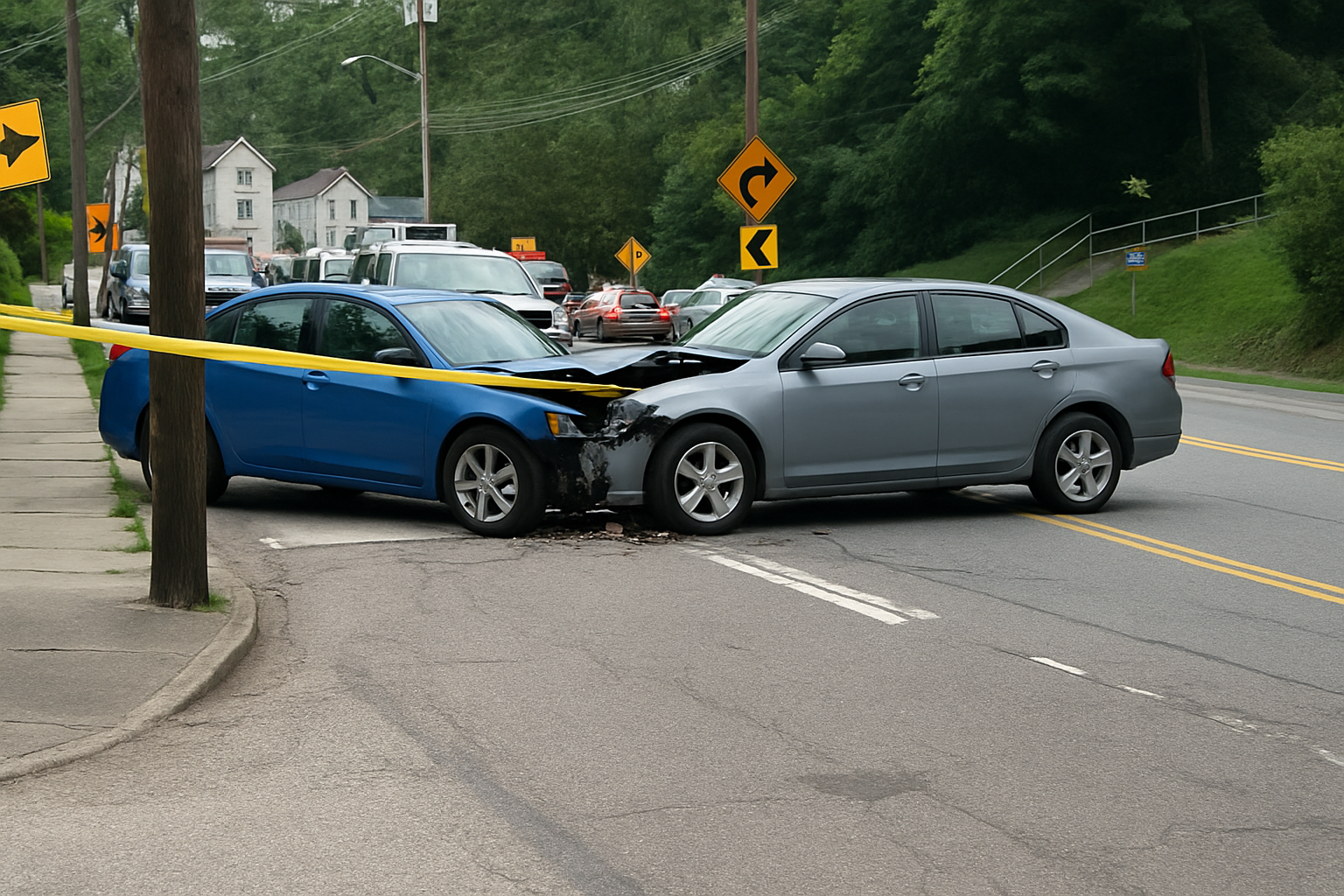
If you've picked up points from a ticket or accident in Stockton, your insurance rates likely jumped 20–50% or more. Here's the realistic timeline for getting them back down and which carriers will compete for your business while you wait.
What a Violation Does to Your Rates in Stockton
California operates on a point system where most moving violations add 1 point to your DMV record and at-fault accidents add 1 point. A single speeding ticket in Stockton typically triggers a rate increase of 20–40%, while an at-fault accident can raise premiums 40–60% depending on the severity and your carrier. If you accumulate 4 points in 12 months, 6 points in 24 months, or 8 points in 36 months, the DMV will suspend your license — but your insurance rates will climb well before you hit that threshold.
The disconnect most drivers miss: California DMV points fall off after 36 months from the violation date, but your insurance company tracks the violation itself for 3–5 years depending on the carrier and violation type. That means even after the point disappears from your driving record, the speeding ticket or accident still appears on your motor vehicle report (MVR) and continues to affect your premium. Some carriers surcharge for the full 5 years, others drop the surcharge after 3 years — this variance is why shopping around matters more for drivers with points than it does for clean-record drivers.
Stockton drivers also face higher baseline rates than much of California. The average annual premium in San Joaquin County for a driver with a clean record runs approximately $1,800–$2,200 depending on coverage limits. Add a single speeding ticket and that climbs to $2,200–$2,900. Add an at-fault accident and you're looking at $2,500–$3,200 annually. If you stay with the same carrier, you'll pay the inflated rate for the entire surcharge period — but if you shop, you can often cut 15–30% off that inflated quote immediately. SR-22 insurance
California's Point System and When Violations Actually Fall Off
California assigns 1 point for most moving violations including speeding, running a red light, unsafe lane changes, and following too closely. At-fault accidents also carry 1 point. More serious violations like reckless driving, hit-and-run, or driving on a suspended license carry 2 points. The DMV removes 1-point violations from your record 36 months after the violation date, and 2-point violations after 7 years — but these are administrative timelines that only affect your eligibility to keep your license, not your insurance rates.
Your insurance company pulls your MVR during underwriting and renewal, and the violation itself remains visible on that report for 3–5 years depending on the type. A speeding ticket will show up for at least 3 years, an at-fault accident for 3–5 years, and a serious violation like reckless driving for 5–10 years. The surcharge your carrier applies is tied to the presence of the violation on your MVR, not the point count on your DMV record. This is why drivers often see no rate relief at the 3-year mark when the point falls off — the violation is still there, and the carrier is still pricing it in.
Stockton drivers with multiple violations should calculate their point total carefully. If you're approaching 4 points in 12 months or 6 points in 24 months, the DMV will flag you for a suspension hearing, and that triggers a separate insurance crisis: most standard carriers will non-renew you immediately upon learning of a suspension, forcing you into the non-standard or assigned risk market where rates are 50–150% higher than standard market pricing even for the same violation history. California's SR-22 requirements and filing rules
The Rate Recovery Timeline: What to Expect Year by Year
Most Stockton drivers see rate relief follow a predictable pattern, though the exact timeline depends on your carrier's surcharge schedule and whether you shop. In year one after a violation, you're paying the full surcharge — expect rates 20–60% higher than your pre-violation premium depending on what's on your record. At renewal, your carrier may apply a small step-down (5–10% reduction in the surcharge), but you're still carrying the majority of the penalty.
By year three, the violation is typically halfway through most carriers' surcharge windows, and you should see your rate begin to normalize — but only if your carrier uses a 3-year lookback. If they use a 5-year lookback, you'll see minimal movement. This is the point where shopping becomes critical: carriers that price violations more favorably can offer you a quote 20–40% lower than your current renewal, even though the violation is still on your record. They're not ignoring it — they're just pricing it differently based on their own loss data and underwriting appetite.
After 5 years, nearly all carriers will treat you as a clean-risk driver again, assuming you've had no additional violations. The original ticket or accident will still appear on your MVR, but it will no longer factor into your premium calculation. If you've stayed with the same carrier this entire time, your rate should return to roughly where it was before the violation (adjusted for normal annual increases). If you shop at the 5-year mark, you'll have access to the full standard market again and can expect competitive quotes from top-tier carriers.
Which Carriers in Stockton Will Compete for Drivers with Points
Stockton drivers with violations need to understand that not all carriers treat points the same way, and the gap between the most expensive and least expensive quotes can exceed $1,000 annually for the same coverage and driver profile. Standard carriers like State Farm, Farmers, and Allstate will typically keep you as a customer after a single violation, but their surcharge schedules are rigid and often on the high end. Regional carriers and non-standard specialists like CSAA, Wawanesa, Mercury, and Bristol West tend to price violations more competitively, especially if you have 1–2 points and no lapses in coverage.
If you have 3 or more points, or if you've been non-renewed by a standard carrier, you'll likely need to shop the non-standard market. Carriers like Acceptance, Dairyland, Kemper, and National General specialize in drivers with imperfect records and will write policies that standard carriers won't touch — but their rates vary widely. A quote from Acceptance might come in 30% lower than one from Kemper for the same driver, purely based on how each company weights your specific violation type and geography. This is why bundling all your shopping into a single session with a high-risk specialist or multi-carrier tool is the highest-leverage move you can make.
Stockton's location in San Joaquin County also affects carrier availability. Some non-standard carriers that write aggressively in Los Angeles or the Bay Area have limited appetite in the Central Valley, which can shrink your options. Working with an independent agent or using a comparison tool that includes non-standard carriers gives you access to the full market, not just the handful of carriers that advertise directly to consumers. non-standard auto insurance
Steps That Actually Lower Your Premium Before Points Fall Off
The most effective action you can take is to shop your policy every 6–12 months while the violation is still on your record. Carrier appetite for violations changes constantly based on loss ratios, underwriting priorities, and market conditions — a carrier that quoted you high six months ago may be aggressively competing for your profile today. Many Stockton drivers assume they're locked into high rates until the points fall off, but in reality, switching carriers mid-surcharge period often delivers the single largest rate reduction available to you.
California allows drivers to take a DMV-approved traffic school course once every 18 months to mask a violation from their record, but this only works if you complete the course before the conviction appears on your MVR and your insurance company pulls it. If you've already been convicted and your carrier has already surcharged you, traffic school won't remove the surcharge retroactively — but it will prevent the point from counting toward a license suspension, which protects you from the much worse outcome of being non-renewed and pushed into assigned risk.
Other margin-gain moves include raising your deductible (moving from $500 to $1,000 can cut 10–15% off your premium), dropping collision and comprehensive if you're driving an older vehicle with low book value, and bundling your auto policy with renters or homeowners insurance if the carrier offers a meaningful multi-policy discount. None of these steps erase the violation surcharge, but they reduce the base premium the surcharge is applied to, which compounds into real savings over a 3–5 year recovery period.
When SR-22 Enters the Picture and What That Changes
Most Stockton drivers with standard point violations — speeding tickets, at-fault accidents, or minor moving violations — will not need an SR-22 filing. California only requires SR-22 for specific triggering events: DUI or DWI conviction, reckless driving, driving without insurance, license suspension for points accumulation, at-fault accident with no insurance, or a court-ordered filing. If you've simply picked up a ticket or had a fender-bender and maintained continuous coverage, SR-22 does not apply to you.
If you do need SR-22, the filing itself costs $15–$25 in California and is handled by your insurance carrier, who submits it electronically to the DMV. The real cost is the insurance premium: SR-22 drivers are classified as high-risk, which typically doubles or triples the base premium compared to a standard driver with the same violation. You'll need to maintain the SR-22 for 3 years in California, and any lapse in coverage during that period resets the 3-year clock and triggers an immediate license suspension.
Stockton drivers who need SR-22 should focus on non-standard carriers that specialize in high-risk filings — companies like Acceptance, Dairyland, and National General write SR-22 policies daily and price them more competitively than standard carriers who view SR-22 as a red flag. Shopping the SR-22 market is even more critical than shopping the standard violation market, because the rate spread between the most expensive and least expensive SR-22 quotes can exceed 100%.
What to Do Right Now If You Have Points in Stockton
First, pull your own MVR from the California DMV to see exactly what violations are on your record, how many points you currently carry, and when each violation is set to fall off. You can order your MVR online through the DMV website for $2, and it will show the same information your insurance carrier sees when they run your record. This gives you a clear baseline for shopping and eliminates surprises during the quote process.
Second, request quotes from at least 3–5 carriers, including both standard and non-standard options. If you're working with an independent agent, ask them specifically to run you through non-standard markets — many agents default to standard carriers because the commissions are higher, but non-standard specialists will almost always deliver a better price if you have points. If you're shopping online, use a tool that includes non-standard carriers in the comparison, not just the household-name brands.
Third, check your current policy for coverage you may not need. If you're carrying collision and comprehensive on a vehicle worth less than $3,000, you're likely paying more in annual premium than you'd ever recover in a claim. If you're carrying high liability limits because you have significant assets, keep them — but if you're carrying 100/300/100 limits on a tight budget with points on your record, stepping down to California's minimum (15/30/5) can cut your premium by 30–50%. It's not the right move for everyone, but it's a lever you control immediately while you wait for the violation to age off your record.