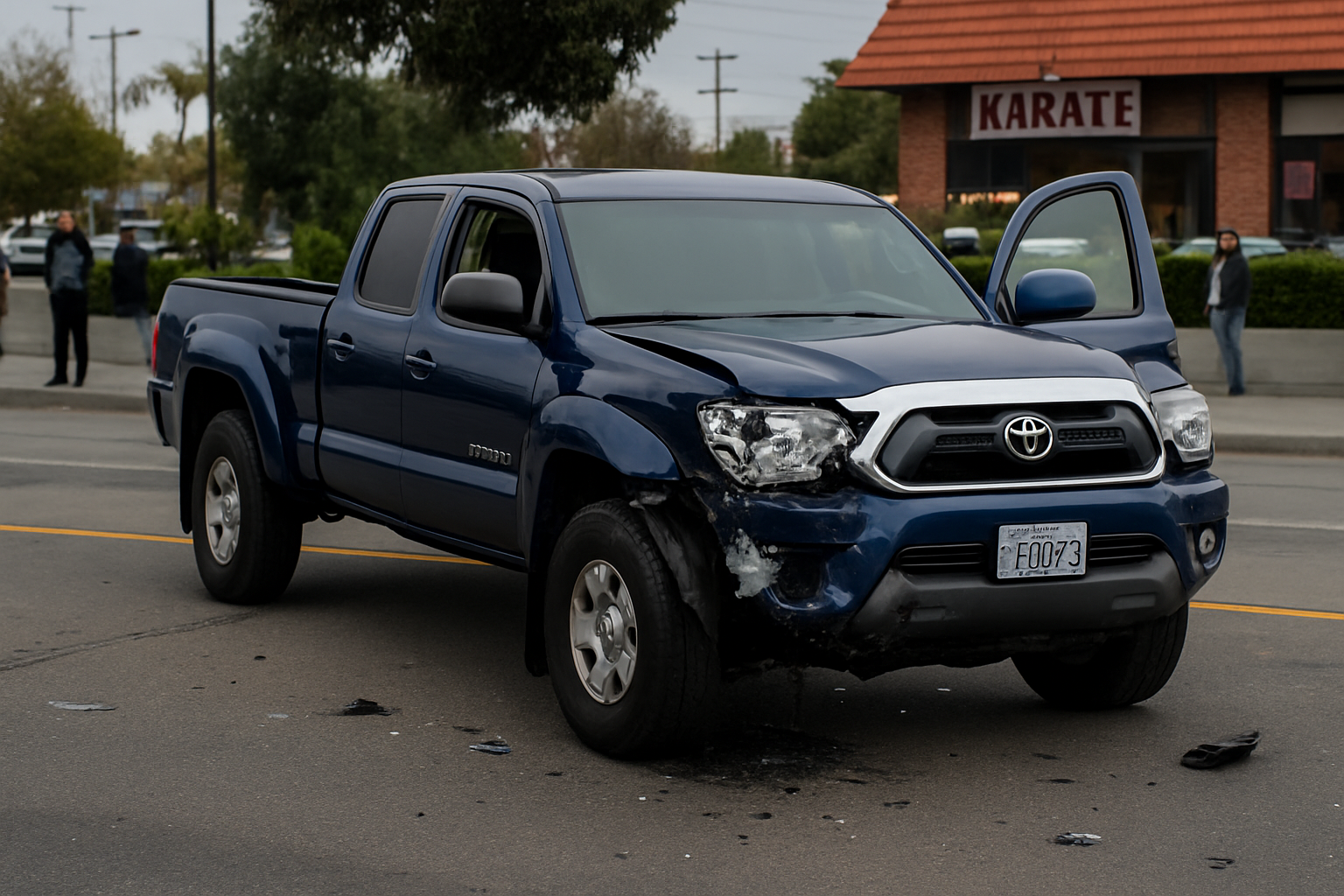
You got a ticket or had an accident in Tacoma and your rates jumped. Here's exactly how long it takes for premiums to normalize in Washington, which carriers still compete for your business, and what steps accelerate rate recovery.
Washington's Point System vs. Insurance Rate Timeline
Washington assigns points to your license for moving violations, and those points stay on your Department of Licensing abstract for five years from the violation date. If you accumulate six or more points within 12 months, the DOL suspends your license. Most Tacoma drivers facing rate increases have two to four points from a single speeding ticket or at-fault accident — well below the suspension threshold but enough to trigger carrier surcharges.
Insurance carriers do not use the DOL point system directly. They pull your driving record and apply their own internal rating factors based on violation type and severity. A single speeding ticket typically raises premiums by 15–30% depending on how far over the limit you were traveling. An at-fault accident can increase rates by 30–50%. The critical insight: most carriers apply these surcharges for three years, not the full five years the violation appears on your abstract.
This timing gap matters because it defines your rate recovery window. If you got a speeding ticket in Tacoma in January 2023, your rates will reflect that surcharge through approximately January 2026 with most carriers, even though the violation remains on your DOL record until January 2028. Shopping carriers in year three of a violation often reveals significantly lower quotes because some insurers have already aged the infraction out of their rating model while others still apply it. Washington SR-22 filing requirements liability insurance
Typical Rate Increases by Violation Type in Tacoma
Rate impact varies by violation severity and your carrier's underwriting guidelines. A speeding ticket 1–10 mph over the limit typically adds 10–20% to your premium. Speeding 11–20 mph over increases rates by 20–35%. Reckless driving or speeding more than 20 mph over can trigger 40–60% surcharges and may push you into non-standard carrier territory if you have multiple violations.
At-fault accidents produce similar increases. A minor at-fault accident with less than $2,000 in damages raises premiums approximately 25–40%. A major accident with injury or significant property damage can double your rates or result in non-renewal. Washington is a pure comparative negligence state, so even if you are only partially at fault, the accident appears on your record and affects your rates.
Carrier response matters as much as violation type. Standard carriers like State Farm and Allstate typically non-renew drivers with two or more violations in three years. Regional carriers like PEMCO and non-standard specialists like The General or Direct Auto continue to write policies but at elevated rates. The spread between the highest and lowest available quote often exceeds $100/month for drivers with one major violation, which makes shopping critical.
When Rates Actually Drop After a Violation
Most Tacoma drivers see their first meaningful rate reduction at the three-year mark from the violation date. This is when many standard carriers remove the surcharge entirely or reclassify the violation as no longer recent. Some carriers begin phasing out the surcharge gradually starting in year two, reducing the penalty by 25–50% before removing it completely in year three.
You do not need to wait passively. Shopping carriers every six months during your recovery period surfaces better pricing as your record ages. A carrier that quoted you $220/month immediately after a violation may still quote $210/month 18 months later, while a different carrier that did not previously compete for your business may now offer $160/month because their underwriting guidelines treat the older violation more favorably.
Points themselves fall off your Washington DOL abstract five years after the violation date, not the conviction date or payment date. If you were cited on March 15, 2023, that violation disappears from your abstract on March 15, 2028, regardless of when you paid the fine or attended court. Insurance carriers typically stop applying surcharges well before this five-year mark, but a completely clean abstract does unlock the absolute lowest rates from preferred carriers who will not write policies with any recent history.
Defensive Driving and Rate Reduction Strategies
Washington does not mandate that insurance carriers offer discounts for completing a defensive driving course, but many carriers provide 5–10% rate reductions voluntarily. Courses approved by the Washington Traffic Safety Commission typically qualify. The discount usually lasts three years and can be stacked with other discounts, making it one of the few immediate actions available to offset a violation surcharge.
Ticket deferral is another option if you have not used it in the past seven years. Pierce County and Tacoma Municipal Court allow eligible drivers to defer a traffic infraction, meaning it does not appear on your DOL abstract if you complete the deferral period without additional violations. Deferred tickets do not add points and generally do not affect insurance rates. Not all violations qualify — reckless driving, DUI, and speeding in a school zone typically cannot be deferred — but standard speeding tickets and failure-to-yield citations often can.
Maintaining continuous coverage without lapses is essential. A coverage lapse in Washington, even for a few days, adds another surcharge and can reclassify you as high-risk regardless of your violation history. If affordability is a constraint, reduce coverage limits or increase your deductible rather than dropping coverage entirely. Liability-only policies cost 40–60% less than full coverage and keep you continuously insured while your violation ages off.
Which Tacoma Carriers Write Drivers with Points
Standard carriers typically tier their underwriting. Drivers with one minor violation in three years remain eligible for standard rates with carriers like PEMCO, Mutual of Enumclaw, and Progressive. Two violations or one major violation often trigger non-renewal or a shift to a non-standard subsidiary. Progressive writes through multiple underwriting tiers and often remains competitive even with two speeding tickets.
Non-standard carriers actively compete for drivers with points. The General, Bristol West, Dairyland, and National General all write policies in Tacoma for drivers with multiple violations or at-fault accidents. Monthly premiums from these carriers typically range from $180–$300/month for liability coverage depending on violation count and severity. Full coverage with a non-standard carrier can exceed $400/month, but it keeps you legal and continuously insured.
Regional carriers sometimes offer better pricing than national non-standard specialists. Titan Insurance and Kemper operate in Washington and often quote competitively for drivers with one to two violations. They occupy a middle tier between standard and non-standard, providing lower rates than The General but accepting risk profiles that State Farm or Allstate decline. Getting quotes from at least one standard, one regional, and one non-standard carrier is the most reliable way to find the actual floor price available to you. non-standard auto insurance
SR-22 Requirements and Tacoma Violation Scenarios
Most speeding tickets and at-fault accidents in Washington do not require an SR-22 filing. SR-22 is only mandated for specific violations: DUI, reckless driving, driving while license suspended, being found at fault in an accident while uninsured, and accumulating multiple serious violations leading to a license suspension. If you received a ticket for speeding or following too closely, you do not need SR-22 unless the DOL suspended your license.
If the DOL does suspend your license for accumulating too many points or for a specific violation, reinstating your license requires SR-22 proof of insurance for three years in Washington. The SR-22 itself costs $25–$50 to file, but the real cost is the insurance premium — carriers that file SR-22 typically charge 30–80% more than standard policies because SR-22 signals higher risk. Not all carriers file SR-22 in Washington. Progressive, The General, and Dairyland all file SR-22, while many standard carriers like USAA and Nationwide do not.
SR-22 filings require continuous coverage with no lapses. If your policy cancels for non-payment or you drop coverage, your carrier notifies the DOL and your license suspends again immediately. Reinstating after an SR-22 lapse requires paying reinstatement fees a second time and restarting the three-year SR-22 clock. Drivers with SR-22 requirements should prioritize carriers with flexible payment plans and automatic payment options to avoid accidental lapses.
Tacoma-Specific Rate Factors and Recovery Outlook
Tacoma's ZIP codes affect base rates before any violations are applied. Drivers in 98405, 98406, and 98409 typically see higher base premiums than those in 98466 or 98498 due to higher accident frequency and theft rates. A violation surcharge applies on top of this base rate, so two Tacoma drivers with identical violations may pay different totals depending on where they live.
Traffic enforcement patterns in Pierce County mean more drivers accumulate points from speeding citations on I-5 and SR-16 than in rural Washington counties. Tacoma Municipal Court and Pierce County District Court both offer mitigation and deferral hearings, which can reduce the insurance impact of a ticket if you act quickly. Attending a mitigation hearing within 15 days of the citation and negotiating a reduced charge — such as reducing a speeding ticket to a non-moving violation — keeps the infraction off your DOL abstract entirely.
Rate recovery outlook for Tacoma drivers with one violation is positive. Expect elevated premiums for approximately three years, with the steepest increases in year one. Shopping carriers at the 18-month and 30-month marks reliably produces lower quotes as your violation ages. Drivers with two or more violations face longer recovery periods — up to five years before returning to standard carrier pricing — but non-standard carrier rates do stabilize after three years, and defensive driving discounts apply immediately regardless of violation count.