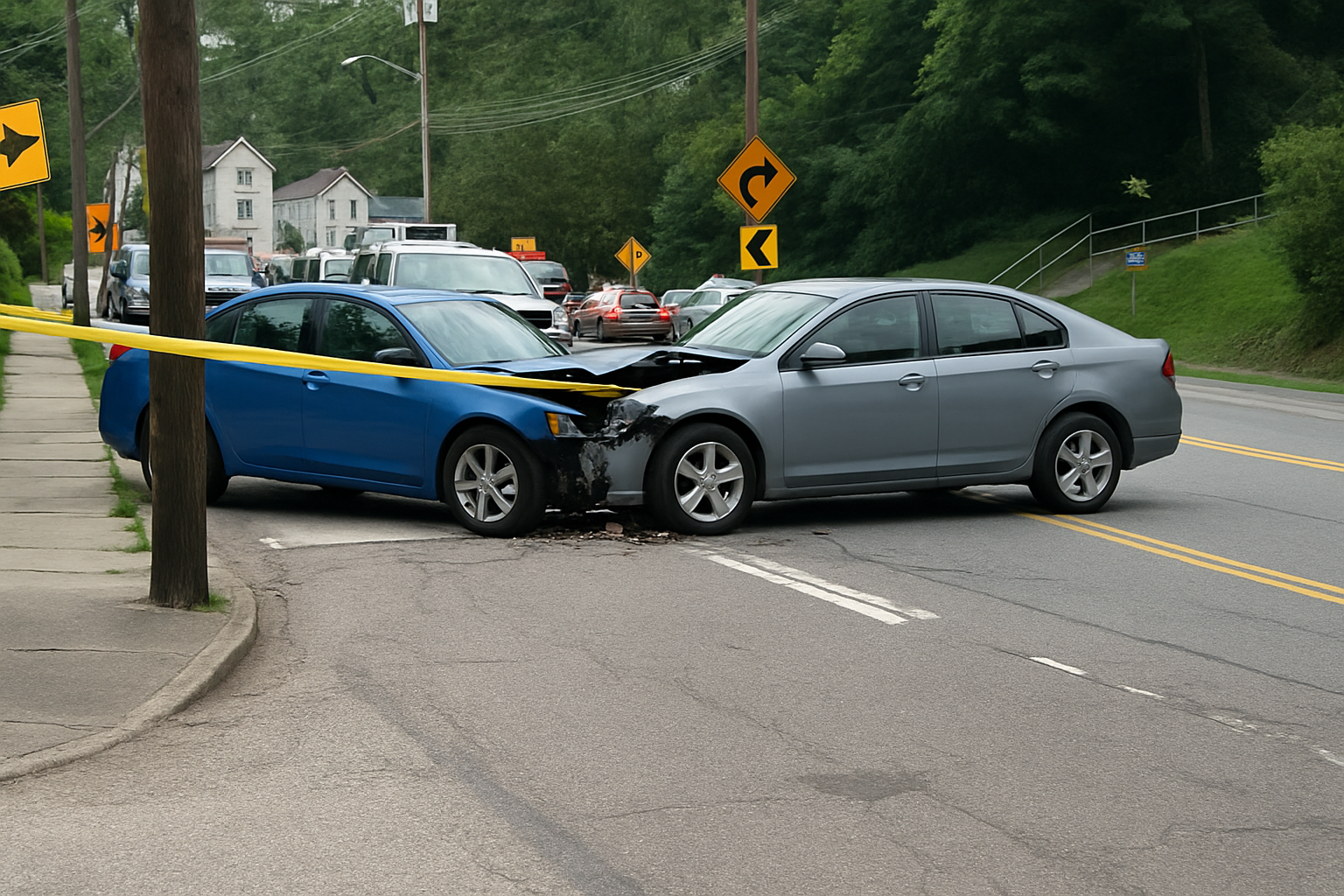
You got a ticket or had an accident in Tampa and your rates jumped. Here's the actual timeline for rate recovery — how long points stay on your Florida record, which carriers price violations more fairly, and what you can do now to speed up the drop.
What a Violation Does to Your Tampa Auto Insurance Rate
A single speeding ticket in Tampa typically raises your premium by 20–30% with most standard carriers, and an at-fault accident pushes the increase to 40–60%. If you're carrying full coverage on a newer vehicle, that's often an extra $60–$120 per month. The increase hits at your next renewal — usually within 30–90 days of the violation appearing on your Florida driving record.
Florida uses a point system administered by the Department of Highway Safety and Motor Vehicles. A speeding ticket 15 mph or less over the limit adds 3 points. Reckless driving adds 4 points. An at-fault accident with property damage or injury adds 6 points. You'll face a license suspension if you accumulate 12 points in 12 months, 18 points in 18 months, or 24 points in 36 months. Most Tampa drivers with a single violation or accident are nowhere near suspension — but they're paying the insurance penalty immediately.
Standard carriers like Geico, Progressive, and State Farm all apply multi-year surcharges to violations. The surcharge duration varies by company, but most apply the rate increase for 3 years from the violation date. Some carriers extend it to 5 years for at-fault accidents. Florida does not require SR-22 filings for standard point violations like speeding tickets or single at-fault accidents — SR-22 is reserved for DUI convictions, driving without insurance, or license suspensions for repeat violations. how Florida's point system affects rates
How Long Points Stay on Your Florida Record vs. How Long Rates Stay High
Points for most moving violations stay on your Florida driving record for 3 years from the conviction date, and they only count toward suspension thresholds for 12 months. That means a 3-point speeding ticket from March 2023 will appear on your record until March 2026, but it only counts toward the 12-point suspension threshold through March 2024. DUI convictions remain on your record for 75 years.
But insurance carriers don't price based on Florida's point count — they price based on the violation itself and how long ago it occurred. Most standard carriers in Tampa apply the surcharge for 3 years from the violation date. If you got a speeding ticket in January 2023, expect the rate increase to persist through January 2026, even though the points stopped counting toward suspension after January 2024.
This gap is why waiting for points to fall off doesn't automatically lower your rate. Your insurer is applying a separate internal lookback period. Some carriers use a 5-year lookback for accidents, meaning an at-fault crash in 2022 can still affect your 2027 renewal quote even though the points are long gone. The only reliable way to drop the surcharge before the lookback period ends is to switch to a carrier with a shorter lookback or one that prices your specific violation type more competitively. Florida SR-22 requirements
Which Tampa Carriers Price Violations More Fairly
Not all carriers treat violations the same way. National General, Bristol West, and Dairyland specialize in non-standard auto insurance and often quote drivers with recent violations 20–40% lower than standard carriers still applying multi-year surcharges. These companies expect violations in their customer base and price them into the baseline rate rather than layering aggressive surcharges on top.
Progressive and Geico both write non-standard policies in Florida and may offer competitive rates if you're 1–2 years past the violation date. State Farm and Allstate tend to apply longer surcharge periods and are rarely the best option for Tampa drivers with recent tickets or accidents. If you're still with the carrier you had when the violation occurred, you're almost certainly overpaying — they've already surcharged you and have no incentive to reduce it.
Shop at least three carriers as soon as the violation appears on your record, then shop again every 12 months. Rates drop in stages as you move further from the violation date, and different carriers reprice at different intervals. A carrier that quoted you high in year one may become competitive in year two. The average Tampa driver with a single speeding ticket who switches carriers within 6 months of the violation saves $840 per year compared to staying with their original insurer through the full surcharge period.
What You Can Do Now to Lower Your Rate Faster
Florida offers a Basic Driver Improvement (BDI) course that removes up to 18% of points from your record once every 12 months — but only for point accumulation purposes, not insurance surcharges. Completing the course won't automatically lower your premium, but some carriers like Progressive and Geico offer a 5–10% discount for taking it. The course costs $25–$50, takes 4 hours online, and the completion certificate goes directly to the Florida DHSMV. If you're close to a suspension threshold, this is worth doing immediately. If you're not, ask your insurer whether they offer a discount before enrolling.
Increasing your deductible from $500 to $1,000 can lower your premium by 10–15%, partially offsetting the violation surcharge. Dropping collision or comprehensive coverage on an older vehicle eliminates the most expensive components of your policy, though you'll lose protection for damage to your own car. Bundling auto with renters or homeowners insurance typically saves 10–20% and is underused by Tampa drivers renting apartments.
The highest-impact action is shopping carriers every 6–12 months. Violations create rate compression — the difference between your current rate and the best available rate in the market widens significantly after a ticket or accident. A clean-record driver might save $200/year by switching. A driver with a violation might save $800–$1,200. Set a calendar reminder for 6 months and 12 months after your violation date and request quotes from at least three non-standard carriers each time.
The Real Recovery Timeline for Tampa Drivers
Most Tampa drivers see their first meaningful rate drop 12–18 months after the violation date, assuming no new incidents. By month 12, you're past the point accumulation window and some carriers begin softening the surcharge. By month 24, you're halfway through the standard 3-year lookback and competitive quotes from non-standard carriers often drop 20–30% below your current rate.
By month 36, the violation falls outside most carriers' primary lookback window and you can return to standard rates if your record is otherwise clean. If you had multiple violations or an at-fault accident, expect the timeline to extend to 48–60 months. Carriers with 5-year lookback periods — common for accidents — won't fully clear the surcharge until month 60.
During this period, your Florida driving record improves faster than your insurance rate does. Points drop off at 3 years, but the rate impact persists until the carrier's internal lookback clears. This is why year two is the most important year to shop aggressively — you're far enough from the violation that non-standard carriers see improving risk, but your current carrier is still applying the full surcharge. The gap between those two perspectives is where you find the savings.
What Happens If You Get Another Violation During Recovery
A second violation during the recovery period resets the timeline and compounds the surcharge. If you got a speeding ticket in 2023 and another in 2024, most carriers will treat you as a higher-tier risk and apply surcharges that stack rather than replace each other. Your rate could increase by 50–80% above your clean-record baseline, and you'll lose access to standard carriers entirely.
Two violations in 12 months may also push you over Florida's point threshold depending on severity — 12 points in 12 months triggers a 30-day suspension, and you'll need to complete a driver improvement course and pay a reinstatement fee to get your license back. At that point, you'll likely need non-standard coverage from a high-risk specialist, and rates will reflect the suspension.
If you're already in recovery from one violation, prioritize defensive driving. Use cruise control on highways, leave extra following distance, and avoid aggressive lane changes. The financial cost of a second ticket during the lookback period is 3–5 times higher than the first because you lose access to competitive rates entirely and get pushed into the true high-risk market.