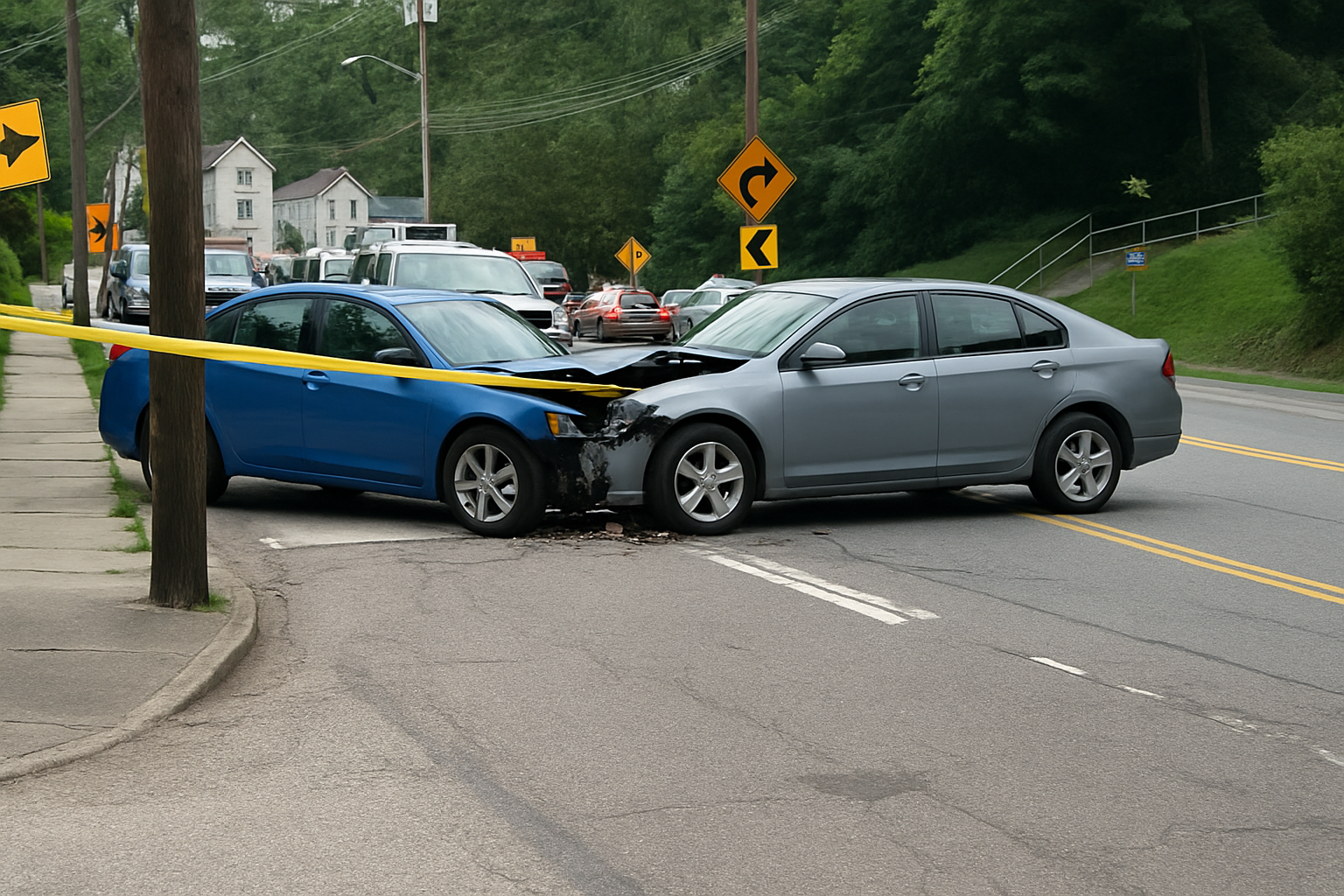
Your rates spiked after a ticket or accident in Winston-Salem. Here's the timeline for point removal in North Carolina, what carriers work with drivers who have violations, and the exact steps that bring premiums back down.
What Violations Do to Your Rates in Winston-Salem
A speeding ticket in Winston-Salem adds 2 to 5 points to your North Carolina driving record depending on speed, and carriers typically raise premiums 15% to 30% per violation at your next renewal. An at-fault accident adds 3 points and often triggers a 40% to 60% increase. If you accumulated multiple violations within 12 months, you're likely seeing compounded increases — a second ticket can double the surcharge from the first.
North Carolina uses a point system where 12 points in 3 years suspends your license, but insurance companies run their own calculations. A 2-point speeding ticket stays on your DMV record for 3 years, but your carrier may surcharge you for 3 to 5 years depending on their underwriting rules. This gap between point removal and rate recovery is why waiting passively rarely works.
Most violations in Winston-Salem do not trigger an SR-22 requirement. Speeding, failure to yield, and single at-fault accidents are rated as standard point violations. You'll need SR-22 only if your license is suspended for accumulating too many points, convicted of DUI, or cited for driving without insurance. If you're not facing suspension or a court-ordered filing, your situation is a rate problem, not a compliance crisis. non-standard auto insurance
North Carolina Point Removal Timeline
Points from moving violations fall off your North Carolina driving record 3 years from the conviction date, not the citation date. If you were convicted in March 2023, those points expire in March 2026. The North Carolina DMV does not offer point reduction for defensive driving courses in most cases — the Safe Driver Incentive Plan (SDIP) governs insurance points separately from license points, and completing a course does not erase conviction-based points.
Insurance points under SDIP remain on your record for 3 years as well, but insurers can choose to surcharge beyond that window. A carrier filing SDIP rates may reduce your surcharge after 3 years automatically, but a non-SDIP carrier (many non-standard insurers) sets its own timeline. This is why switching carriers often delivers faster savings than waiting for expiration.
If you're close to the 8-point suspension threshold (12 points triggers suspension, but 8 points within 3 years flags you as high-risk), focus on avoiding any additional violations. A single 4-point citation at 8 points puts you over the limit and into a license suspension, which requires SR-22 and restarts your rate recovery timeline entirely. North Carolina SR-22 requirements liability insurance minimums
Which Carriers Write Drivers with Points in Winston-Salem
Not all carriers treat violations the same way. Standard carriers like State Farm and Nationwide typically surcharge heavily for the first 3 years but may offer accident forgiveness or vanishing deductibles if you had a clean record before the violation. If your rate doubled after one ticket, you're likely better served by a non-standard carrier that specializes in higher-risk profiles and prices violations less punitively.
Non-standard carriers such as Dairyland, Bristol West, and National General operate in North Carolina and often deliver 20% to 40% lower premiums than standard carriers for drivers with 2 to 6 points. These insurers expect violations in their pool and price accordingly. They don't offer the same perks or bundling discounts as standard carriers, but if cost is the priority, they're the most direct path to savings.
Local independent agents in Winston-Salem who work with non-standard markets can quote multiple carriers at once. Captive agents (State Farm, Allstate) can only offer their own company's rates, which limits your options if that carrier prices violations aggressively. Shopping at least 3 carriers after a violation is standard advice, but for drivers with points, shopping 5 to 7 including non-standard options typically uncovers the lowest rate.
Steps That Lower Premiums Before Points Fall Off
Raising your deductible from $500 to $1,000 reduces your premium by roughly 10% to 15% immediately. If you're carrying comprehensive and collision on an older vehicle worth under $4,000, dropping those coverages and keeping only liability saves significantly more. North Carolina requires minimum liability of 30/60/25, but if you're financing or leasing, you'll need full coverage regardless of cost.
Paying your premium in full instead of monthly installments eliminates financing fees that add 5% to 10% annually. Bundling home or renters insurance with your auto policy can trigger a multi-policy discount of 10% to 20%, though this works best with standard carriers. Non-standard carriers rarely offer robust bundling discounts.
Switching carriers 12 to 18 months after your violation often delivers the largest single rate drop. Carriers reassess risk at different intervals — your current insurer may lock in the surcharge for 3 years, but a competitor may price the same violation less severely after the first year. This is why drivers who shop annually after a violation recover faster than those who stay with the same carrier hoping for automatic relief.
Rate Recovery Timeline: What to Expect Year by Year
In the first 12 months after a violation, expect no rate relief from your current carrier. The surcharge is typically applied at your renewal and remains fixed for the full policy term. This is the window to shop aggressively — competitor rates vary widely for recent violations, and switching now sets a lower baseline for future renewals.
Between 12 and 24 months, some carriers begin to reduce surcharges if no additional violations occur. A driver who was surcharged 40% in year one may see that drop to 25% in year two, though this is carrier-dependent and not guaranteed. Shopping again at the 18-month mark often uncovers better options as your violation ages.
At 36 months, your points fall off your North Carolina DMV record, but insurance surcharges may persist for another 1 to 2 years depending on the carrier. By year 5, most drivers with a single violation return to near-baseline rates if no new incidents occur. Drivers with multiple violations or an at-fault accident see longer recovery timelines — typically 5 to 7 years before returning fully to standard rates.
When You Actually Need SR-22 in North Carolina
SR-22 is required in North Carolina only if your license is suspended or revoked, you're convicted of DUI, or you're cited for driving without insurance. A speeding ticket or at-fault accident alone does not trigger SR-22. If the DMV sends you a suspension notice for accumulating too many points, you'll need SR-22 to reinstate your license, but this is avoidable if you stay under the 12-point threshold.
SR-22 filing costs $25 to $50 in North Carolina and must be maintained for 3 years without lapse. If your policy cancels or lapses during that period, your carrier notifies the DMV and your license suspends again. This restarts the 3-year clock. Most drivers with standard point violations will never need SR-22 — it's reserved for compliance failures and serious convictions, not routine tickets.
If you do need SR-22, expect your premiums to increase an additional 30% to 80% on top of the violation surcharge. Non-standard carriers handle SR-22 filings routinely and price them more competitively than standard carriers, who often non-renew SR-22 policies outright. Understanding whether you actually need SR-22 is critical — many drivers assume they do after any violation, which creates unnecessary alarm and misdirects their shopping efforts.