
Second At-Fault Accident: When Your Carrier Drops You
Free to compare
What triggers non-renewal after a second at-fault accident
Your carrier reviews two numbers at every renewal: total at-fault claims in the past 36 months, and total payout across those claims. Most preferred carriers non-renew automatically when you reach two at-fault accidents in a rolling three-year window, regardless of claim size. A $2,500 fender-bender followed by a $4,000 intersection collision 18 months later crosses the threshold even if both were minor compared to total-loss claims.
The 36-month lookback starts from the accident date, not the claim closure date or the policy renewal date. If your first accident happened in January 2023 and your second in October 2024, both accidents remain on your claims history through January 2026. Your carrier sees both at every renewal during that window.
Some carriers add a severity overlay: if combined payouts exceed $10,000 to $15,000 across two claims, non-renewal becomes likely even if the accidents are spaced beyond the typical threshold. State Farm and Allstate publicly confirm claim-count triggers in underwriting guidelines, though exact thresholds are proprietary. Progressive and GEICO follow similar patterns based on disclosed underwriting practices.
The 45-day non-renewal notice and your response window
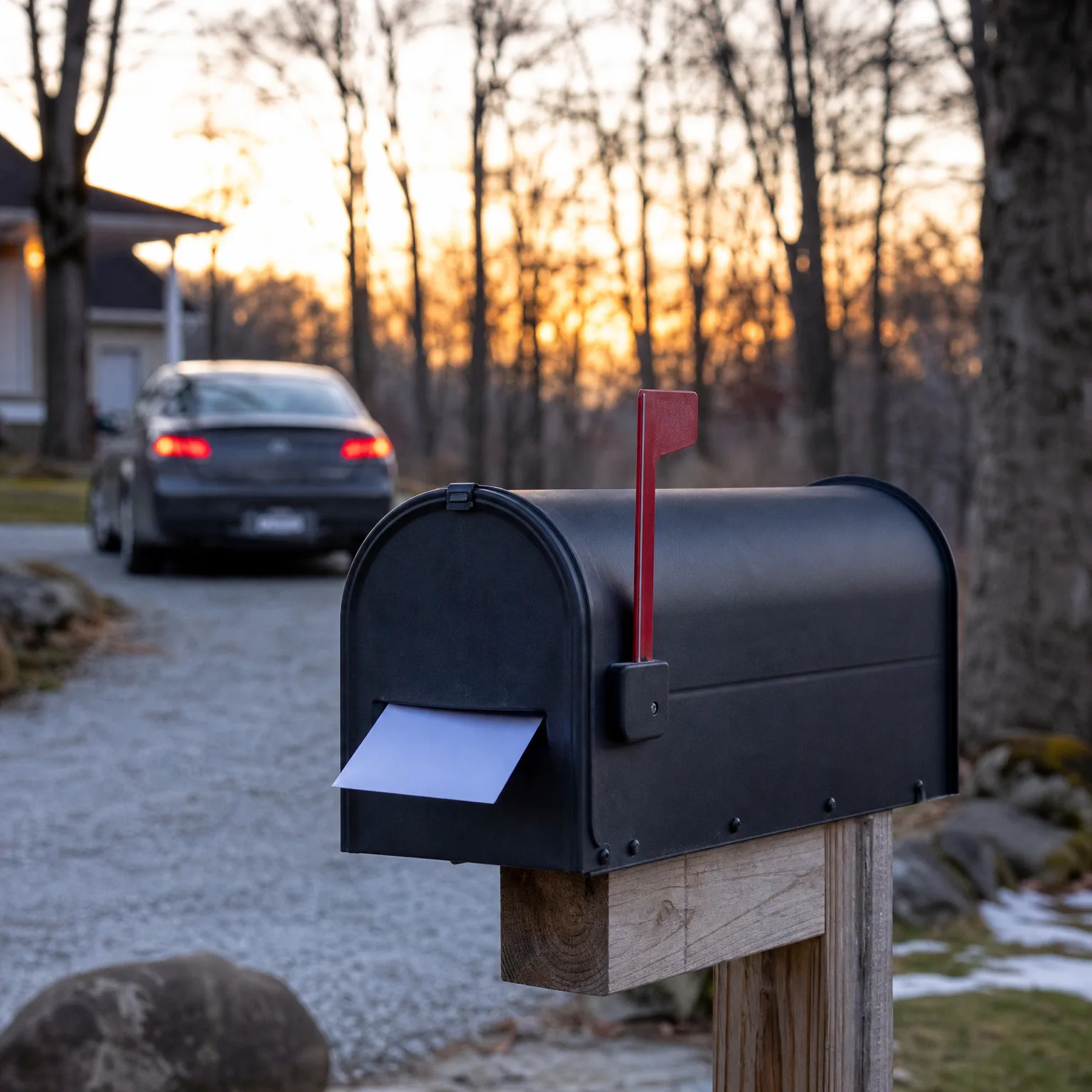
Your carrier must send written non-renewal notice 45 to 60 days before your policy expires, depending on state law. The letter states they will not offer a renewal policy but does not terminate your current coverage early. You remain insured through the expiration date printed on your declarations page.
This notice period is your entire shopping window. Carriers do not negotiate or reverse non-renewal decisions for claim-count triggers. Calling to dispute the decision, explaining fault circumstances, or offering to increase your deductible will not change the outcome once the letter is issued.
Start shopping the day you receive the notice. Your current premium stays locked until expiration, but your new premium with any carrier will reflect both at-fault accidents immediately. Delaying the search does not delay the rate impact — it only reduces the number of quotes you can collect before your coverage lapses.


How your rate changes when you move to a standard or non-standard carrier
Two at-fault accidents in 36 months typically trigger a 60% to 110% rate increase compared to your clean-record baseline, depending on claim severity and state. A driver paying $140/month with a preferred carrier before any accidents will see quotes ranging from $225/month to $295/month after the second accident, based on current standard-market pricing in moderate-cost states.
Preferred carriers like State Farm, Allstate, and USAA price for low-risk drivers and exit when claim history crosses their threshold. Standard carriers like The General, Bristol West, and Dairyland specialize in multi-accident drivers and price the risk instead of declining it. Non-standard carriers add another 15% to 30% above standard rates but guarantee acceptance regardless of claim count.
The rate increase persists for the full 36-month lookback window. As each accident ages past three years, it falls off your claims history and your rate drops. A driver non-renewed in month 18 after the second accident will see a partial rate reduction at month 36 when the first accident expires, then a second reduction at month 54 when the second accident expires. Full rate recovery to clean-record pricing typically takes four to five years from the second accident date.
Which carriers will quote you after two at-fault accidents
Standard carriers write policies specifically for drivers with two or more at-fault claims in three years. The General, Progressive's non-standard division, Bristol West, Dairyland, and National General all quote multi-accident drivers without requiring SR-22 or proof of financial responsibility unless a separate violation triggered that requirement.
Preferred carriers including State Farm, Allstate, Farmers, and USAA will decline to quote or will route you to a non-standard affiliate at a higher rate tier. Liberty Mutual and Nationwide occasionally quote two-accident drivers in states where they operate standard-market divisions, but rates typically match or exceed dedicated standard carriers.
Regional carriers vary by state. In California, Mercury and Wawanesa write standard-market policies for multi-accident drivers. In Texas, Texas Farmers and Acceptance Insurance operate standard divisions. In Florida, United Auto and Bear River specialize in high-claim-count drivers. Independent agents access these carriers more reliably than direct-to-consumer channels, which route multi-accident applicants to automated decline workflows.

Find the Insurers That Still Want Your Business
See Carriers That Cover You
SR-22 requirements and collision coverage retention after non-renewal
Non-renewal for claim count alone does not trigger SR-22 filing requirements in any state. SR-22 is required only after specific violations: DUI, driving without insurance, license suspension for points, or at-fault accidents while uninsured. If your license and insurance record remain continuous, you will not be asked to file SR-22 when moving to a new carrier after non-renewal.
Collision and comprehensive coverage remain available after two at-fault accidents, but your deductible options narrow. Most standard carriers require a $1,000 minimum collision deductible for drivers with two claims in 36 months, compared to $250 to $500 deductibles available to clean-record drivers. Choosing a $1,000 deductible instead of $500 reduces your premium by 8% to 12%, but you pay the first $1,000 out of pocket on any future claim.
Some drivers drop collision coverage entirely after non-renewal to reduce premium cost, especially if their vehicle value has depreciated below $5,000. This saves 30% to 40% on total premium but leaves you financially responsible for all repair costs if you cause another accident. Comprehensive coverage for theft, vandalism, and weather damage costs significantly less than collision and remains worth carrying even on older vehicles.

Filing a third claim while already non-renewed
If you have another at-fault accident after receiving a non-renewal notice but before your policy expires, your current carrier must cover the claim under the active policy. Non-renewal does not void coverage for accidents that occur before the expiration date. File the claim immediately and follow standard claim procedures.
That third claim will appear on your CLUE report and will be visible to every carrier you contact for a new policy. Three at-fault accidents in 36 months moves you into the non-standard market exclusively. Assigned-risk pools and state high-risk programs become the primary coverage sources in most states. Premiums for three-accident drivers range from $350/month to $550/month depending on state and claim severity.
Some standard carriers will not quote drivers with three at-fault claims regardless of spacing or severity. The General, Dairyland, and state-assigned risk pools remain available, but expect 45 to 60 days for underwriting approval and policy issuance in the assigned-risk system. Do not let your current policy lapse while waiting for assigned-risk approval — a coverage gap adds a separate surcharge and complicates future reinstatement.
Rate recovery timeline and claim aging
Each at-fault accident remains on your insurance record for 36 months from the accident date. Carriers recalculate your rate at every renewal, and your premium drops automatically as accidents age past the three-year threshold. A driver non-renewed in June 2025 after accidents in January 2023 and October 2024 will see a rate reduction in January 2026 when the first accident expires, even while the second accident remains on record.
The reduction is not proportional. Dropping from two accidents to one accident typically reduces your rate by 25% to 35%, not 50%, because the second accident alone still places you in a higher risk tier than a clean-record driver. Full recovery to baseline rates occurs only after both accidents have aged past 36 months and you have maintained continuous coverage without additional claims.
Re-shopping at each expiration accelerates recovery. Carriers weight recent claims more heavily than older claims, and a 30-month-old accident has less rate impact than an 18-month-old accident. A driver who stays with the same standard carrier for the full recovery period may pay 10% to 15% more than a driver who re-shops every 12 months as claims age, because competitive pressure forces initial pricing lower than renewal retention pricing.
Frequently Asked Questions
Can I appeal a non-renewal decision after two at-fault accidents?
No. Carriers have underwriting discretion to non-renew based on claim count, and state insurance departments do not require carriers to reverse non-renewal decisions for drivers with two at-fault accidents in 36 months. You can file a complaint with your state insurance department if the non-renewal notice violated timing or disclosure rules, but the carrier is not required to offer a renewal policy.
Will my rate go down if I take a defensive driving course after being non-renewed?
Defensive driving courses do not remove at-fault accidents from your insurance record and will not reduce your rate after non-renewal for claim count. Some carriers offer a 5% to 10% discount for course completion, but that discount applies on top of the post-accident surcharge — it does not replace it. The only factor that reduces your rate is time: accidents fall off your record 36 months after the accident date.
How long does non-renewal stay on my insurance record?
Non-renewal itself does not appear as a separate item on your CLUE report or insurance record. The two at-fault accidents that triggered the non-renewal remain visible to all carriers for 36 months from each accident date. Future carriers see the claim history, not the non-renewal decision. If you maintain continuous coverage with a new carrier, the non-renewal has no independent effect beyond the rate impact of the accidents themselves.
Do I need SR-22 after being non-renewed for two accidents?
No. SR-22 is required only after specific violations like DUI, driving without insurance, or license suspension. Non-renewal for claim count does not trigger SR-22 filing requirements. You can move to a new carrier without filing SR-22 as long as your license remains valid and you have maintained continuous insurance coverage.
What happens if I let my policy lapse after receiving a non-renewal notice?
A coverage lapse triggers a separate surcharge of 20% to 40% on top of the multi-accident surcharge, and most carriers require proof of prior insurance to quote you. If your license is suspended for lapse of insurance, you will be required to file SR-22 for one to three years depending on state law. Maintain continuous coverage through the expiration date and start your new policy the same day your old policy ends to avoid lapse penalties.
Related Articles

Two At-Fault Accidents in CA: Non-Renewal Rules
5/17/2026

3 At-Fault Accidents: The 36-Month Carrier Trigger
5/17/2026

Car Insurance After 2nd At-Fault Accident in Texas
5/15/2026

Non-Standard Auto Insurance After At-Fault Accidents
5/15/2026

Car Insurance After 2 At-Fault Accidents in NC
5/15/2026

Renewal After First Accident: When to Shop vs Stay
5/17/2026