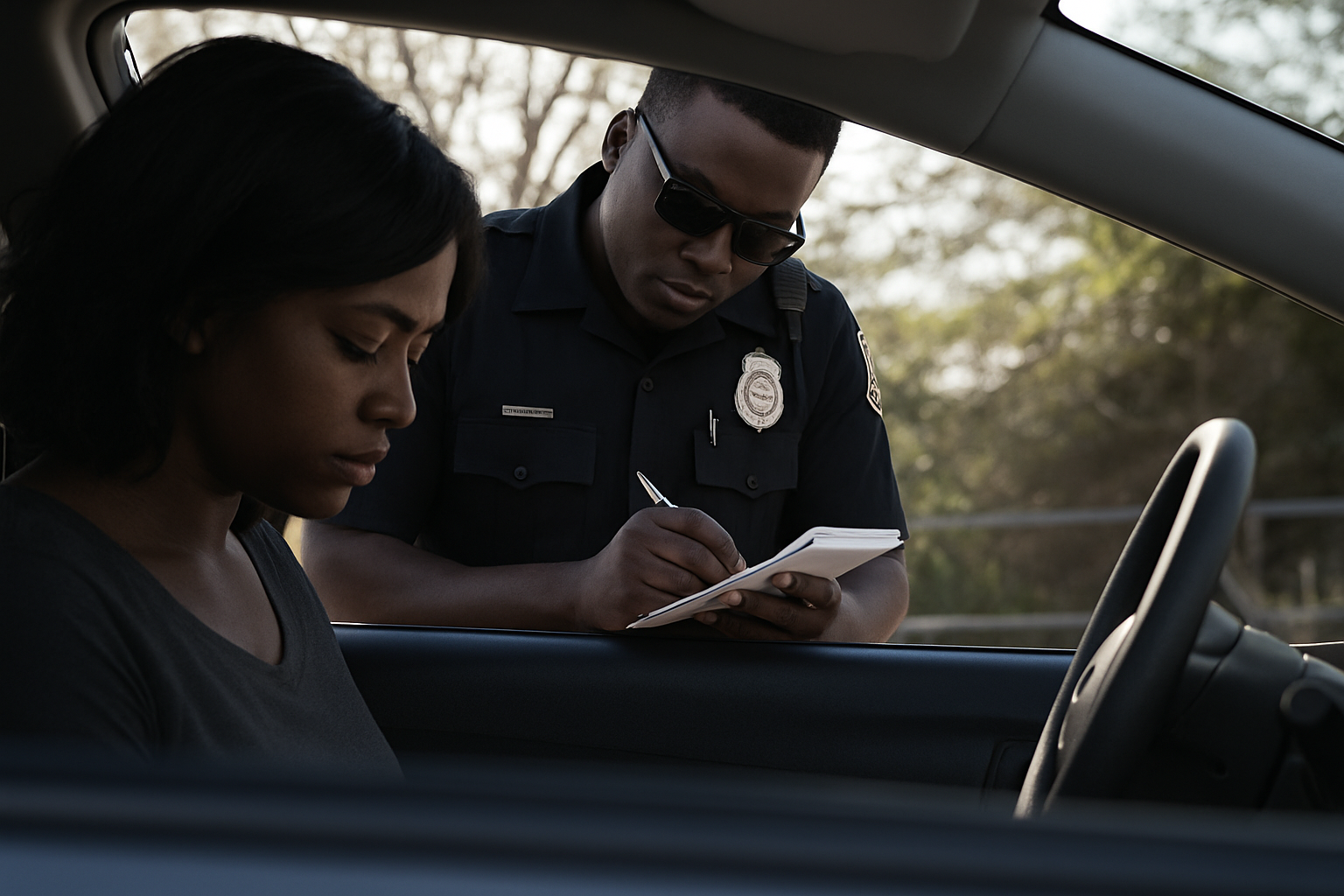
A single speeding ticket in Huntsville can raise your insurance rates 15–30% depending on carrier and speed tier. Here's what drivers with points actually pay with each major insurer and how long the increase lasts.
What a Speeding Ticket Actually Costs You in Huntsville
A speeding ticket in Huntsville triggers two separate costs: the fine you pay to the court and the insurance rate increase that follows. The fine ranges from $20 to $200+ depending on speed and jurisdiction, but the insurance increase over three years typically costs $800 to $2,400 — far more than the ticket itself. Alabama assigns 2 points for speeding 15+ mph over the limit and 2 points for any speed violation in a construction zone, while speeds under 15 mph over may still trigger a rate increase without adding points to your record.
Insurance carriers in Alabama can see your violation even if no points are assigned. Most insurers pull your driving record at renewal and adjust rates based on the violation itself, not just the point value. This means a 10 mph over ticket that adds zero points can still raise your premium 10–20% with some carriers. The rate increase typically applies for three years from the violation date, matching the period Alabama keeps the ticket on your driving record.
Huntsville drivers with one speeding ticket pay an average of $145–$190/month for full coverage, compared to $110–$140/month for clean-record drivers in the same zip codes. The gap widens with higher speed violations: tickets 20+ mph over the limit or reckless driving citations (often issued for speeds 25+ over) can double your premium with some carriers or trigger non-renewal entirely. Alabama's SR-22 requirements
Rate Increases by Carrier After One Speeding Ticket
Carrier response to speeding violations varies more than the ticket severity itself. Based on rate filings and policyholder data in Alabama, here's what Huntsville drivers with one speeding ticket (15–19 mph over) typically see at renewal:
State Farm raises rates approximately 15–22% for a first speeding ticket, one of the lowest increases among major carriers. Geico applies a 20–28% surcharge for the same violation. Progressive and Allstate both average 25–35% increases, with higher-tier violations pushing closer to 40%. USAA (available only to military families) applies a 15–20% increase for first violations. Nationwide and Farmers typically raise rates 22–30% depending on prior history and policy tier.
Non-standard carriers — those specializing in drivers with violations — often provide better rates than major carriers for drivers with points. The General, Acceptance, and Dairyland frequently quote $130–$170/month for full coverage after a speeding ticket, undercutting the post-violation pricing from State Farm or Geico by 10–25%. These carriers assume violation risk in their pricing models from the start, which means they apply smaller surcharges when violations occur.
Shopping after a ticket matters more than with a clean record. A driver paying $125/month with Geico before a violation might see their rate jump to $160/month, while switching to The General or Acceptance could yield a $135–$145/month quote for identical coverage. The savings compound over the three-year surcharge period. non-standard auto insurance
How Alabama's Point System Affects Your License and Rates
Alabama uses a point system to track violations and trigger license suspensions, but points affect your insurance differently than your driving privilege. The state assigns 2 points for most speeding violations, 2 points for running a red light or stop sign, 3 points for reckless driving, and 6 points for DUI or leaving the scene of an accident. Accumulating 12–14 points within two years triggers a license suspension, with the exact threshold depending on your age and violation history.
Points remain on your Alabama driving record for two years from the violation date, but insurance surcharges typically last three years. This creates a gap where your license is clear but your rates remain elevated. Carriers do not remove surcharges when points fall off — they apply the surcharge for the full three-year rating period regardless of point status. The only exception is if you complete a state-approved defensive driving course, which can remove points from your record but does not guarantee a rate reduction unless your carrier explicitly offers a course completion discount.
Huntsville drivers do not need SR-22 insurance for standard speeding tickets or point violations. Alabama requires SR-22 filing only for specific violations: DUI, driving without insurance, at-fault accidents without insurance, habitual offender designation, or license reinstatement after certain suspensions. A speeding ticket — even one that adds 2 points — does not trigger SR-22 requirements. If your carrier or agent suggests SR-22 for a speeding ticket alone, verify the requirement directly with the Alabama Law Enforcement Agency or the court that handled your case. how long points stay on your record
How Long the Rate Increase Lasts and What Reduces It
Most Alabama insurers apply a speeding ticket surcharge for three years from the violation date, not the conviction date or payment date. If you received a ticket on March 15, 2024, expect the surcharge to remain until March 15, 2027, even if you paid the fine immediately or contested it in court for months. The violation date is what carriers use to calculate the surcharge period, and most do not prorate the final year — you pay the full increase until the three-year mark passes.
Points fall off your Alabama driving record after two years, but this does not automatically reduce your insurance rate. Carriers re-evaluate your record at each renewal, so the surcharge typically remains until your first renewal after the three-year violation anniversary. If your policy renews annually in January and your ticket occurred in March 2024, you'll likely see the surcharge removed at your January 2028 renewal — nearly four years after the violation.
Completing a state-approved defensive driving course can remove points from your Alabama record, but only if the court approves it before conviction. Alabama allows drivers to attend a course once per year to avoid points for certain violations, but this option must be requested at or before your court date. Post-conviction courses do not remove points, though some insurers — including State Farm, Geico, and Nationwide — offer 5–10% discounts for course completion regardless of point removal. Check with your carrier before enrolling to confirm the discount applies to drivers with violations, as some restrict it to clean-record policyholders.
Shopping your rate every six months after a violation is the most effective way to reduce costs before the surcharge period ends. Carrier appetite for violation risk shifts constantly, and an insurer that quoted high six months ago may offer competitive rates today. Non-standard carriers re-rate drivers with violations more favorably as time passes and no new violations occur, often dropping rates 10–15% per year if your record stays clean.
What Huntsville Drivers Should Do After a Speeding Ticket
Request your Alabama driving record from the Alabama Law Enforcement Agency within 30 days of your ticket to confirm how the violation appears and whether points were assigned. Errors happen — incorrect speed notations, duplicate entries, or violations attributed to the wrong driver — and correcting them before your insurer pulls your record prevents unnecessary rate increases. The official record costs $15 and processes within 5–10 business days online.
Shop at least three carriers immediately after the ticket is added to your record, focusing on both major insurers and non-standard carriers. Do not assume your current carrier offers the best post-violation rate. Get quotes from The General, Dairyland, Acceptance, National General, and Bristol West in addition to State Farm, Geico, Progressive, and Allstate. Drivers who shop after a violation save an average of $40–$80/month compared to those who accept their renewal increase without comparing.
Ask every carrier whether they offer a defensive driving discount and whether it applies to drivers with recent violations. Some insurers restrict discounts to clean-record drivers, while others allow stacking a course completion discount on top of a violation surcharge. A 10% discount on a $170/month policy saves $204/year — enough to justify the $25–$75 course fee within two months.
Avoid lapses at all costs. A coverage gap after a violation compounds your risk profile and triggers non-standard or assigned risk pricing with most carriers. If cost is the barrier, reduce coverage to state minimum liability rather than canceling — Alabama requires 25/50/25 liability limits, which costs $50–$90/month even with a violation. Keeping continuous coverage preserves access to standard-market carriers and prevents the lapse surcharge that often exceeds the ticket surcharge itself.
When a Ticket Becomes a Bigger Insurance Problem
A second speeding ticket within three years moves you from standard to high-risk pricing with most carriers. Geico, State Farm, and Progressive typically non-renew drivers with two violations in 36 months, forcing a move to non-standard carriers or the assigned risk pool. Non-standard carriers price two-ticket drivers at $180–$250/month for full coverage, compared to $130–$170/month for one ticket. The gap widens with each additional violation.
Reckless driving citations — often issued for speeds 25+ mph over the limit in Alabama — trigger steeper increases than standard speeding tickets and may require SR-22 in some jurisdictions if the court classifies it as a major violation. Madison County and Huntsville municipal courts occasionally impose SR-22 requirements for extreme speed or reckless driving, though this is not automatic statewide. If your citation lists "reckless driving" rather than a specific speed, verify SR-22 requirements with the court before assuming you don't need it.
Accumulating 12–14 points in two years suspends your Alabama license and requires reinstatement, which includes SR-22 filing for three years in most cases. The SR-22 filing itself costs $15–$25, but the insurance requirement raises your premium an additional 20–50% on top of the violation surcharges. A driver paying $170/month with two tickets might pay $250–$300/month once SR-22 is added. Avoiding the second or third violation that pushes you over the point threshold is the most cost-effective decision you can make after your first ticket.