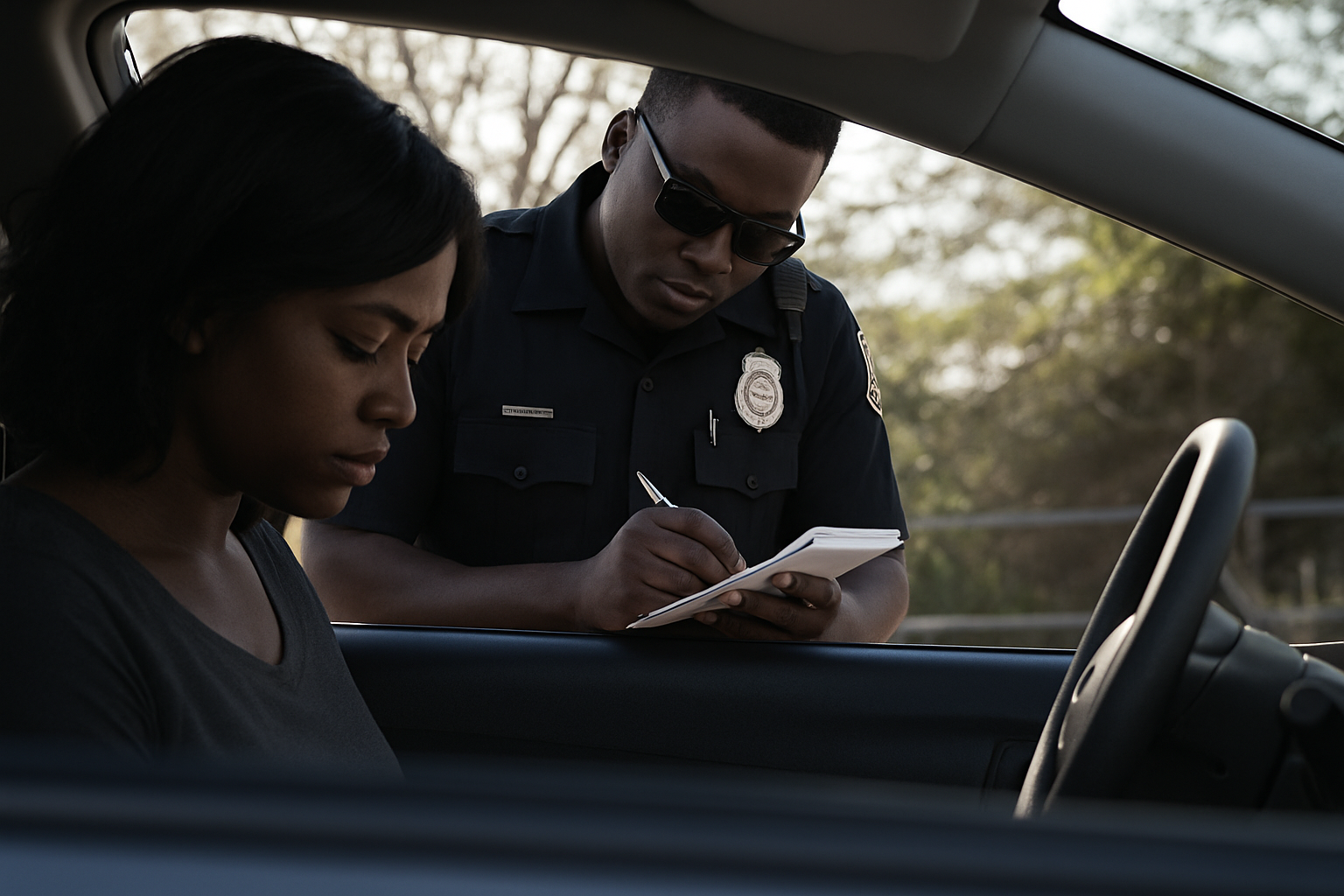
A speeding ticket in Lincoln can raise your insurance rates 15–40% depending on the carrier and how many points hit your Nebraska record. Here's what each major insurer actually charges drivers with violations in Lancaster County.
How Nebraska Points Affect Your Lincoln Insurance Rate
Nebraska assigns points based on violation severity. A speeding ticket 1–10 mph over the limit earns you 1 point. 11–15 mph over is 1 point. 16–35 mph over is 2 points. Anything 36+ mph over is 3 points. These points stay on your Nebraska driving record for five years from the conviction date, but they affect your insurance rates most heavily in the first three years.
Lincoln insurers don't all penalize the same point totals equally. State Farm and Progressive tend to apply smaller surcharges for a single 1-point speeding ticket — typically 15–22% increases. Geico and Allstate often impose 25–35% surcharges for the same violation. Farmers and Nationwide can push increases past 40% for drivers with 2 or more points already on record. If you're currently insured with a carrier that penalizes points aggressively, switching after your ticket can cut your annual premium by $300–$600.
Nebraska does not require SR-22 for speeding tickets or standard point violations. You only need SR-22 if your license is suspended, you're convicted of DUI, or you're caught driving uninsured. Most drivers with a speeding ticket are dealing with a rate increase, not a compliance filing — but if you hit 12 points in any two-year period, Nebraska will suspend your license and you'll need SR-22 to reinstate. Nebraska point system and SR-22 requirements
Carrier-by-Carrier Rate Increases for Lincoln Drivers After a Speeding Ticket
A 35-year-old Lincoln driver with one speeding ticket (16–35 mph over, 2 points) can expect the following approximate monthly rate changes based on 2024 Nebraska rate filings and regional carrier data:
State Farm: $95/mo clean record → $115/mo after ticket (21% increase). State Farm applies a flat minor violation surcharge rather than a tiered point penalty, which benefits drivers with 2-point tickets.
Progressive: $102/mo clean → $122/mo after ticket (20% increase). Progressive uses telematics and continuous insurance history to offset violation surcharges for drivers who maintain coverage without lapses.
Geico: $88/mo clean → $118/mo after ticket (34% increase). Geico penalizes moving violations more heavily than most carriers but still writes high-point drivers without requiring a non-standard policy.
Allstate: $110/mo clean → $148/mo after ticket (35% increase). Allstate applies both a violation surcharge and a higher base rate for drivers with points, making them one of the most expensive options post-ticket in Lincoln.
Farmers: $107/mo clean → $152/mo after ticket (42% increase). Farmers assigns multi-year surcharges for violations, meaning your rate stays elevated longer even as points age on your record.
These figures assume full coverage (100/300/100 liability, $500 collision and comprehensive deductibles) and a clean record prior to the ticket. If you already have one prior violation, expect surcharges 10–20% higher than the numbers above.
When Lincoln Carriers Move You to Non-Standard Policies
Most Nebraska carriers will keep you on a standard policy after one or two speeding tickets, but three or more moving violations in three years often triggers a non-standard or high-risk assignment. Non-standard policies carry higher base rates and fewer discount options. In Lincoln, non-standard carriers include Dairyland, The General, Bristol West, and National General. Monthly premiums for non-standard auto insurance in Nebraska typically range from $180–$280/mo for full coverage after multiple violations.
If your current carrier non-renews your policy or moves you to a high-risk tier, you're not stuck with that company's non-standard rate. Non-standard pricing varies wildly by carrier. Dairyland may quote you $210/mo while The General quotes $265/mo for identical coverage and the same driving record. Shopping at least three non-standard carriers after a non-renewal can save you $600–$900 annually.
Nebraska law prohibits insurers from surcharging or canceling a policy mid-term based solely on a ticket — the increase applies at your next renewal. If you receive a ticket three months before your renewal, you have time to shop and switch before the surcharge hits your current carrier's renewal quote.
How Long Rate Increases Last and What Speeds Recovery
Speeding ticket surcharges in Nebraska typically remain in effect for three to five years depending on the carrier's underwriting rules. State Farm and Progressive often reduce or remove violation surcharges after three years even if the points remain on your record. Geico and Allstate tie surcharge duration directly to the five-year point reporting period, meaning you'll pay higher rates until the ticket fully drops off your Nebraska driving abstract.
Completing a Nebraska Department of Motor Vehicles-approved defensive driving course can remove up to 2 points from your record once every five years, but this does not guarantee your insurer will reduce your rate. Most carriers apply surcharges based on the violation conviction itself, not the current point total. If you take a course and remove the points, you'll still need to shop competitors to capture the savings — your current carrier is unlikely to adjust your premium mid-term.
Maintaining continuous coverage without lapses is the single most effective way to limit rate damage after a ticket. A 30-day lapse in coverage can add another 20–50% surcharge on top of the violation penalty. If you're struggling to afford your post-ticket premium, dropping collision and comprehensive coverage on an older vehicle (worth less than $3,000) is a better cost-cutting strategy than letting your policy lapse.
What to Do Immediately After a Speeding Ticket in Lincoln
Do not wait until your renewal to shop. Request quotes from at least three carriers within two weeks of your ticket conviction. Rates lock at the time of quote, and switching before your current carrier applies the surcharge at renewal can save you months of higher premiums. If your ticket is still pending in Lancaster County Court, some carriers will quote you at your clean-record rate and honor that rate even after conviction if you bind the policy before the court date.
If you're currently paying more than $140/mo for full coverage with one or two tickets on record, you're overpaying. Standard-market carriers like State Farm, Progressive, and Auto-Owners are writing Lincoln drivers with 2–4 points at rates 20–40% below non-standard policies. You do not need to settle for non-standard pricing unless you have three or more violations in three years, a DUI, or a license suspension on record.
Check your Nebraska driving record through the Department of Motor Vehicles before you shop. Lincoln carriers pull your Motor Vehicle Report during underwriting, and discrepancies between what you report and what appears on your MVR can result in higher quotes or policy rescission. Nebraska allows you to request your own driving abstract online for $6.50 — verifying your point total before quoting ensures accurate pricing and no surprises at binding.