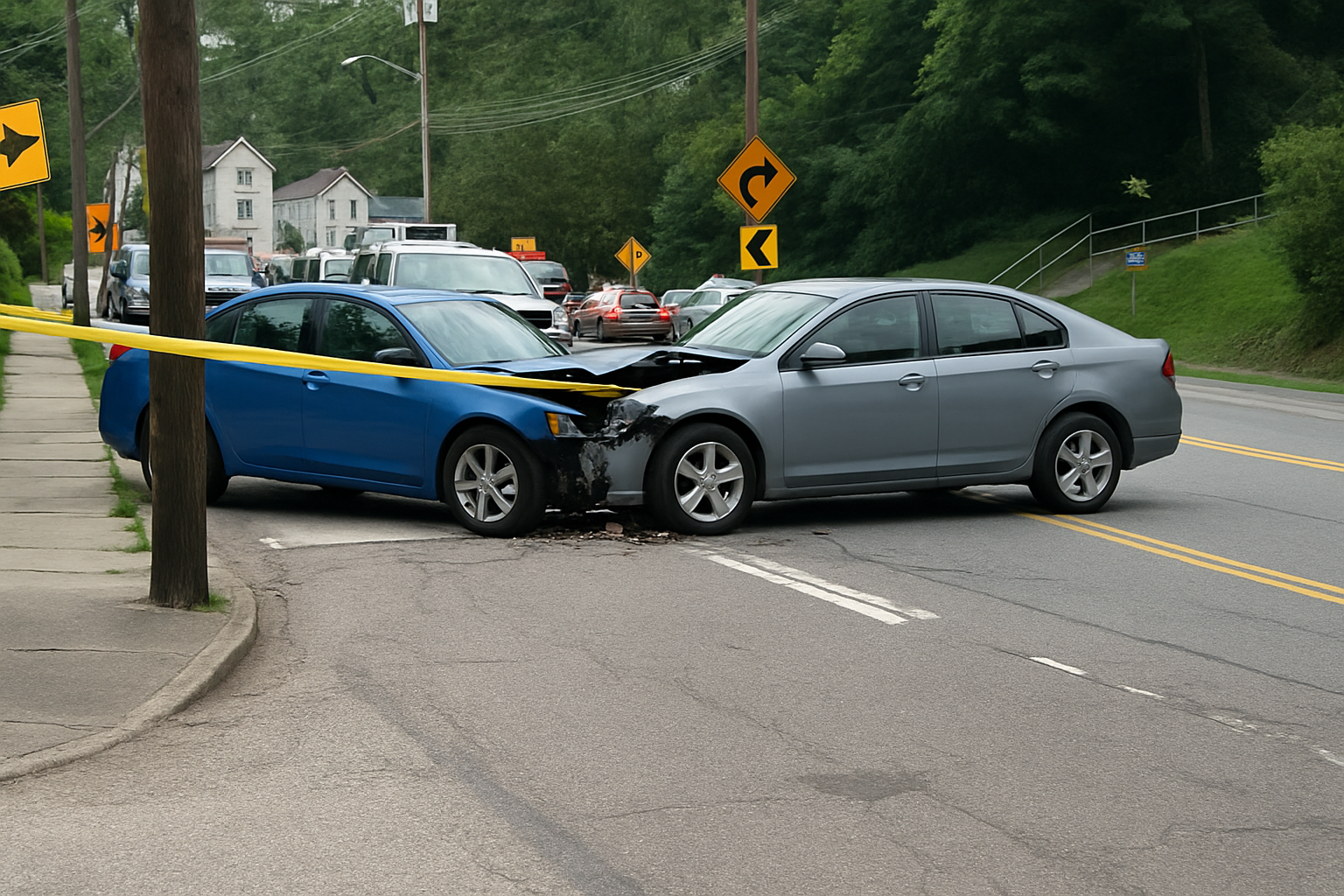
Street racing citations carry reckless driving charges in most states, triggering 4–6 points, 200–350% rate increases, and immediate non-renewals from standard carriers. Here's what to expect and which carriers will still write you.
Street Racing Citations Are Prosecuted as Reckless Driving — Your Insurance Impact Depends on the Charge
Street racing is not a standalone traffic violation in most states. It is typically prosecuted under existing reckless driving statutes, exhibition of speed laws, or speed contest ordinances. In California, Vehicle Code 23109 classifies street racing as a misdemeanor with points assigned to your driving record. In Virginia, street racing falls under reckless driving by speed (§ 46.2-852), carrying 6 demerit points and a Class 1 misdemeanor conviction. In Florida, it's charged under §316.191 as a first-degree misdemeanor. The insurance industry does not treat street racing as a separate violation category — they respond to the underlying charge on your motor vehicle record, which is almost always reckless driving.
Reckless driving is one of the highest-severity moving violations recognized by insurers, second only to DUI in most carrier underwriting guidelines. It signals willful disregard for safety rather than a momentary lapse in judgment. Standard carriers — State Farm, Geico, Progressive, Allstate — typically non-renew policies immediately upon conviction rather than waiting for the policy term to expire. You will receive a cancellation or non-renewal notice within 30–60 days of the conviction posting to your record, giving you a narrow window to secure replacement coverage before your policy lapses.
The difference between cancellation and non-renewal matters for future underwriting. Cancellation for a reckless driving conviction is noted in industry databases and can exclude you from standard market eligibility for 3–5 years. Non-renewal is less punitive but still requires you to disclose the conviction on every application. Either way, you are moving into the non-standard insurance market, where underwriting is based on your current risk profile rather than your historical loyalty or bundle discounts. California SR-22 requirements Virginia reckless driving insurance SR-22 insurance coverage non-standard auto insurance options
Rate Increases After a Street Racing Conviction Range from 200% to 350% in the Standard Market
If your carrier does not cancel immediately and instead applies a surcharge at renewal, expect a rate increase between 200% and 350% depending on your state and prior driving history. A driver paying $150/month for full coverage before a reckless driving conviction will see premiums jump to $450–$675/month. These surcharges remain in effect for 3–5 years in most states, matching the duration the conviction stays on your driving record for insurance rating purposes.
California drivers face particularly steep impacts. Reckless driving convictions remain on your record for 7 years under California DMV rules, and insurers in the state can surcharge for the full duration. The average rate increase for reckless driving in California is approximately 300%, according to data from the California Department of Insurance. In states with shorter lookback periods — such as Michigan (3 years) or Colorado (5 years) — the surcharge duration is shorter, but the percentage increase at renewal is comparable.
Most standard carriers will not offer renewal at any price after a street racing conviction. Geico, State Farm, and USAA typically issue non-renewal notices within 30–45 days of the conviction. Progressive and Allstate may offer renewal in some states but apply maximum surcharges that make the policy unaffordable compared to non-standard alternatives. If you receive a renewal offer from your current carrier, compare it against non-standard quotes before accepting — you may find better pricing in the assigned risk or high-risk market.
SR-22 Requirements Depend on Your State and Whether Your License Was Suspended
Street racing does not automatically trigger an SR-22 requirement in most states. SR-22 is a certificate of financial responsibility filed by your insurer with the state DMV, required after specific violations: DUI, driving without insurance, at-fault accidents without coverage, or license suspensions for point accumulation. A standalone reckless driving conviction without a license suspension does not require SR-22 in the majority of states.
However, if your street racing citation results in a license suspension — either through the criminal court or through DMV point accumulation — you will likely need SR-22 to reinstate your driving privileges. California requires SR-22 for all reckless driving convictions that involve a suspension. Virginia requires SR-22 if your license is suspended for 6+ demerit points within 12 months, which a single reckless driving conviction can trigger. Florida requires SR-22 if your street racing conviction is your second or third offense within 5 years, as this often results in mandatory suspension.
SR-22 filing adds $15–$50 to your policy cost depending on the state and insurer, but the real cost is the restriction it places on your carrier options. Not all non-standard insurers offer SR-22 filing, and those that do may impose higher base rates. If you are uncertain whether your conviction requires SR-22, check your DMV reinstatement letter or court order — it will specify whether a certificate of financial responsibility is mandatory. Do not assume you need SR-22 based on the street racing charge alone.
Non-Standard Carriers That Write Street Racing Convictions
After a street racing conviction, your carrier options narrow to non-standard and high-risk insurers. These companies specialize in underwriting drivers with major violations, suspensions, and point accumulation. The Assigned Risk Pool in your state is the insurer of last resort if no voluntary market carrier will accept you, but premiums in assigned risk are typically 30–50% higher than voluntary non-standard options.
Voluntary non-standard carriers that frequently write policies for drivers with reckless driving convictions include Bristol West, Dairyland, Acceptance Insurance, and The General. These insurers operate in most states and offer state minimum liability coverage as well as full coverage options if you finance or lease your vehicle. Monthly premiums in the non-standard market for a driver with a reckless driving conviction range from $250–$500/month for full coverage, depending on your age, location, and vehicle type.
Some regional carriers specialize in high-risk drivers and may offer better pricing than national non-standard insurers. In California, Freeway Insurance and Infinity Insurance write a high volume of reckless driving policies. In Texas, Acceptance and Dairyland dominate the non-standard market. In Florida, Cure Auto and United Auto write drivers with racing convictions. Pricing varies significantly between carriers even within the same market, so obtaining quotes from at least three non-standard insurers is essential.
Your goal is to remain in the voluntary non-standard market rather than entering the assigned risk pool. Assigned risk policies are more expensive, offer fewer coverage options, and restrict your ability to add optional coverages like comprehensive or collision. Shop non-standard carriers first, and only apply for assigned risk if you receive no voluntary market offers.
How Long the Conviction Affects Your Rates and When You Can Return to Standard Carriers
Reckless driving convictions remain on your motor vehicle record for 3–7 years depending on your state, but insurers only surcharge for a portion of that time. In most states, the active rating period for a reckless driving conviction is 3–5 years from the date of conviction, not the date of the citation. After that period expires, the conviction may still appear on your driving record but is no longer used to calculate your premium.
California keeps reckless driving convictions on your record for 7 years, but most insurers stop surcharging after 5 years. Virginia removes reckless driving convictions from your public driving record after 11 years, but insurers only rate it for 5 years. In Florida, the conviction remains for 75 years on your full record but only affects insurance for 3–5 years depending on the carrier. The key date is when the conviction drops out of the carrier's underwriting lookback period, not when it is expunged from your DMV record.
Returning to the standard market after a street racing conviction requires a clean driving record for 3–5 years post-conviction. Some standard carriers will consider you after 3 years if you have no additional violations during that period and have maintained continuous coverage. Others require a full 5-year clean period before offering standard rates. Shopping your policy annually starting in year three post-conviction is the most effective strategy for rate recovery. Non-standard carriers do not reward loyalty — your premium will not decrease simply by staying with the same insurer.
Defensive driving courses, accident prevention programs, and telematics programs may reduce your rates modestly in the non-standard market, but they will not remove the conviction from your record or accelerate your return to standard carrier eligibility. The only factors that restore standard market access are time and a clean driving record during the lookback period.
State-Specific Street Racing Penalties and Insurance Impacts
California prosecutes street racing under Vehicle Code 23109, which assigns 2 points to your license and carries a misdemeanor conviction. A first offense typically results in a 30–90 day license suspension, and SR-22 is required for reinstatement. Insurance rate increases average 300%, and the conviction remains on your record for 7 years. Assigned risk premiums in California for a reckless driving conviction range from $400–$700/month for state minimum liability.
Virginia treats street racing as reckless driving by speed under §46.2-852, a Class 1 misdemeanor carrying 6 demerit points. A conviction can result in a 6-month license suspension and mandatory SR-22 filing. Virginia insurers surcharge reckless driving for 5 years, and average premiums in the non-standard market range from $300–$550/month. The Virginia Assigned Risk Pool is one of the most expensive in the country, with average monthly premiums exceeding $600 for drivers with reckless convictions.
Florida charges street racing under §316.191, a first-degree misdemeanor with 4 points assigned. A first offense does not typically trigger a suspension unless combined with other violations, so SR-22 is not required in most cases. However, insurers in Florida apply 250–350% surcharges, and non-standard market premiums range from $250–$500/month. Texas prosecutes street racing as racing on a highway under §545.420, a Class B misdemeanor with 2 points. SR-22 is not required unless the conviction results in suspension, but standard carriers non-renew immediately, and non-standard premiums average $280–$480/month.