
Texting While Driving in California: Points, Rate Impact & Timeline
Free to compare
How Many Points Does a Texting Ticket Add in California?
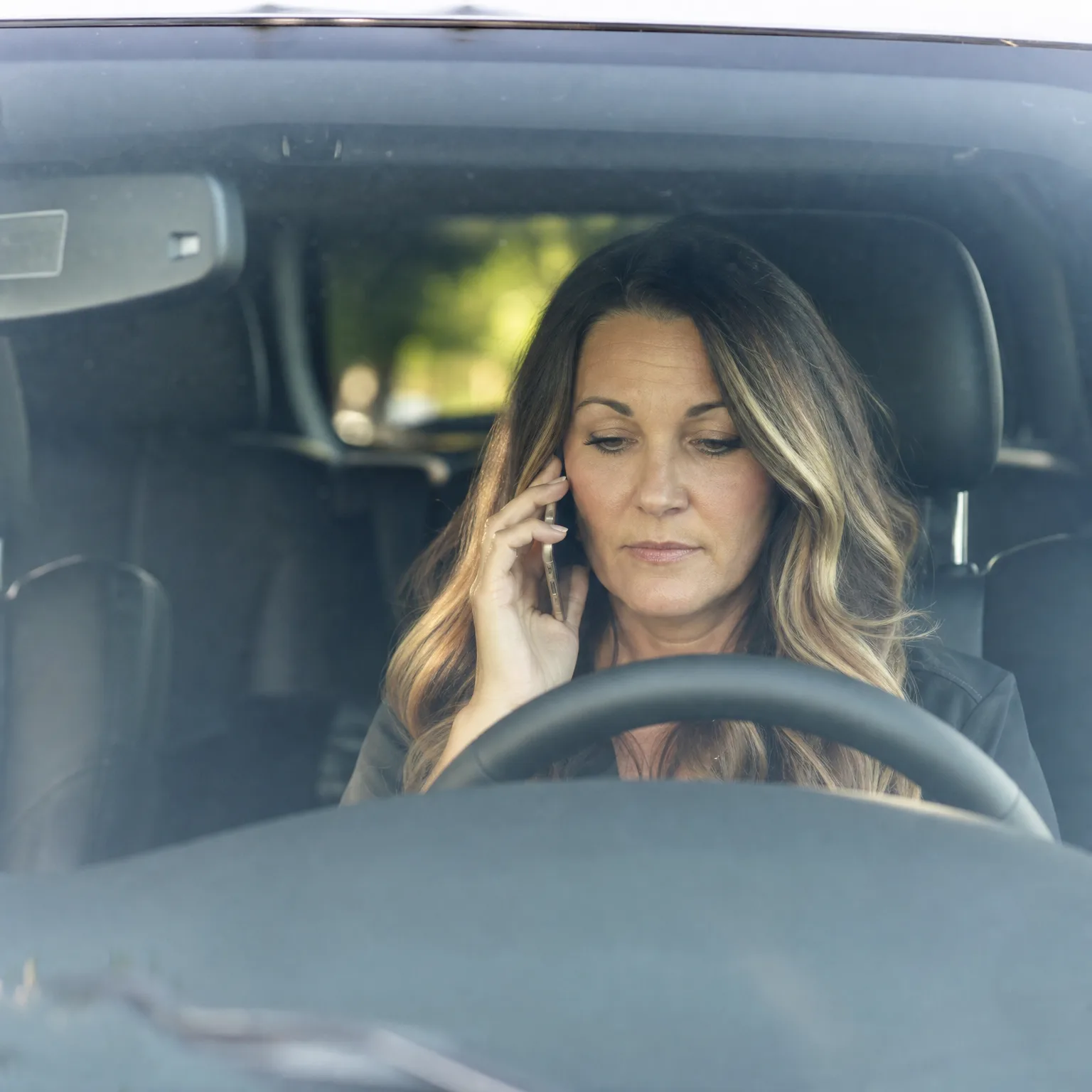
A texting while driving conviction adds 1 point to your California DMV record under Vehicle Code 23123.5. The base fine is $20 for a first offense and $50 for subsequent offenses, but court fees and assessments push the total penalty to $162 or more.
That single point stays on your DMV record for 36 months from the conviction date. California uses a negligent operator treatment system: 4 points in 12 months, 6 points in 24 months, or 8 points in 36 months triggers a license suspension. A single texting ticket won't put you near that threshold, but it combines with any other moving violations you accumulate during that window.
The point appears on your driving record within 30 days of conviction. Carriers pull your motor vehicle report at renewal, which means the rate increase typically appears at your next policy renewal after the conviction posts, not immediately after the ticket.
What Rate Increase Should You Expect After a Texting Conviction?
A 1-point texting violation typically increases your California auto insurance premium by 15% to 28%, depending on your carrier and your record before the violation. On a $1,800 annual premium, that translates to $270 to $504 more per year.
Preferred carriers like State Farm and Farmers often apply a minor violation surcharge that lasts 3 years from the conviction date. Standard and non-standard carriers may apply the surcharge for the full 39-month lookback period most carriers use in California, which extends 3 months beyond the point falling off your DMV record.
Your actual increase depends on how many violations you already have. A texting ticket on a clean record triggers the lower end of the range. A texting ticket combined with a prior speeding violation or at-fault accident moves you into the higher tier, and some preferred carriers will decline to renew at all once you cross 2 points within 36 months.
Carriers treat distracted driving violations inconsistently. Progressive and Allstate have higher surcharge percentages for handheld device violations than for basic speeding tickets, reflecting claims data that shows texting correlates with higher accident severity.


How Long Does the Rate Increase Last?
Most California carriers apply the texting violation surcharge for 39 months from the conviction date, not the ticket date. The conviction date is when you pay the fine or the court enters judgment, which can be weeks after the citation.
The DMV clears the point from your record at 36 months, but your carrier's underwriting lookback extends 3 months longer. If you don't request a re-rate or shop for new quotes after the 39-month mark, the surcharge can persist indefinitely. Carriers don't automatically remove surcharges when violations age off — they apply them at renewal and leave them in place until the next manual review.
Some carriers offer accident forgiveness or minor violation forgiveness programs that suppress the first surcharge if you've been claim-free for 3 to 5 years. USAA and State Farm both offer this for qualifying policyholders, but it applies only if the texting ticket is your first moving violation in the lookback period.
The fastest path to rate recovery is shopping at the 39-month mark. A new carrier pulls a fresh MVR and rates you based on your current record, which no longer shows the texting conviction. Your current carrier may still have the violation coded into your policy file even after it's aged off the state record.
Does a Texting Ticket Require SR-22 in California?
No. A standalone texting while driving conviction does not trigger an SR-22 filing requirement in California. SR-22 is required after DUI convictions, at-fault accidents without insurance, multiple at-fault accidents within a short window, or driving without a valid license.
SR-22 becomes relevant only if your texting ticket is part of a pattern that triggers a negligent operator suspension. If you accumulate 4 points in 12 months and the DMV suspends your license, you'll need SR-22 to reinstate after the suspension period ends. But the texting violation alone, even with the 1 point, doesn't require filing.
If you're already carrying SR-22 from a prior DUI or suspension, the texting ticket doesn't extend your SR-22 period. California requires 3 years of SR-22 from the original triggering event, and the clock doesn't reset unless you have a new DUI or suspension.

Find the Insurers That Still Want Your Business
See Carriers That Cover You
Can You Remove the Point by Taking Traffic School?
Yes, if you're eligible. California allows drivers to attend traffic school once every 18 months to mask a moving violation from appearing on your public driving record. The court must approve your traffic school election, and you must complete the course before your due date.
When you complete traffic school, the DMV still records the conviction, but it's marked as confidential. Insurance carriers can't see it when they pull your motor vehicle report, which means no surcharge. The point still counts toward the negligent operator threshold internally at the DMV, but it won't affect your insurance rate.
You're not eligible for traffic school if you hold a commercial driver's license, if you've attended traffic school for another violation within the past 18 months, or if the violation occurred in a commercial vehicle. You must request traffic school at or before your court appearance — you can't add it retroactively after the conviction posts.
Traffic school costs $50 to $80 for the course plus a court administrative fee. That's significantly less than 3 years of a 15% to 28% surcharge on your premium.

What If You Already Have Points on Your Record?
A texting ticket stacks with any other moving violations you've accumulated in the past 36 months. California counts points on a rolling window, so a texting ticket today combines with a speeding ticket from 18 months ago to put you at 2 points.
At 2 points, you're still well below the 4-point suspension threshold, but you've crossed into a higher underwriting tier with most preferred carriers. State Farm, Farmers, and Allstate typically move you into a standard or non-standard rate class once you hit 2 points within 36 months. That shift can double your premium, separate from the individual violation surcharges.
If you're at 3 points and add a texting ticket, you're at 4 points, which triggers a 6-month probation period under California's negligent operator treatment system. You won't face an immediate suspension, but any additional point during that probation converts into a suspension.
At this tier, your realistic carrier options narrow to non-standard markets: Bristol West, Kemper, National General, and Infinity specialize in multi-point drivers. Monthly premiums in this market typically range from $180 to $320 for minimum liability coverage in urban counties like Los Angeles and Orange County.
Which Carriers Still Write Coverage After a Texting Violation?
Most preferred carriers will still write you after a single texting ticket, but your rate class changes. If you had a clean record before the violation, you'll stay in the standard tier with State Farm, Farmers, Geico, and Progressive. Expect the 15% to 28% surcharge, but you won't be declined.
If the texting ticket is your second or third violation within 36 months, preferred carriers start declining at renewal. Allstate and Liberty Mutual commonly non-renew drivers who cross 2 points. You'll receive a non-renewal notice 60 days before your policy ends, which gives you time to shop.
Non-standard carriers that specialize in pointed records include Bristol West, Kemper, National General, Infinity, and Acceptance. These carriers expect violations on your record and price accordingly. Monthly premiums are higher than preferred markets, but they're your only option if preferred carriers decline.
USAA, if you're eligible, applies lighter surcharges than most carriers for minor violations and offers a minor violation forgiveness benefit after 5 years of membership. If you have military affiliation, USAA is the first place to quote after a texting ticket.
Frequently Asked Questions
Does a texting ticket in California require SR-22 insurance?
No. A texting while driving conviction does not trigger an SR-22 requirement in California. SR-22 is required only after DUI convictions, at-fault accidents without insurance, or license suspensions for accumulated points reaching the negligent operator threshold.
How long does a texting ticket affect your insurance in California?
Most California carriers apply a surcharge for 39 months from the conviction date, even though the point falls off your DMV record at 36 months. The surcharge typically increases your premium by 15% to 28% during that period.
Can you remove a texting ticket from your record in California?
You can mask it from your insurance record by completing traffic school, if you're eligible. Traffic school prevents the violation from appearing on your public MVR, which means carriers won't see it and won't apply a surcharge. You must request traffic school before your court date and you can only use it once every 18 months.
How many points is a texting while driving ticket in California?
A texting while driving conviction adds 1 point to your California DMV record under Vehicle Code 23123.5. The point stays on your record for 36 months from the conviction date.
Will State Farm drop you for a texting ticket in California?
State Farm will not drop you for a single texting ticket if you have a clean record otherwise. You'll stay in their standard tier with a 15% to 20% surcharge for 39 months. If the texting ticket is your second or third violation within 36 months, State Farm may non-renew your policy at expiration.
Related Articles

Texting Ticket Insurance Rate Impact: Points & Cost
5/15/2026

Car Insurance After Texting Ticket: Rates & Options
5/15/2026

How Many Points Is Texting While Driving?
5/15/2026

CA Cell Phone Ticket: 1-Point Math & Carrier Impact
5/17/2026

First Speeding Ticket CA: Rate Impact & Timeline
5/15/2026

Two Cell Phone Tickets in CA: Rate Surcharge Impact
5/17/2026