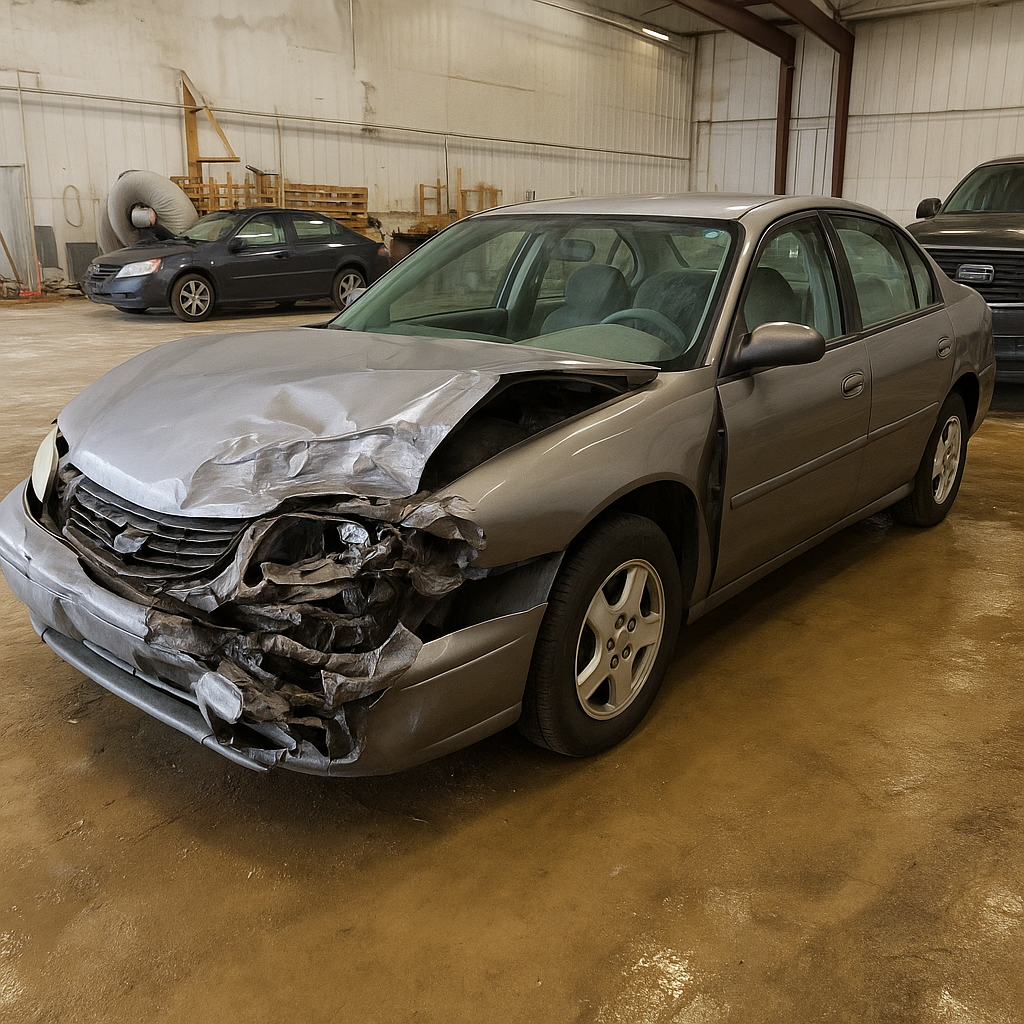
Uninsured Motorist Property Damage (UMPD) coverage protects your vehicle when an uninsured driver hits you — but it's often misunderstood, rarely required, and varies wildly by state. Here's what it covers, when it matters, and whether you actually need it with points already on your record.
What UMPD Actually Covers — And What It Doesn't
Uninsured Motorist Property Damage (UMPD) is an optional coverage that pays for damage to your vehicle when you're hit by a driver who has no liability insurance — and that driver is at fault. It functions like a substitute for the other driver's property damage liability coverage, which should have covered your repairs but doesn't exist. UMPD is not collision coverage. It does not cover single-vehicle accidents, damage you cause to your own car, or losses from weather, theft, or vandalism.
Most UMPD policies cap coverage at $3,500 to $25,000 per accident depending on the state and carrier, far lower than standard collision coverage limits. Many policies also require you to identify the uninsured driver — if you can't provide a name, plate, or police report confirming fault, the claim may be denied. This makes UMPD ineffective for hit-and-run scenarios in many states unless you have a witness or camera footage.
UMPD is only available in states that specifically allow it as a standalone coverage option. It is not the same as Uninsured Motorist Bodily Injury (UMBI), which covers your medical bills, lost wages, and pain and suffering when an uninsured driver injures you. Some carriers bundle UMPD and UMBI together; others offer them separately. If you already carry collision coverage, UMPD is almost always redundant — collision will cover the same damage, often with a higher limit and fewer proof requirements.
Why UMPD Exists — And Who Actually Uses It
UMPD was created as a lower-cost alternative to collision coverage for drivers who want some vehicle protection but can't afford or don't qualify for full comprehensive and collision policies. It's targeted at drivers carrying liability-only coverage who still want a safety net if they're hit by someone without insurance. According to the Insurance Research Council, approximately 13% of drivers nationally were uninsured in 2022, though rates vary dramatically by state — Mississippi and Michigan exceed 25%, while Massachusetts and New York sit below 6%.
For drivers with points on their record, UMPD can serve as a stop-gap if you've dropped collision to reduce premiums but still want some recourse against uninsured drivers. Collision coverage can be expensive for drivers with recent violations — a single at-fault accident typically raises premiums by 40–60%, and adding comprehensive and collision coverage on top of that base rate increase can make full coverage unaffordable. UMPD offers a middle ground: you keep liability-only rates low but gain limited protection if someone else causes damage.
The downside is narrow applicability. UMPD only works when the other driver is clearly at fault, uninsured, and identifiable. If you're hit in a parking lot with no witnesses, or if fault is disputed, UMPD won't help. Collision coverage applies regardless of fault, which makes it more versatile in real-world scenarios where liability isn't immediately clear or documented.
State Availability and Requirements for UMPD
UMPD is not available in every state. Only about half of U.S. states allow it as a standalone coverage option, and rules vary significantly. Some states mandate that insurers offer UMPD if they sell auto policies in the state, but almost none require drivers to purchase it. States where UMPD is commonly available include Texas, Georgia, Illinois, Maryland, and Virginia. States like California, New York, and Florida either do not offer UMPD or fold similar protections into Uninsured Motorist coverage that includes both bodily injury and property damage as a package.
In states where UMPD is offered, coverage limits are usually capped lower than standard collision limits — often between $3,500 and $25,000 per accident. Some states allow UMPD to include a deductible, typically between $250 and $500, which reduces the premium slightly but also reduces the net payout if you file a claim. A handful of states, including Texas, allow UMPD to be written without a deductible, making it a true substitute for the absent liability coverage.
If you live in a state with high uninsured motorist rates — such as Mississippi (29%), Michigan (26%), or Tennessee (23%) — UMPD becomes more statistically relevant, but only if you're not already carrying collision. Drivers with points should verify whether their state offers UMPD and what the coverage limits are before assuming it will provide meaningful protection. Many non-standard carriers targeting drivers with violations or lapses do not offer UMPD at all, focusing instead on state-minimum liability packages.
UMPD vs. Collision Coverage — Which One Makes Sense
If you already have collision coverage, adding UMPD is redundant and a waste of premium. Collision covers damage to your vehicle regardless of who caused the accident, whether the other driver is insured, and whether you can identify them. UMPD only covers damage caused by an identified, at-fault, uninsured driver — a much narrower set of scenarios. Collision also typically has higher coverage limits and fewer proof-of-fault requirements.
The only time UMPD makes sense is when you cannot afford or do not carry collision coverage, but you want some protection against uninsured drivers. For drivers with points who have dropped full coverage to manage premium increases, UMPD can provide a low-cost layer of protection — but it's a calculated trade-off. The annual premium for UMPD typically ranges from $30 to $80 depending on state and coverage limit, compared to collision premiums that can run $300 to $1,200 annually or more for drivers with violations.
Before choosing UMPD over collision, consider your vehicle's value. If your car is worth less than $5,000, the maximum UMPD payout may exceed the vehicle's actual cash value, making UMPD a reasonable substitute. If your car is worth $15,000 or more, UMPD's low caps mean you'll be significantly underinsured in a total loss scenario. Also factor in how you would handle an at-fault accident — UMPD does nothing for damage you cause, while collision covers your vehicle even when you're the one who made the mistake.
How UMPD Claims Work — And Common Denial Reasons
Filing a UMPD claim requires proving three things: the other driver was at fault, the other driver was uninsured, and you can identify the other driver or vehicle. Most carriers require a police report that documents the accident, lists the other driver's information, and confirms they lacked insurance. If you cannot provide this documentation, the claim is likely to be denied. This makes UMPD nearly useless for hit-and-run accidents unless you have witness statements, dashcam footage, or a plate number that leads to an identified driver.
Once a UMPD claim is filed, the insurer will verify the other driver's insurance status through state databases or by contacting the driver directly. If the other driver had a lapse but later reinstated coverage, or if they were insured under a different policy you weren't aware of, your UMPD claim will be denied and you'll be directed to file a claim against their liability policy instead. Processing time for UMPD claims typically runs 2 to 4 weeks, similar to collision claims.
UMPD claims generally do not count as at-fault claims and should not trigger a rate increase on their own — you are the victim, not the cause. However, some carriers treat any property damage claim as a red flag, especially for drivers who already have points or prior violations. If you're shopping for new coverage after a UMPD claim, some non-standard insurers may ask about all claims in the past 3 to 5 years regardless of fault. Always disclose UMPD claims accurately during the application process to avoid policy rescission later.
Should You Add UMPD With Points Already on Your Record
If you're carrying liability-only coverage because full coverage premiums spiked after a ticket or accident, UMPD can be a reasonable add-on — but only if your state allows it, your vehicle is worth protecting, and the coverage limit is high enough to matter. For a $50 annual premium and a $10,000 UMPD limit, the math works if you live in a state with uninsured driver rates above 15% and you're driving a vehicle worth $8,000 or more.
If your state's UMPD cap is $3,500 and your car is worth $12,000, the coverage won't come close to making you whole in a total loss. In that scenario, saving the UMPD premium and putting it toward reinstating collision coverage once your rates start to recover makes more sense. Most drivers with a single speeding ticket or minor at-fault accident will see rates begin to normalize after 3 years, and many carriers offer step-down pricing after the first year if no new violations occur.
Drivers in states without UMPD availability or where UMPD is bundled with Uninsured Motorist Bodily Injury should prioritize UMBI over property coverage. Medical bills and lost wages from an uninsured driver accident will financially devastate you far more than vehicle damage. If budget is tight and you have to choose between higher UMBI limits or adding UMPD, always choose the bodily injury protection first.
Finding Coverage That Matches Your Actual Risk Profile
Drivers with points face a cost-benefit equation that clean-record drivers don't. Every coverage line you add increases your premium, and every premium dollar comes from a tighter budget. UMPD is not a must-have — it's a conditional hedge against a specific scenario that may or may not justify the cost depending on your location, vehicle value, and existing coverage.
The most effective step you can take right now is to compare quotes from multiple carriers that specialize in non-standard or assigned risk policies. Carriers like The General, Bristol West, and state-specific insurers often have more competitive pricing for drivers with points and may offer flexible UMPD options if your state allows it. National carriers that cater to preferred-risk drivers often overprice or decline coverage entirely for drivers with recent violations, making direct comparison critical.
Use a high-risk insurance comparison tool to surface quotes from carriers that actually compete for drivers with points on their record. Enter your current violation details, current coverage limits, and vehicle information to get apples-to-apples comparisons that include UMPD as an optional add-on where available. Focus on total cost over six months, not just the monthly payment — some carriers front-load fees or require higher down payments that distort the true cost.