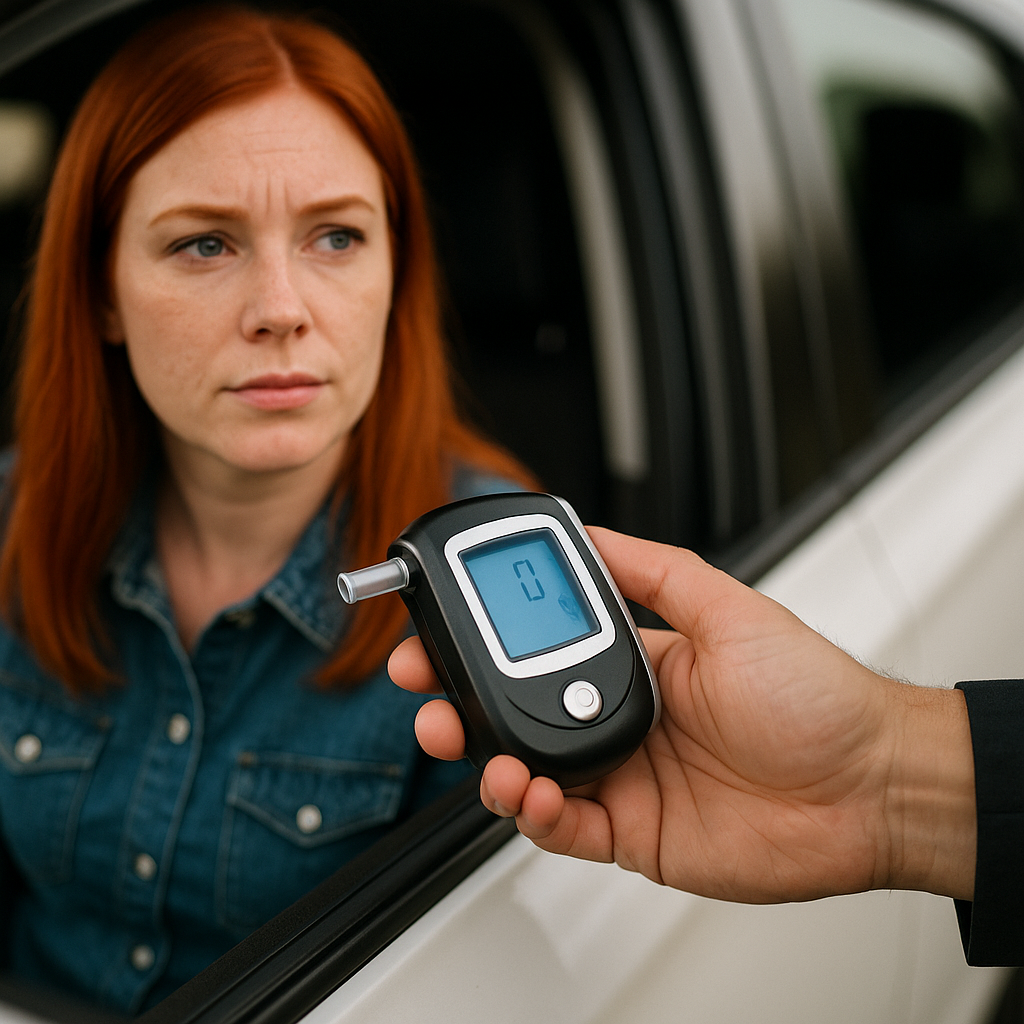
Washington uses a 6-point suspension threshold, but your insurance rates climb long before you hit that limit. A single speeding ticket can raise premiums 20–30%, and most carriers look back 3–5 years when pricing your policy.
How Washington's Point System Works — And When Your License Is at Risk
Washington's Department of Licensing (DOL) assigns points for moving violations, and 6 points within 12 months triggers a license suspension. A speeding ticket 15 mph or less over the limit earns you 3 points. Speeding 16–25 mph over is 4 points. Reckless driving, hit-and-run, and driving while license suspended all carry 6 points — meaning a single violation suspends your license immediately.
Points stay on your Washington driving record for 2 years from the violation date, not the conviction date. If you accumulate 6 points in any 12-month period, the DOL suspends your license for 30 days. A second suspension within 5 years extends to 60 days, and a third suspension within 5 years extends to 90 days.
Your license suspension is lifted after the mandatory period, but the points remain on your DOL record for the full 2 years. That means you can be legally driving again while still carrying points that affect your insurance rates and make you vulnerable to another suspension if you receive additional violations. Washington SR-22 requirements
How Violations Raise Your Insurance Rates in Washington — And for How Long
Insurance carriers in Washington do not use the state's point system to price your policy. They pull your driving record directly from the DOL and apply their own internal rating algorithms. A single speeding ticket typically raises your premium 20–30%, and that increase persists for 3–5 years depending on the carrier. A reckless driving citation can raise rates 50–90%, and an at-fault accident increases premiums 40–60%.
The disconnect between DOL points and insurance pricing creates confusion: your points fall off your DOL record after 2 years, but carriers continue to rate you as a higher risk for another 1–3 years beyond that. This is because insurers care about violation history, not point totals. A speeding ticket from 3 years ago no longer carries DOL points, but it still appears on your driving record and influences your premium.
Washington carriers use a 3-year lookback period at minimum, and many use 5 years for major violations like reckless driving or hit-and-run. That means a violation you received 4 years ago could still be costing you hundreds of dollars annually, even though your DOL point total is zero and your license is in good standing.
Rate increases are not uniform across carriers. A driver with one speeding ticket might see a 22% increase with GEICO, a 30% increase with State Farm, and a 15% increase with Progressive. This variance is why shopping your policy after a violation is the highest-leverage action available to you. The carrier that gave you the best rate when your record was clean may not be the cheapest option now.
Which Violations Affect Your Rates the Most — And When SR-22 Comes Into Play
Washington does not require SR-22 filing for standard point violations like speeding tickets or at-fault accidents. SR-22 is reserved for specific legal and compliance events: DUI, reckless driving resulting in a suspension, driving while license suspended, driving without insurance, or being found at fault in an accident while uninsured. If your violation did not trigger a court order or DOL mandate for SR-22, you do not need it — and conflating point violations with SR-22 requirements creates unnecessary alarm.
For drivers with points but no SR-22 requirement, the biggest rate increases come from violations that signal elevated crash risk. Reckless driving raises rates 50–90%, hit-and-run increases premiums 70–100%, and at-fault accidents with property damage over $1,000 raise rates 40–60%. Speeding tickets, while costly, are the least damaging: 20–30% increases are typical, and some carriers treat low-level speeding as a minor infraction if it's your only violation in 3 years.
Multiple violations compound exponentially, not additively. A driver with two speeding tickets in 2 years might see a 50–70% rate increase, not the 40–60% you'd expect from doubling a single-ticket penalty. Carriers interpret multiple violations as pattern behavior, which elevates your risk tier and shrinks the pool of insurers willing to write you at standard rates.
If you do need SR-22 in Washington, expect to pay a $25–50 filing fee and see your premium increase 30–50% on top of the violation-based increase. SR-22 filing is typically required for 3 years, but your specific requirement depends on the court order or DOL action that triggered it. The SR-22 itself is not a coverage type — it's a certificate your insurer files with the DOL proving you carry at least Washington's minimum liability limits: $25,000 bodily injury per person, $50,000 per accident, and $10,000 property damage.
What You Can Do to Lower Your Rate After a Violation
Washington allows you to attend a state-approved defensive driving course to remove one ticket from your insurance record every 3 years. The course does not remove points from your DOL record, but it can prevent the violation from being reported to your insurer — which means no rate increase for that ticket. You must request the course option before your court date or conviction, and it's only available for moving violations that don't involve alcohol, drugs, or reckless driving.
If you've already been convicted or your violation doesn't qualify for the course, your options shift to shopping carriers and adjusting coverage. Non-standard carriers like The General, National General, and Bristol West specialize in drivers with points and often offer lower rates than standard carriers for the same coverage. These insurers price risk differently and may not penalize your specific violation as heavily as the carrier you currently use.
Increasing your liability limits above the state minimum can sometimes lower your rate with certain carriers, counterintuitive as that sounds. Insurers view drivers who carry higher limits as more responsible, and the discount for that signal can offset part of the violation penalty. Bundling your auto policy with renters or homeowners insurance also generates discounts that help absorb the rate increase.
Maintaining continuous coverage is critical. A lapse in insurance — even a short one — adds a separate penalty on top of your violation-based increase and can push you into the non-standard market even if your points alone wouldn't have. Washington insurers are required to report lapses to the DOL, and the DOL can suspend your license for driving uninsured, which triggers an SR-22 requirement and extends your high-rate period by years.
How Long Until Your Rates Recover — And What to Expect Year by Year
The rate impact of a violation decays over time, but it doesn't disappear the moment your points fall off your DOL record. For a single speeding ticket, expect the steepest penalty in year one: a 20–30% increase that persists through your first renewal. In year two, most carriers reduce the penalty to 10–20% if you've had no additional violations. By year three, the increase drops to 5–10%, and by year four, many carriers treat the ticket as aged out and remove the penalty entirely.
More serious violations follow a longer decay curve. A reckless driving citation or at-fault accident can keep your rates elevated 40–60% for the first 2 years, 20–30% in years three and four, and 10–15% in year five. Full rate recovery typically occurs 5–7 years after the violation date, assuming no additional incidents.
Your rate recovery timeline accelerates if you shop carriers annually. A violation that one insurer prices at a 50% increase might cost you only 30% with another insurer, and that gap widens as the violation ages. Carriers apply different depreciation schedules to old violations, so the insurer offering you the best rate in year one may not be the cheapest in year three.
Washington drivers with multiple violations or an at-fault accident plus a speeding ticket should expect to remain in the non-standard market for 3–5 years. Standard carriers typically require 3 years of violation-free driving before they'll write you at preferred rates. Non-standard carriers are not permanent assignments — they're a bridge. Once your record cleans up, you can transition back to standard carriers and recover the rate you had before the violations.