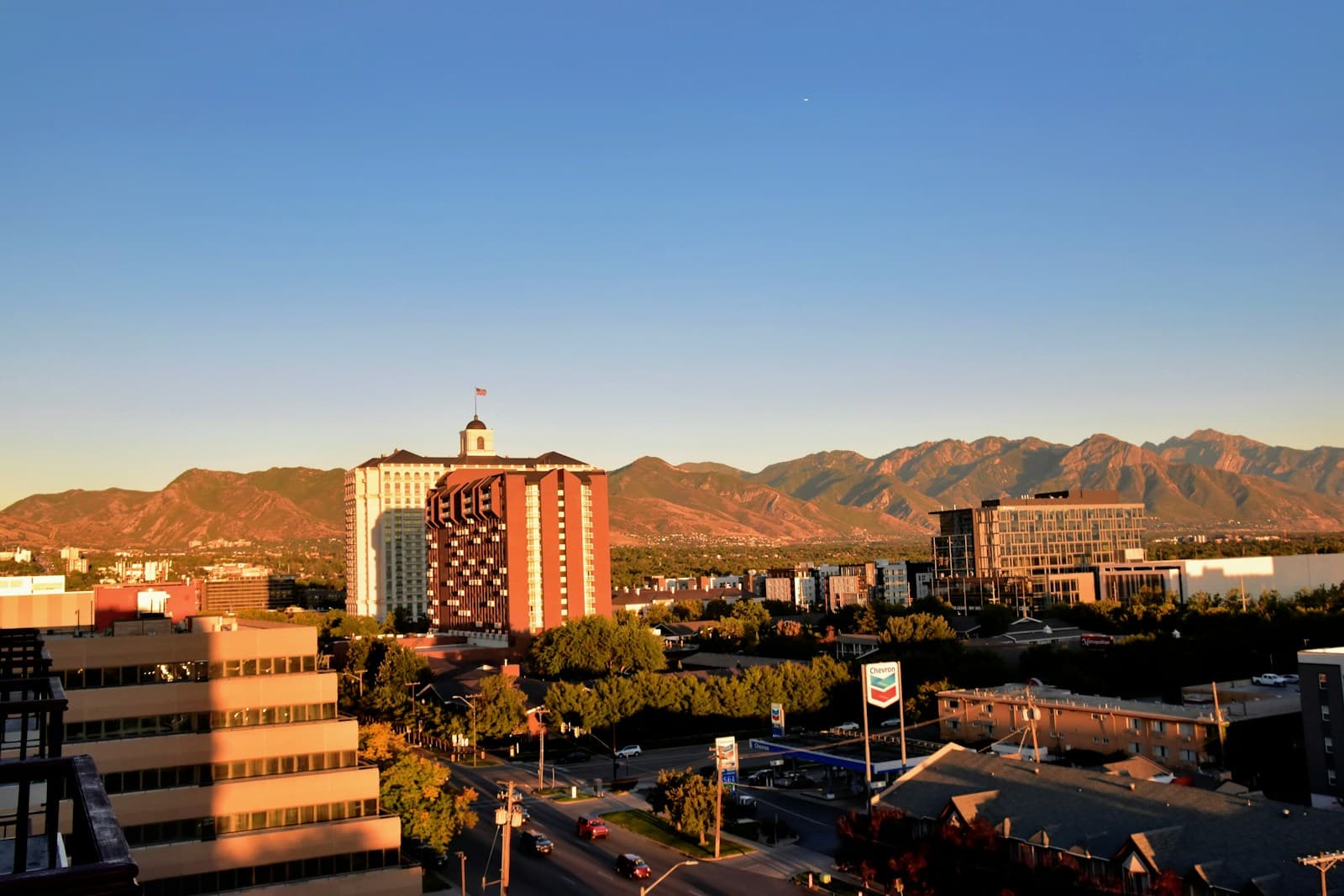
What Affects Rates in Salt Lake City
- I-15 Corridor Accident Density: Salt Lake City's primary north-south artery sees elevated accident frequency during peak commute hours, particularly between 600 South and the I-80 interchange. Drivers with at-fault accidents already on record face steeper increases here than in suburban areas, as carriers price for repeat-incident likelihood in high-density corridors.
- Wasatch Front Urbanization: Salt Lake City proper sits in a compact valley with higher traffic density than surrounding counties. High-risk drivers pay 15–25% more in the urban core compared to West Valley City or Sandy, based on collision frequency and theft rates in zip codes 84101, 84102, and 84111.
- Winter Weather Claim Patterns: Lake-effect snow and inversion fog contribute to elevated winter claims along the Wasatch bench and I-80 east of the city. Drivers with existing violations see compounded rate impacts during renewal if winter claims occur, as carriers view weather-related incidents as preventable with proper speed adjustment.
- Utah Point System Mechanics: Utah assesses 35–80 points per moving violation, with suspension at 200 points in 3 years. Points remain on the driving record for 3 years from conviction date. A single speeding ticket (35–75 points) does not trigger SR-22, but multiple violations within 3 years compound both point totals and premium increases. SR-22 is required only for specific triggers: DUI, reckless driving, driving on a suspended license, or failure to maintain required coverage.
- Non-Standard Carrier Concentration: Salt Lake City has strong local presence from non-standard carriers including The General, Bristol West, Acceptance, and regional programs through independent agents. These carriers compete aggressively for high-risk drivers, and quotes for identical coverage often vary 30–50% between carriers — making shopping critical for this audience.
Compare rates from carriers that work with drivers who have points
Standard carriers surcharge heavily after violations. These specialists price your specific record differently.
Get Your Free QuoteCoverage Recommendations
Cost estimates are based on available industry data and vary by driver profile. These are not insurance quotes.
SR-22 Insurance
Required in Utah for 3 years following DUI, reckless driving, or license suspension. The SR-22 is a certificate proving you carry Utah's minimum liability limits (25/65/15), filed by your insurer to the Driver License Division. The filing itself costs $15–$50, but the underlying violation typically doubles or triples your premium.
$150–$280/month with SR-22 requirementEstimated range only. Not a quote.
Liability Insurance
Utah requires 25/65/15 minimums ($25k per person injury, $65k per accident injury, $15k property damage). High-risk drivers often carry only minimums to reduce cost, but this leaves you personally liable for damages above those limits. Salt Lake City's urban density and I-15 traffic increase the likelihood of higher-value claims.
$95–$180/month for minimum liability with violationsEstimated range only. Not a quote.
Uninsured Motorist Coverage
Roughly 9% of Utah drivers lack insurance, concentrated in lower-income zip codes and among unlicensed operators. If you're already paying high-risk rates, UM/UIM coverage (often $15–$30/month extra) protects you from another uninsured driver causing additional financial harm. Utah law requires insurers to offer this coverage, and you must sign a waiver to decline it.
$15–$30/month additionalEstimated range only. Not a quote.
Non-Standard Auto Insurance
Non-standard carriers specialize in drivers with violations, lapses, or SR-22 requirements. In Salt Lake City, these include The General, Bristol West, Acceptance, and regional programs. Rates vary dramatically between carriers — one may quote $220/month, another $155 for identical coverage. Independent agents often have access to multiple non-standard markets unavailable online.
$150–$280/month typical rangeEstimated range only. Not a quote.